
Moe: “We cannot in any way support the adding of export tariffs on a product like oil”
By Brian Zinchuk
PipelineOnline.ca
PRINCE ALBERT – When it comes to this trade war, placing export tariffs on our oil and potash is not a great idea.
That was the thrust of Premier Scott Moe’s comments on Aug. 26 with regards to the ongoing trade war with the United States. An export tax is like a tariff, but paid to the government of the exporting country as opposed to the company receiving the imports.
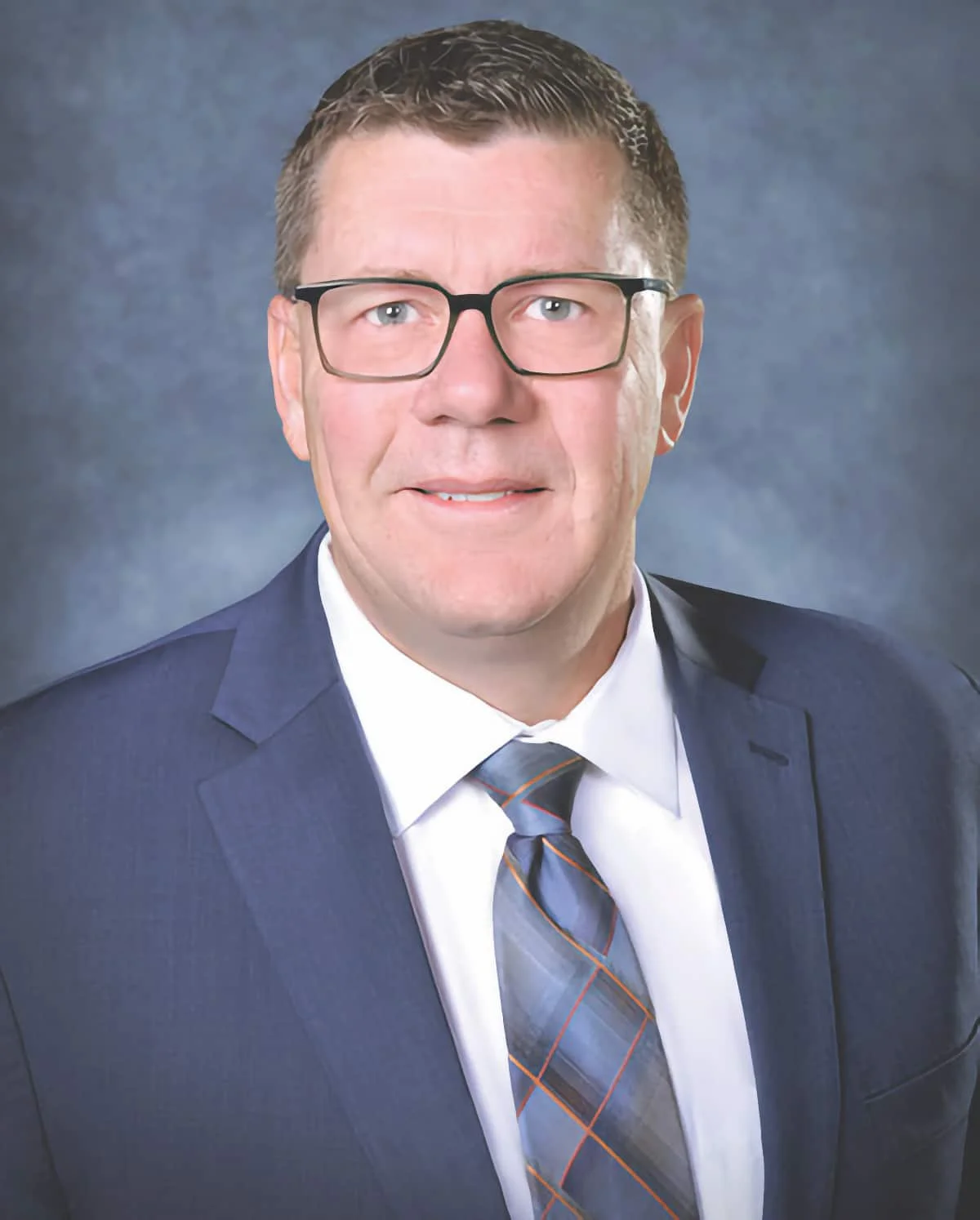
Scott Moe.
More and more voices, from former Alberta Premier Jason Kenney to callers on the Evan Bray Show, have suggested Canada should use its oil production for leverage in the escalating trade war.
In a 19 minute speech to a press conference in Prince Albert, with his cabinet standing behind him, Moe took a different approach. He made several subtle and not-so-subtle digs at the previous Justin Trudeau-led government, particularly when it comes to the failed Energy East Pipeline.
Moe said, “What we as a province cannot and will not support is any kind of export tariff on our natural resources or any of our resources that are being exported to the U.S. or through the U.S. to other areas of the world.”
Potash
“Let me start with the potential suggestion of an export tax on potash. Saskatchewan, in the not too distant future, will be providing half of the world’s potash. That would be a tremendous economic hit to our province and to our nation. First, Canadians would lose jobs. Second, farmers on both sides of the borders would pay more for that crucial fertilizer. Third, the United States of America most assuredly would switch to buying potash from other nations around the world, nations like Belarus, for example.
“This would be a tremendously flawed policy on behalf of Canadians.”
Moe said the industry is using virtually all North American ports to get product to the world, and blamed flawed federal policy on port governance, in particular the board structure at the Port of Vancouver, which he said is not representative of the three prairie provinces that ship the bulk of the potash.
“We have asked for that structure to change, the board structure at the port to change, to prioritize the Canadian economy, to prioritize the Prairie provincial economy, so that we have true access to the world through an efficient port system.”
Oil
“Similarly, we cannot in any way support the adding of export tariffs on a product like oil. Again, it would be an unsustainable hit to our Canadian economy and, in particular, our Saskatchewan and Alberta economy. Canadians would lose jobs immediately. We, as a nation, would lose investment immediately.
“And I would put forward that an export tariff on oil would have a far greater impact on those that are living in Eastern Canada than it would even on those that are directly working in the energy industry. Twenty to 50 per cent of Canadians’ refined petroleum products, our diesel, our gasoline, is produced through products that are produced in Western Canada, travel through the United States of America back into Canada, to be refined and utilized. An export tariff on that Canadian Western oil would most assuredly result in a much higher price on gasoline, largely in eastern Canada.”
Here he referenced the failed Energy East Pipeline Project, which would have allowed Western Canadian crude to transit all the way to Ontario and eventually New Brunswick on an entirely Canadian route. That pipeline was originally planned to be in service by December 2018, but never proceeded as TC Energy pulled the plug, citing the federal government’s moving of the goalposts on regulatory issues.
Here’s why it’s important
Central Canada gets much of its oil from Western Canada, but it does so via the United States. The Enbridge Mainline, which ships nearly all of Saskatchewan’s oil production for export, runs through North Dakota, Minnesota and Wisconsin to its terminus at Superior, Wisconsin. From there Line 5 passes through the upper and lower peninsulas of Michigan to Sarnia, Ontario, and Line 6 hooks around to Sarnia as well.
If Energy East had been built, with 1.1 million barrels per day of capacity, it could have eliminated the dependence on the American route. It wasn’t, and Michigan has been pushing hard to shut down Line 5. Ontario and Quebec could find themselves cut off from Canadian oil.
That is the bargaining position. If Canada cuts off or taxes oil going to the U.S., the Americans can just as easily cut off or tax our own oil coming back to us through their country.
Moe said, “Flawed policy 10 years ago, flawed policy today. We should not make the same mistake twice.”
Should we pull American booze from the shelves?
Moe said his government wants to leave the choice with the people of Saskatchewan, and that they are already making it. American alcohol sales in the province are down 40 per cent, while sales of Saskatchewan-made products have increased.
“I think that that actually sends a much stronger message than any government-ordered ban that could be put in place.”
He said a 50 per cent U.S. tariff was applied to Canadian alcohol exports on Aug. 22. Saskatchewan will reciprocate on American alcohol coming into the province on Sept. 8.
Data centres
Moe pointed to Bell Canada, which he said is building the largest data centre in Canada, employing thousands in construction and creating over 800 long-term careers in security, logistics, maintenance and hospitality.
He said guidelines for future data centre projects would be announced within 24 hours, and that a top requirement will be a Canadian proponent.
Flawed policy on pipelines
“In doing so, and by implementation of that flawed policy, we have given up some of our economic security. We certainly have given up some of our energy security, which is becoming evident today, and ultimately, putting at risk our very sovereignty.
“We should not make that mistake or any of those mistakes again in the future. We need to do better.”
Moe said his government supports Canadian counter tariffs when they are targeted and short term, and when they are aimed at bringing the Americans back to the negotiating table.
He closed with words from the former prime minister from Prince Albert. “One Canada, where Canadians control their own destiny.”
Article edited down for length. Used with permission.