
Strychnine approval limited to select RMs in Saskatchewan
By Joan Janzen
The governments of Saskatchewan and Alberta have issued a news release approving the emergency use of two per cent liquid strychnine to support pest management of Richardson’s ground squirrels. Health Canada’s Pest Management Regulatory Agency collaborated closely with both provinces and the federal government.
“We are pleased to see the emergency use request granted as a practical opportunity for producers to demonstrate how strychnine can help protect crops and pastures from continued damage. We hope to see strychnine reinstated permanently in the future as a tool producers can use to manage gophers,” Agriculture Minister David Marit stated.
Currently, the federal authorization allows strychnine to be registered for use in Saskatchewan and Alberta until November 2027.
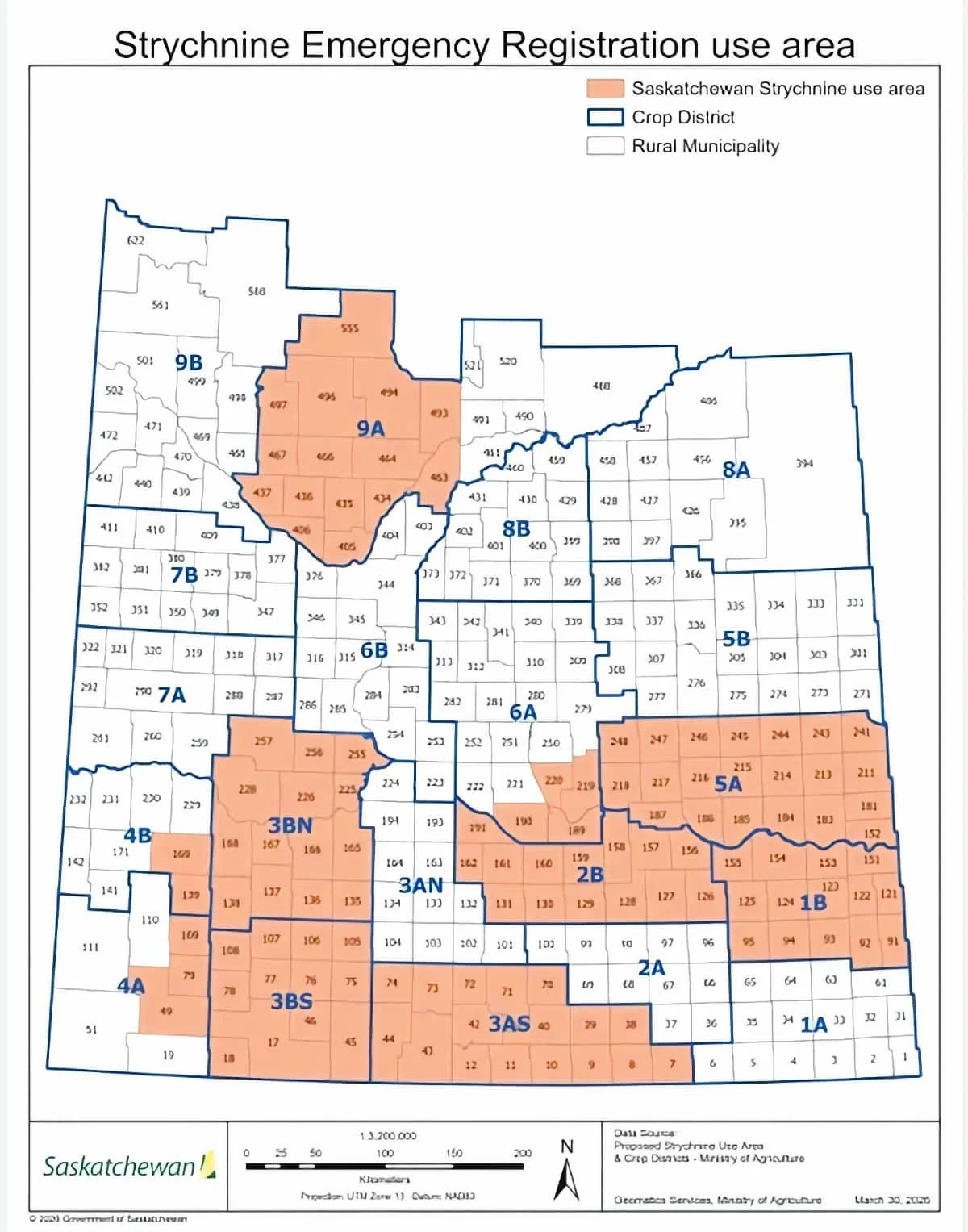
MP Jeremy Patzer posted, “While I am happy to see the temporary approval, I’m disappointed to see it is restricted to certain RMs, leaving those with gopher problems outside the approved area out of luck.” Patzer represents the riding of Cypress Hills-Grasslands.
Under the emergency use registration, areas in approximately seven crop districts in southwest, southeast, south-central and northwest Saskatchewan will be eligible to access strychnine. Those areas were identified using Saskatchewan Crop Insurance Corporation claims data and information related to species-at-risk presence.
“I’ve toured farms where entire quarter sections have been wiped out, alfalfa feed for cattle, crop land destroyed. Some fields have lost half to three-quarters of their yield,” Patzer said. He also pointed out safety issues caused by gopher holes, which can injure cattle and horses.
Elaine Epp, pest control officer for the RM of Kindersley, explained that strychnine is more effective if it is used before there is greenery for the gophers to eat, making this a time-sensitive issue. Burrowing holes begin appearing as male gophers can start emerging as early as February and March. Litter sizes average between five and seven babies.
“At the moment our area will not have access to strychnine, but we’re working on getting it. The farmers have been asking for it for the last couple of years. There are a few farmers in the area that have lost quite a bit of crop due to the gopher population in the area,” Epp reported.