
Rosetown's team-based clinic officially opens
By Ian MacKay
ROSETOWN – Dignitaries officially opened the new clinic at the hospital last week.
In operation since April, the "team-based" Rosetown & District Primary Health Care Centre unites the Rosetown and District Primary Care Centre clinic run by the town on the 100 block of First Avenue West with the private Rosetown Medical Associates clinic at the corner of First Street and Second Avenue West. The Medical Associates physicians and staff moved in at the end of August.
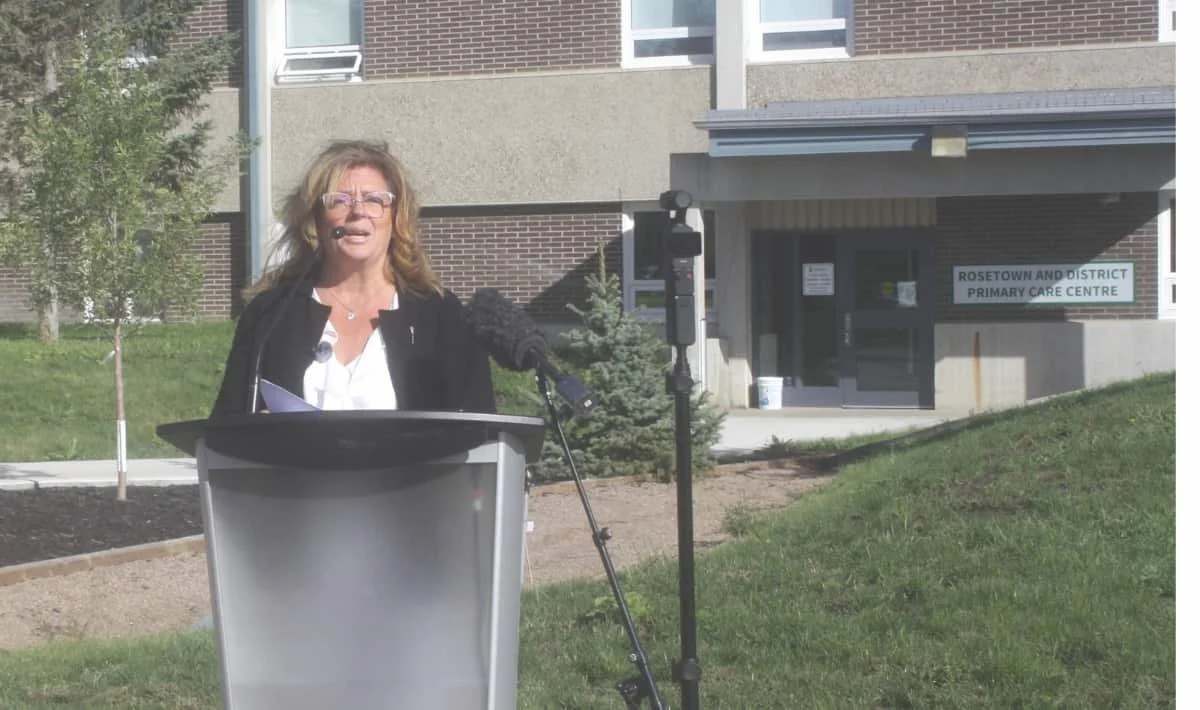
Lori Carr, the province’s minister of remote and rural health, speaks during a ceremony to officially open the new clinic at the hospital on Thursday morning. The Rosetown & District Primary Health Care Centre has six doctors, a behavioural health consultant, a primary health nurse, a pharmacist and support staff, a Saskatchewan Health Authority official said. Photo by Ian MacKay
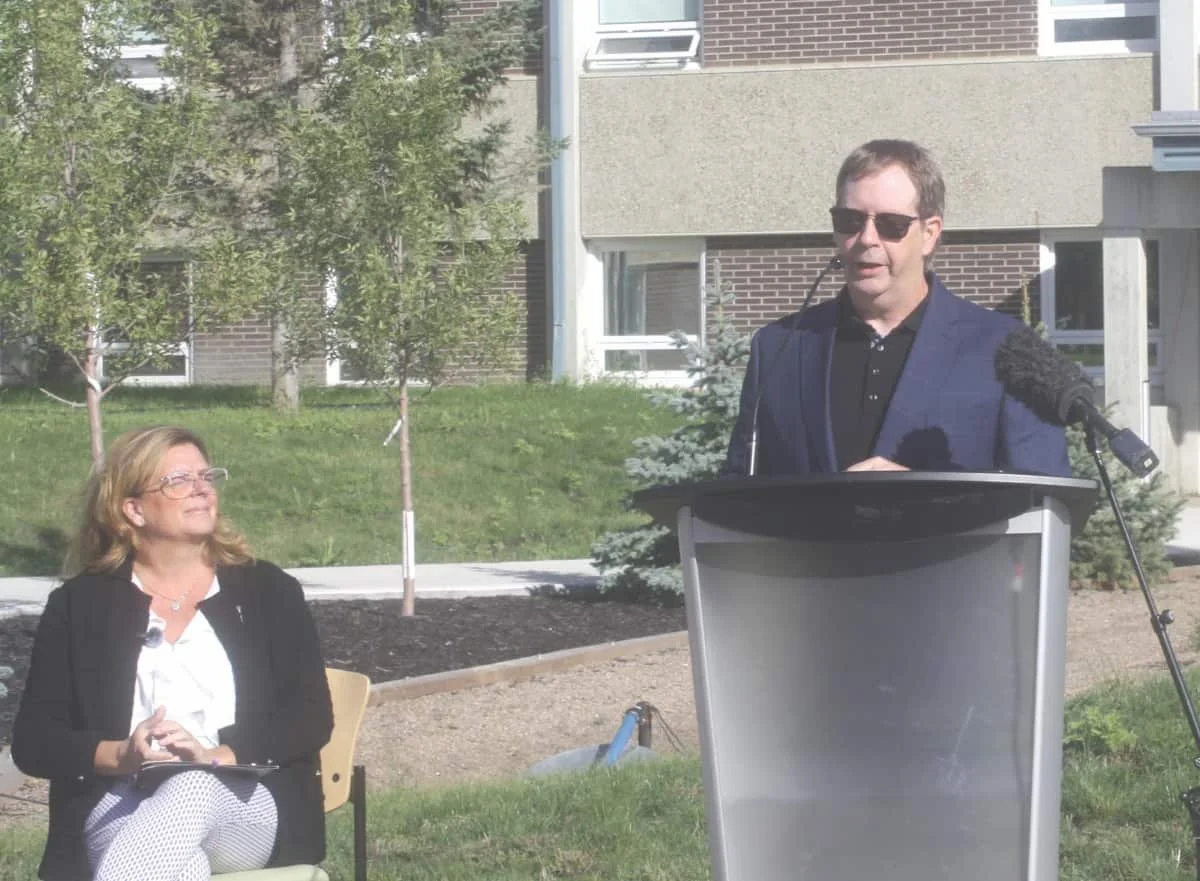
Mayor Trevor Hay expresses appreciation to local residents, the provincial government and the Saskatchewan Health Authority for their efforts to create the new clinic at the Rosetown hospital, during a ceremony in front of the new entrance on Thursday. Photo by Ian MacKay
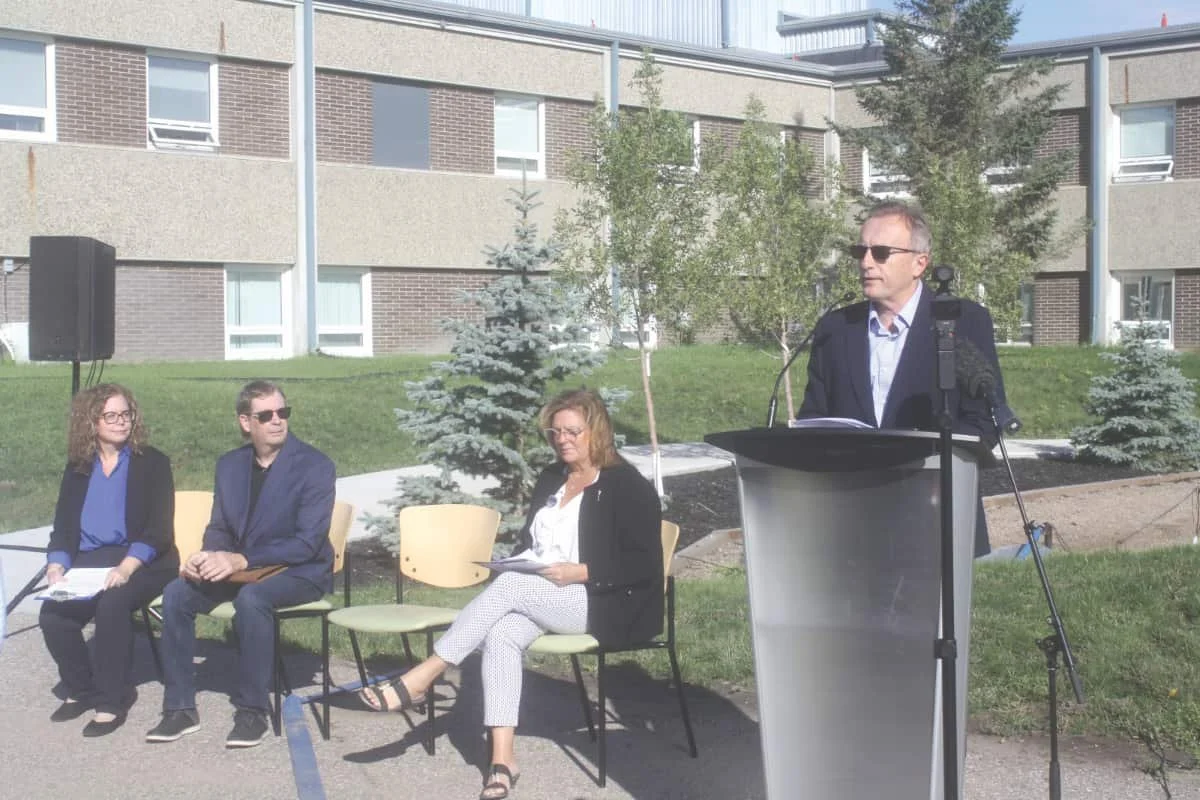
Local MLA Jim Reiter, the province’s finance minister, introduces Lori Carr, the remote and rural health minister, Mayor Trevor Hay and the Saskatchewan Health Authority’s Krista Barnett during the opening. Photo by Ian MacKay
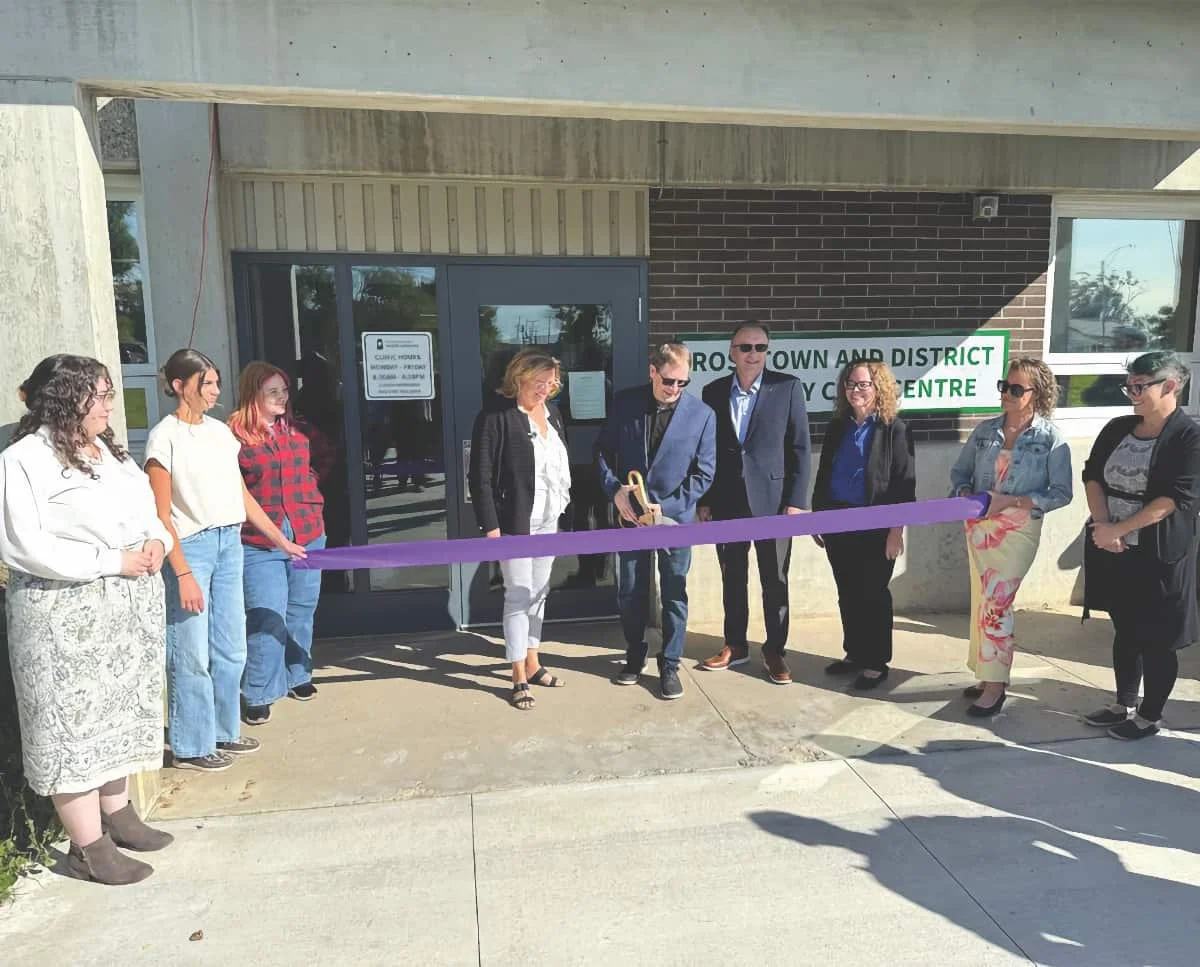
Mayor Trevor Hay wields a pair of scissors to cut a ribbon and officially open the Rosetown & District Primary Health Care Centre on Thursday morning, flanked by Lori Carr, the province’s rural and remote health minister to his right, Rosetown-Delisle MLA and provincial finance minister Jim Reiter to his left and Krista Barnett of the Saskatchewan Health Authority beside him. Saskatchewan Government photo
Under the team-based system, "doctors, nurses and support staff work together to provide that co-ordinated care," Lori Carr, whose provincial cabinet responsibilities include rural health, said in front of the new southeast entrance to the hospital on Thursday morning.
"That means that patients can connect with different health professionals based on their needs, while those providers work together to co-ordinate the care," Carr said. "This is especially important for those living with chronic or complex health needs, who may need support from multiple providers."
The approach ensures that patients receive "the right care, by the right provider, at the right time, and as close to home as possible," she promised. "Team-based care helps us make better use of skills and expertise of all of our health-care professionals."
The approach also includes expanding the "scope of practice," where appropriate, for nurse practitioners, pharmacists and paramedics, Carr said. Certain pharmacists officially added treating ear infections and strep throat to their job descriptions the next day.
"We're celebrating a milestone in the history of our community," said Mayor Trevor Hay. The clinic "represents years of collaboration, planning and determination," Hay said. "It reflects what can happen when local leadership, the government of Saskatchewan and the Saskatchewan Health Authority work together with a shared purpose.
"For many residents, this clinic will mean a real, tangible difference — seniors who have spent years arranging rides out of town for appointments, young families juggling work, child care and long drives for basic care, (and) people managing chronic conditions who rely on continuity and stability — this clinic brings all of that closer," Hay said.
It will also bring "greater convenience, better co-ordination and the peace of mind that comes from knowing high-quality care is available here, right here in Rosetown," he said.
The clinic represents "a healthier future" and "a commitment that rural Saskatchewan communities like ours have access to services we need to thrive," he said. "And it's a reminder that strong health-care systems are built not only in large centres but in towns like Rosetown, where people look out for one another, where families put down roots and where community truly means something."
He thanked the physicians, nurses and staff "who will bring the building to life every day" plus residents and "the provincial partners who recognized the importance of this project and helped make it possible."
Residents' "support, advocacy and belief in this community continue to drive progress" and the ceremony meant "opening doors to better care, better access and a brighter future," Hay said.
Krista Barnett of the health authority's southwest district expressed appreciation to attending officials. They included MLA Jim Reiter (Rosetown-Delisle), the finance minister and former health minister who served as master of ceremonies, as well as Carr, Hay, administrators Rachel Deobald of Mountain View and Samantha Herring of Pleasant View and Marriott, councillor Pierre Charpentier of St. Andrews, Wendy Brigham of the Alex Ositis Foundation, Judy Kahovec and Cindy Mullis of the Rosetown and District Health Centre Foundation and the health authority's Brenda Schwan.
"This new integrated clinic creates a single point of access for primary and specialized health services, making it easier for patients to navigate the health system and receive co-ordinated care closer to home," Schwan, the authority's vice-president for integrated rural health, said in a statement.
For town and district patients, "a common experience included visiting a physician at one of two downtown locations, then travelling to the hospital to receive scans or lab or other tests, then returning downtown for follow-up appointments," Barnett said.
The new operation has six doctors, a behavioural health consultant, a primary health nurse, a pharmacist and support staff, she said. Officials are trying to add a nurse practitioner "and, by the end of February, we expect two more physicians to begin practising here under (an) alternative payment plan model," she said.
"We envision this facility as being an integrated health service hub, a place where patients from Rosetown and the surrounding rural area can access a broad range of services through one central entry," Barnett said. "It will be supported by a co-ordinated care team and shared information systems and have easier access to the right care, at the right time and in the right place."