
Poland agreement opens door for Saskatchewan nuclear growth
By Brian Zinchuk
Premier Scott Moe signed a memorandum of understanding with Poland on June 16 aimed at expanding cooperation in nuclear energy development, workforce training, research, innovation and supply chain opportunities.
The agreement comes as both jurisdictions move forward with ambitious nuclear energy plans.
Saskatchewan has selected the GE Vernova-Hitachi BWRX-300 small modular reactor (SMR) as the preferred technology for its first two proposed reactors. Poland, meanwhile, is pursuing a much larger nuclear buildout, with plans for approximately 24 SMRs as well as several large-scale nuclear generating stations.
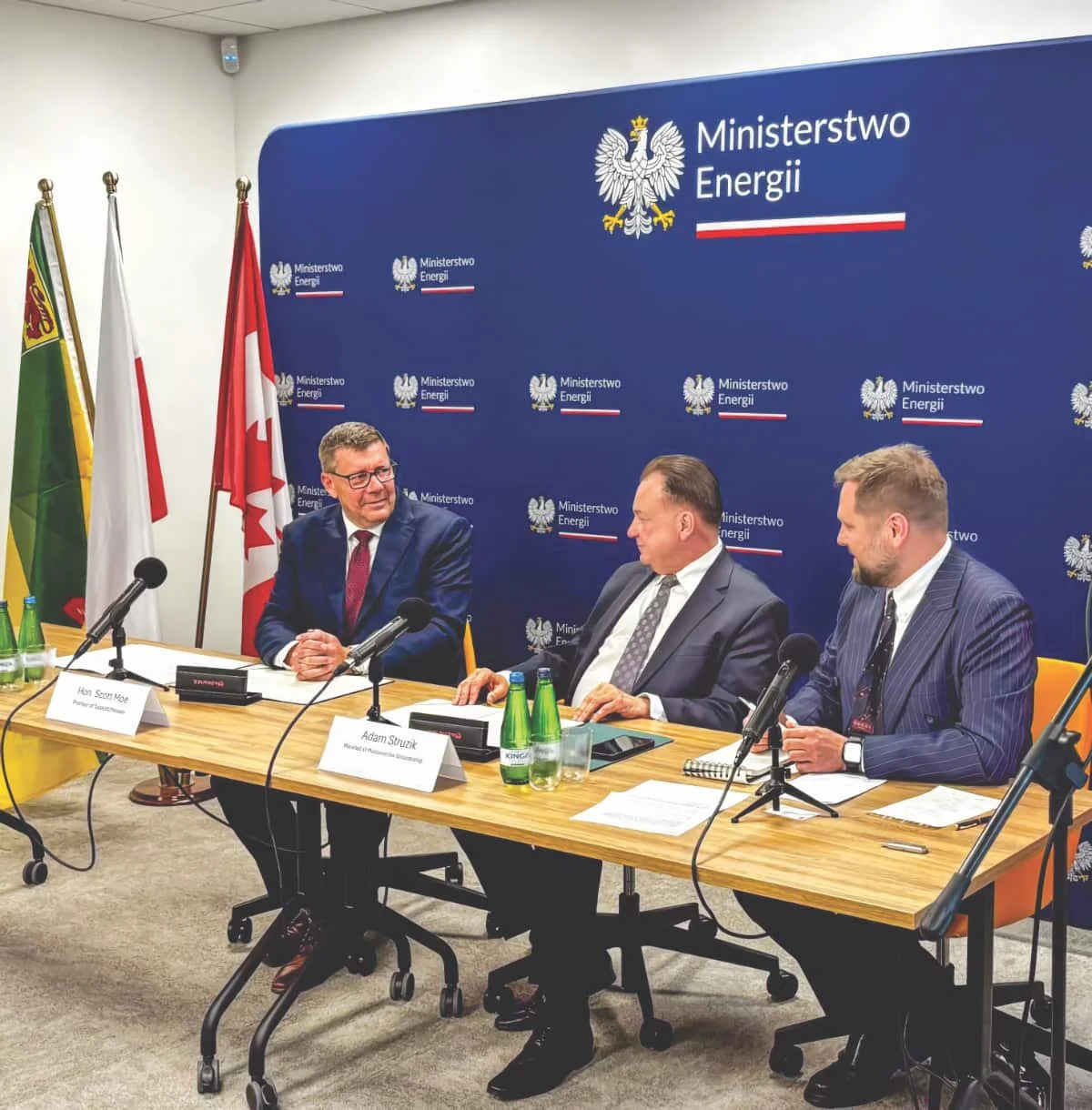
Nuclear partnership: Premier Scott Moe, left, meets with Adam Struzik, marshal of Poland’s Mazovian Voivodeship, during the signing of a memorandum of understanding on nuclear energy development in Poland on June 16. The agreement aims to strengthen collaboration in nuclear research, workforce development, innovation and supply chain opportunities as both jurisdictions advance plans for nuclear power generation. Photo courtesy Government of Saskatchewan.
Saskatchewan is also evaluating large nuclear reactors, including the Westinghouse AP1000. Poland is planning multiple AP1000 units, creating potential opportunities for Saskatchewan's uranium industry and nuclear supply chain.
“Saskatchewan is proud to partner with the government of Poland as we work together to strengthen energy security, support innovation and build the skilled workforce needed for the future,” Moe said. “This agreement reflects our shared commitment to meaningful collaboration in nuclear development, research, training and supply chain opportunities that will benefit both our economies for years to come.”
The province said the agreement recognizes the importance of cooperation on nuclear energy development and creates opportunities for future exchanges and partnerships between Saskatchewan and Poland.
“This is part of a broad effort to protect the environment and combat climate change and demonstrates the continued commitment of both regions to the energy transformation,” said Adam Struzik, marshal of Poland’s Mazovian Voivodeship.
“The goal is to develop human resources and market cooperation, including the creation of platforms for joint educational, scientific and professional collaboration, supporting research and innovation, and building an energy secure environment, with particular emphasis on nuclear energy. Here we agree that it is crucial to respond to the growing energy needs of regions and cities by strengthening research potential and developing the infrastructure of small modular reactors in Poland and Canada.”
The province noted Saskatchewan and Poland have strengthened their trade relationship in recent years. Saskatchewan exports to Poland increased from $2.2 million in 2021 to $79 million in 2025, a rise of more than 3,500 per cent.
Cameco president and CEO Tim Gitzel welcomed the agreement.
“We are pleased to see this agreement signed between Saskatchewan and Mazovian Voivodeship as both jurisdictions explore introducing clean, reliable nuclear energy,” Gitzel said.
“At Cameco, we demonstrate that nuclear is a global business that best serves people and communities through collaboration, knowledge sharing, trade relationships and supply chain opportunities. As a leading provider of uranium fuel and reactor technologies, we look forward to the opportunity to help support both jurisdictions as they pursue civil nuclear reactor programs.”
With some of the world's richest uranium deposits, Saskatchewan is positioning itself to play a significant role in supplying fuel for the growing global nuclear sector.
The memorandum of understanding was signed during Saskatchewan's trade and investment mission to the European Union. The delegation was scheduled to return on June 19. The mission, including the MOU signing, was supported by Saskatchewan's office in Germany.