
Human trafficking is not what you think, Kindersley audience told
By Joan Janzen
The Saskatchewan Health Authority hosted a human trafficking awareness event Thursday afternoon, August 27th, at the Norman Ritchie Centre in Kindersley. The event was held to help those attending understand, recognize, respond to and prevent human trafficking in their neighbourhoods.
Kendra Mazer gave a presentation on behalf of the Saskatoon-based organization Hope Restored. She said when people hear the words human trafficking, they immediately think of kidnapping; however, human trafficking is not what you think.
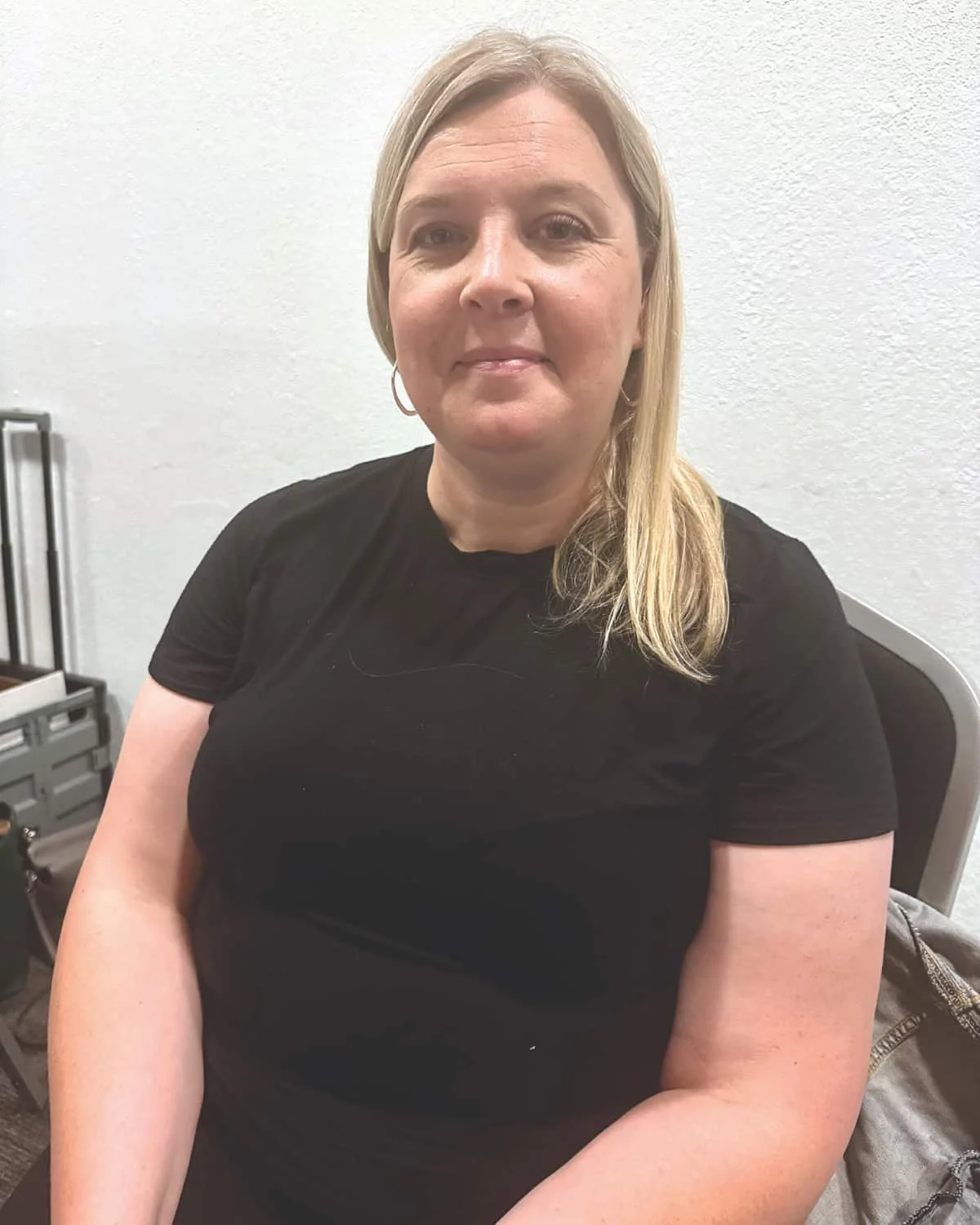
Know the signs. Kendra Mazer, executive director of the Saskatoon-based organization Hope Restored, spoke at a human trafficking awareness event in Kindersley on Thursday afternoon, August 27th. The event was held to help those attending understand, recognize, respond to and prevent human trafficking in their neighbourhoods. PHOTO BY JOAN JANZEN
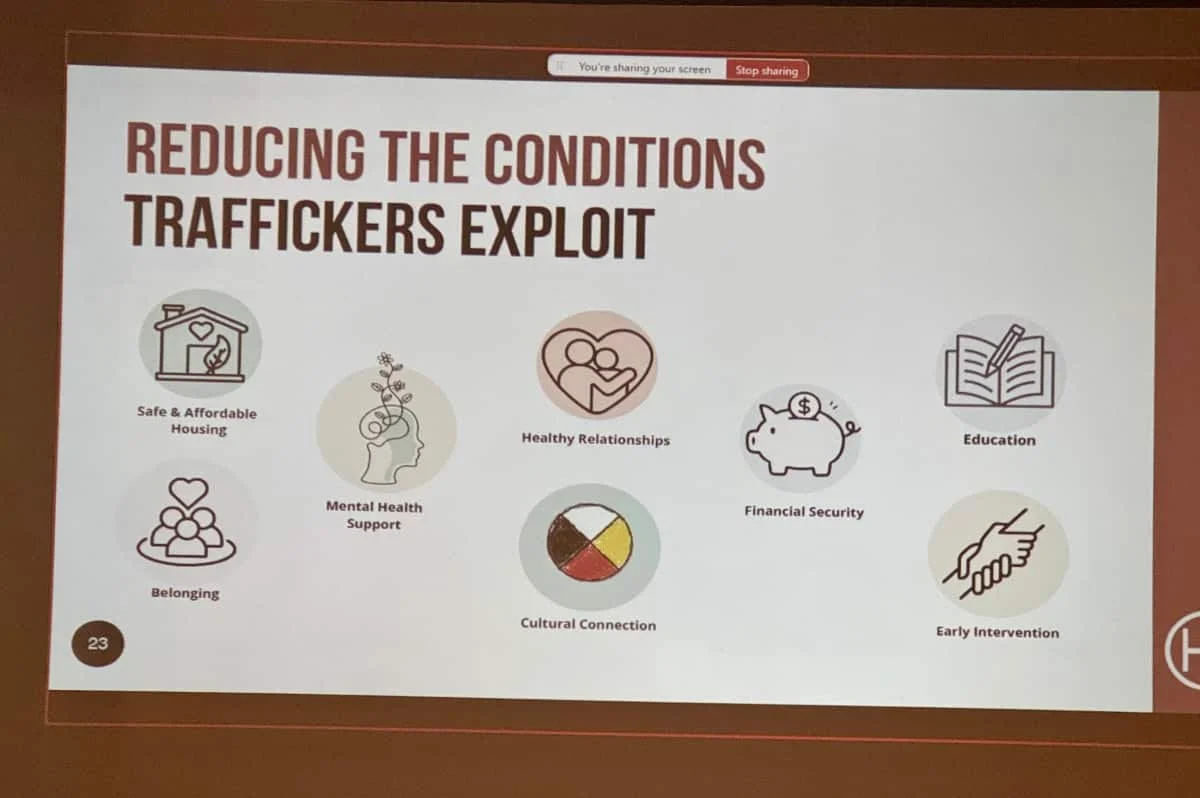
Prevention starts here. A slide from Kendra Mazer's presentation lists the conditions traffickers exploit, including housing, mental health support, belonging, education and early intervention. Mazer told the Kindersley audience that communities reduce exploitation by strengthening those supports. PHOTO BY JOAN JANZEN
Police-reported data is only able to capture incidents that come to their attention and isn't an accurate reflection of the number of cases that occur. Only twenty-three incidents were reported by police in Saskatchewan in 2024. Traffickers prey on vulnerable, needy females.
Traffickers sometimes begin by offering exactly what someone needs as the process of dependency and control unfolds.
"Control has many faces. The trafficker may look loving, but behind closed doors things may look very differently," she said.
They find their victims in schools, malls, shelters, airports, encampments and through online recruiting. She said since it's unlikely kids will stay off the internet, they need to be coached in critical thinking and develop healthy relationships and connections where they can ask for help.
Individuals who exhibit multiple tell-tale signs may be victims of trafficking. Losing important documents, having few personal belongings, being isolated from family and friends, having expensive gifts or unexplained injuries are a few of those signs.
Victims feel trapped because of fear, threats, addictions, shame, dependency and many more reasons. But if someone admits to being exploited, it's important to believe them and not judge them. However, do not confront a suspected trafficker.
"Let the victim know you're a safe person to talk to and stay connected," she suggested. You could offer to go for coffee or for a walk or go watch a movie, as a way to stay connected.
"We need to have options for people," Kendra said. "How do we get to a place where they feel safe leaving?"
We all have a role to play, Kendra concluded. Human trafficking thrives in isolation, however recovery grows through connection. When communities create safety, belonging and opportunity, we don't just respond to exploitation, we help prevent it.