
Environment Department turns to AI for earlier weather warnings
BY YOUR SOUTHWEST MEDIA GROUP
Officials promise that Canadians will learn about bad weather further in advance now that they’ve adopted artificial intelligence to help in their forecasts.
The hybrid forecasting system, which they’ve tested for more than a year, “combines the power of artificial intelligence (AI) with the strengths of traditional forecasting methods,” said an Environment Department backgrounder issued last week. Staff say it will improve public safety and emergency readiness and give residents “more time to prepare for high-impact weather.”
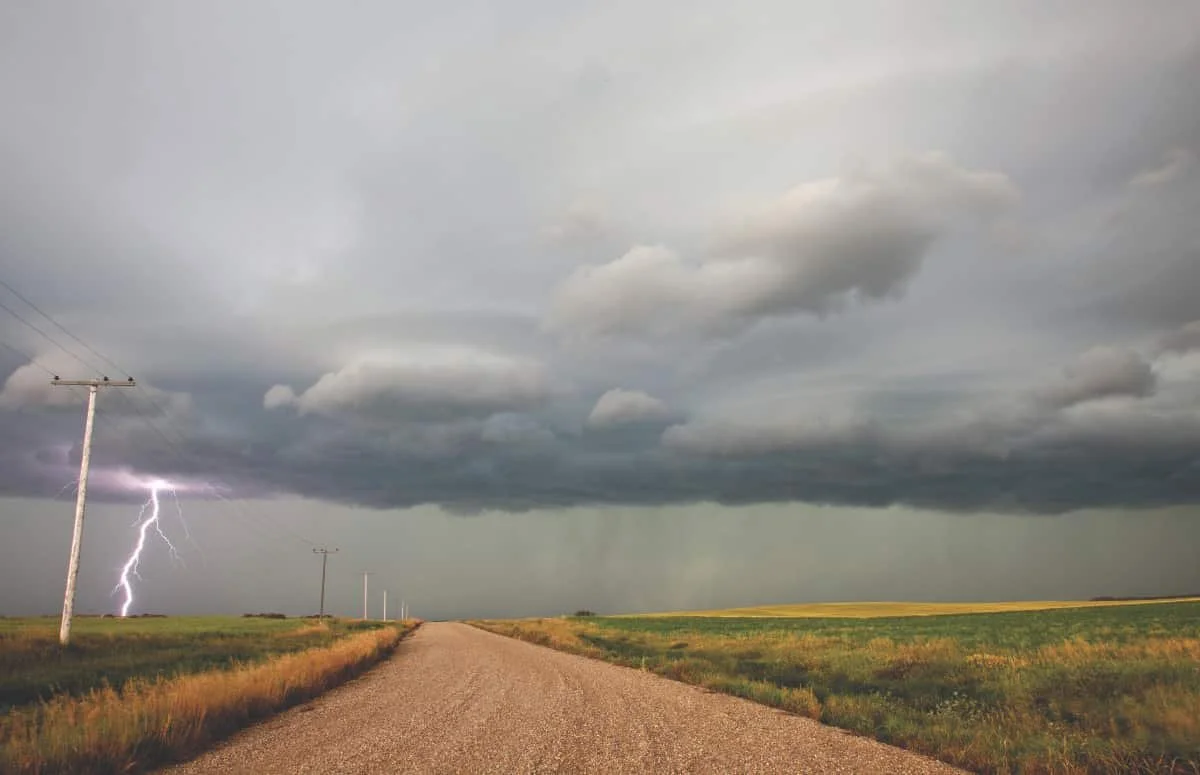
“Traditional weather forecasting is based on numerical weather prediction models,” the document said. “These models combine data from weather observations such as satellite data, weather balloons and radars from domestic and other sources.” Forecasters then simulated atmospheric changes, such as for temperature, wind and precipitation, to produce their forecasts in the past.
Department staff call their AI forecast model the Global Environmental eMuLator (GEML). It’s based on the opensource GraphCast model published by Google DeepMind.
Department scientists “developed innovative approaches to train and fine-tune GEML using historical weather data,” the document explained. Their research shows that such models “can predict large-scale weather patterns” and “can outperform traditional computer models with higher accuracy.”
But it’s not perfect, so “our scientists conceived of a hybrid system, known as ‘spectral nudging,’ that combines the strengths of AI models with our traditional models to improve predictability and accuracy,” it said.
Scientists used high-performance computing, operated by Shared Services Canada, that “combines enhanced computing capacity with AI capabilities to better support operations and advanced research and development” and tested it for over a year, the document said.
“Throughout this process, meteorologists closely monitored performance to ensure it produced reliable information for temperatures, precipitation and storms across Canada, at both large and small scales,” it said.