
Country schools stand as heritage sites on the prairie
By Joan Janzen
As another school year begins, we'll take a look at two of the many country schools standing as heritage sites on the prairie landscape. A three-room country school is located in the village of Fox Valley. In 1928, this structure featuring a cottage roof was built to accommodate the increasing number of students. On June 30, 1939, the school's first Grade 12 class graduated. Today it is a heritage site and has been used as a backdrop for wedding photos throughout the years.
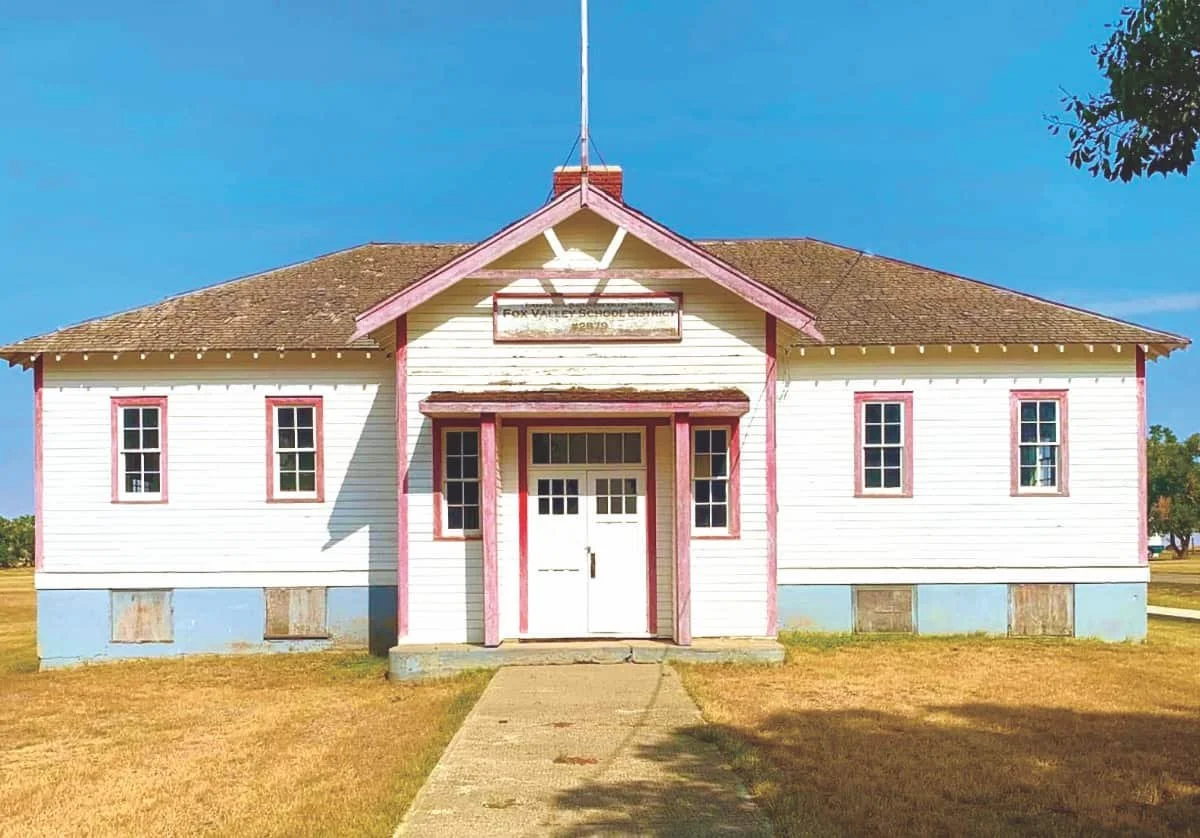
Still standing. This three-room school was built in 1928 and still stands in the village of Fox Valley, Sask. PHOTO COURTESY HISTORIC SASKATCHEWAN
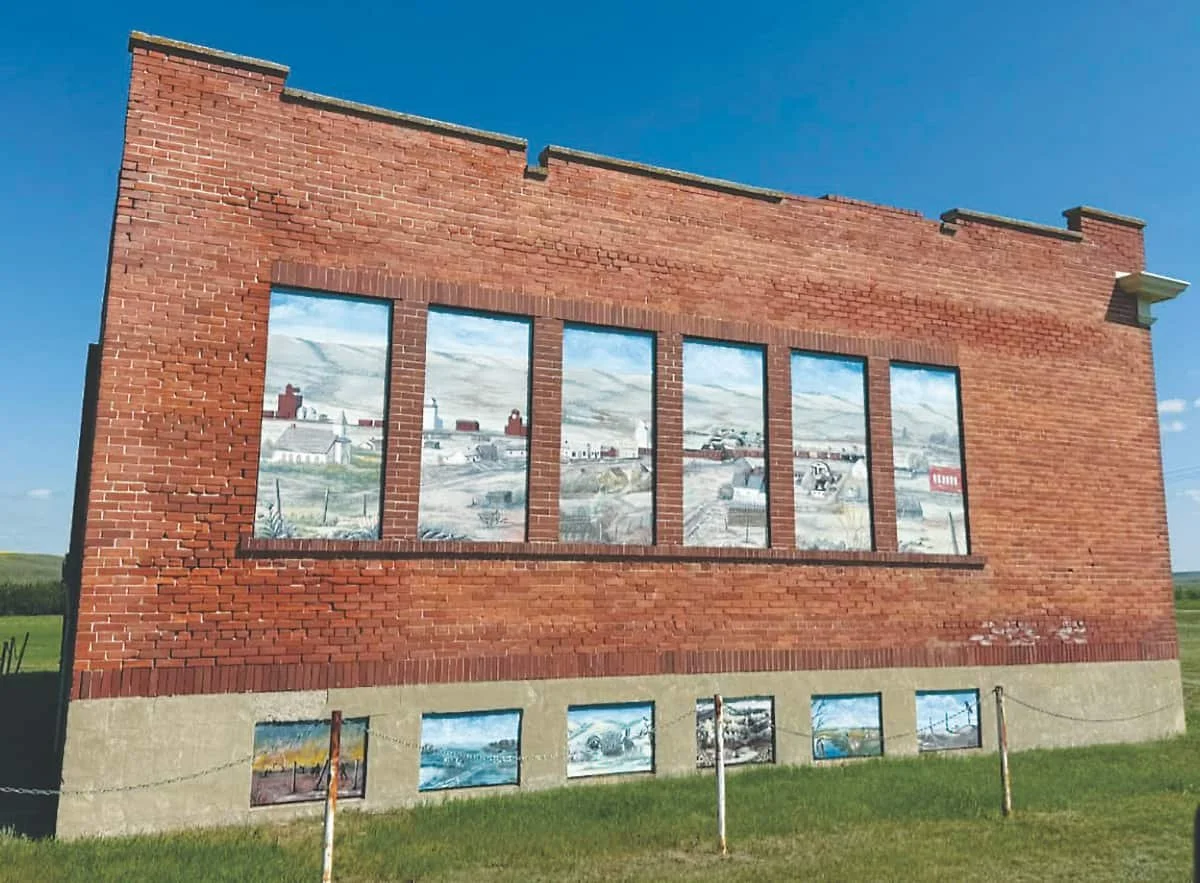
A century in six panels. Murals on the side of the Stranraer school trace the changes in seeding and harvest methods from 1905 to 2005, with smaller panels along the foundation. PHOTO COURTESY HISTORIC SASKATCHEWAN
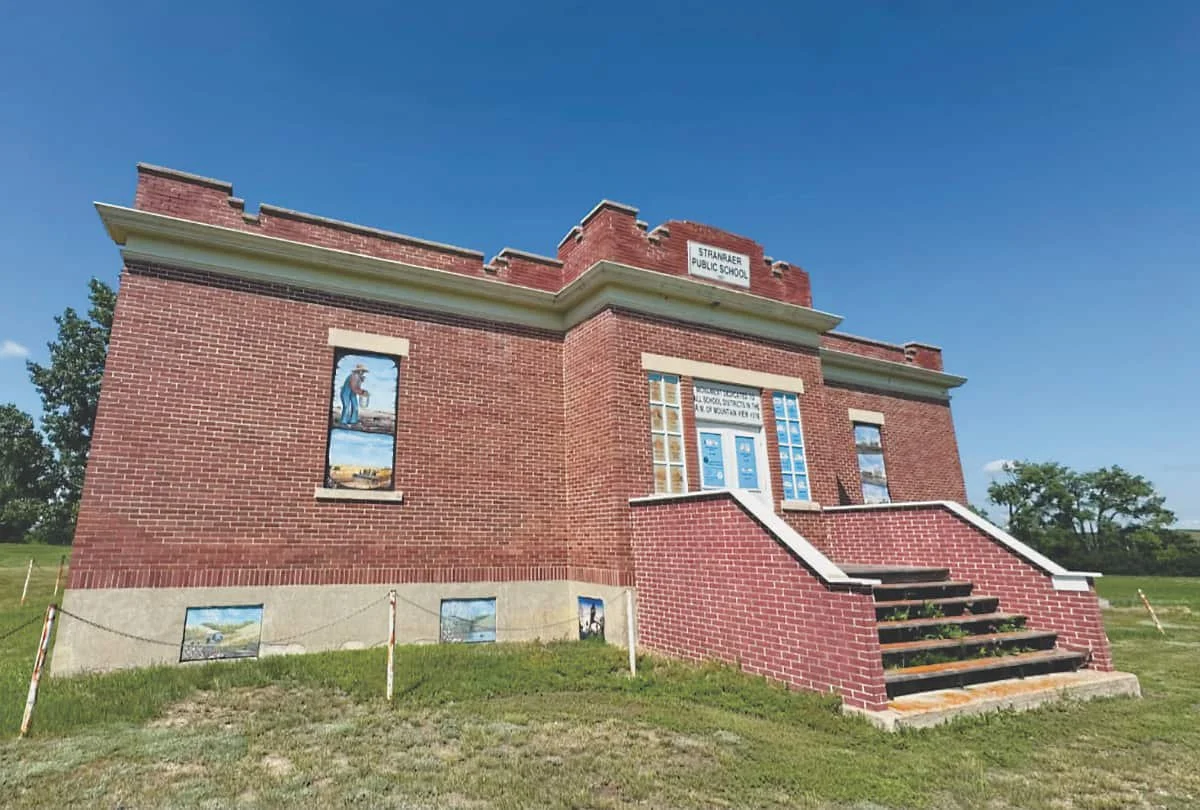
Painted history. Stranraer School is the only brick country school remaining between Kerrobert and Rosetown. The school's windows feature murals painted by local artists. PHOTO COURTESY HISTORIC SASKATCHEWAN
The second country school is an old brick building which remains standing in the community of Stranraer, located on the CPR line between Kerrobert and Rosetown. After the school closed, the majority of students went to the K to Grade 12 school in Plenty, and a few went to Rosetown.
In 2005, the school was slated to be demolished. Since it was the only remaining brick school between Kerrobert and Rosetown, the reeve of the R.M. of Mountain View was able to go through proper channels to have the school designated as a heritage site.
In March of 2005, the community approached Noni Burton, a well-known artist from the Plenty area, with the idea of painting murals on the boarded-up windows. The basement windows were painted by local artists Noni Burton, Lynn Bradley, Barb Bell, Karen Heit, Todd Bradley, Linda Varcoe, Jerry England and Kim Campbell. Murals were painted from a vantage point from west and east. Murals on the front and back of the school illustrate the progression of improvements and changes in seeding and harvest methods from 1905 to 2005. The 16 former school districts are acknowledged in the small panes on either side of the main doors, with the larger schools of Herschel and Stranraer being featured on the doors.
The dedication of the school monument took place during the R.M. Centennial Celebration in July of 2005. The murals effectively preserve both the history of the brick school and the surrounding community.