
Coleville's population quadrupled from 1951-1954
By Joan Janzen
COLEVILLE—In 1951 Coleville was a hamlet with a population of 80 people. That all changed when oil was discovered nearby and the population grew to 430 by 1954 and Coleville became a village. The village's assessments jumped from $165,000 to $280,000 with 75 new units being assessed in a two-year period.
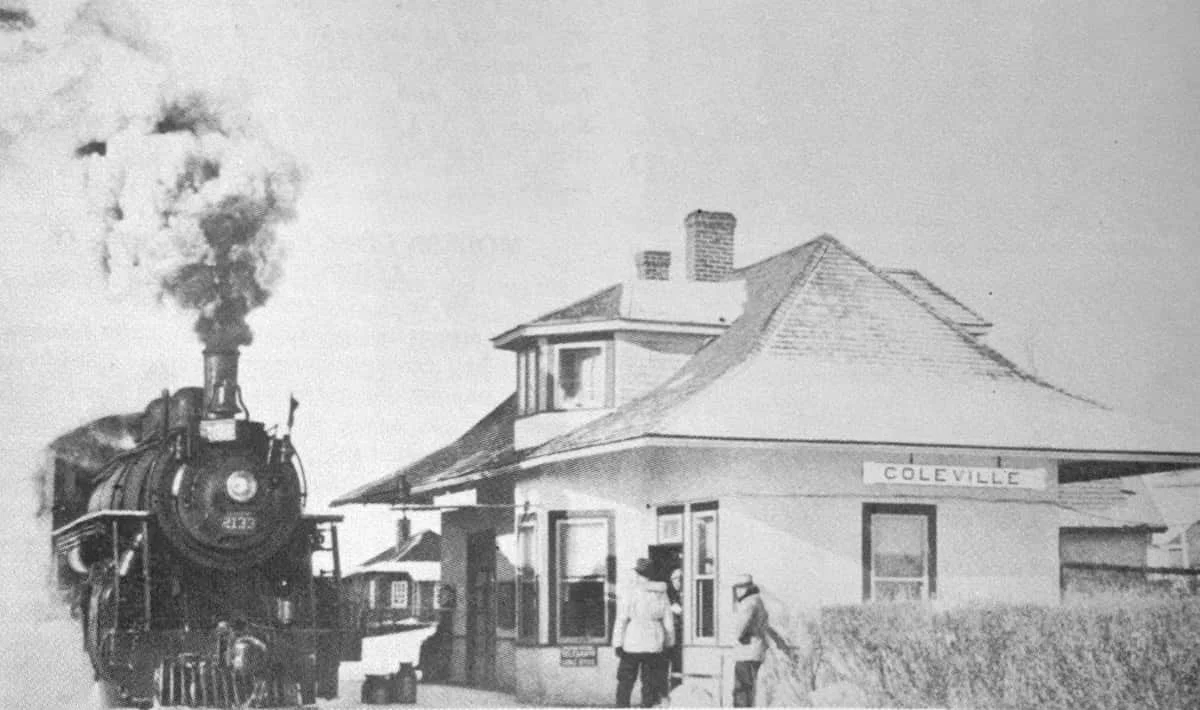
Following the beginning of Coleville’s oil boom in 1951, a refinery was built and in operation by March of 1953. The town that used to see two or three trains a week now had two or three trains of tank cars leaving each day. Photo Oxen to Oil history book
A refinery was built and in operation by March of 1953 with two or three trains of tank cars leaving each day, and 284 heavy crude oil wells drilled in the area. One of the surprising features of Coleville's oil production was the high proportion of successful wells being drilled.
New arrivals to Coleville planned to stay, building substantial homes and took an interest in the village's community life. At that time the Coleville hotel was built at an estimated cost of $150,000.
A 1954 article in the Star Phoenix reported the hotel's construction came to a halt in the spring of that year due to lack of funds. The Prince Charles Hotel was built to accommodate oil workers during the boom, and shares were offered at $100 per share.
The hotel sat idle for over a year until a Mr. Crawford purchased most of the shares at a reduced price. The hotel was completed in 1956 and the famous baseball player Don Stewart retired and took over the hotel, becoming its first manager. It contained office space, 21 guest rooms, a cafe and a bar. Over the years it contained a liquor board store, arcade, hair salon and a movie rental store.
As the village became a centre of industry in the 1950's, Mr. and Mrs. P.M. O'Bready acted as local bankers, cashing cheques for oil companies and their employees. After their passing the need for a bank became a necessity.
According to the history book Oxen to Oil, school enrolment increased with the influx of oil workers and their families. Many of those families came from Alberta along with their school-aged children. The old brick school was remodelled with basement play rooms used as classrooms until 1957 when the new Rossville School was built. It was named after Ross Farris who had been the school's janitor for 37 years.