
Book Review: Charged!: The Dangerous and Misguided Promise of the Electric Vehicle
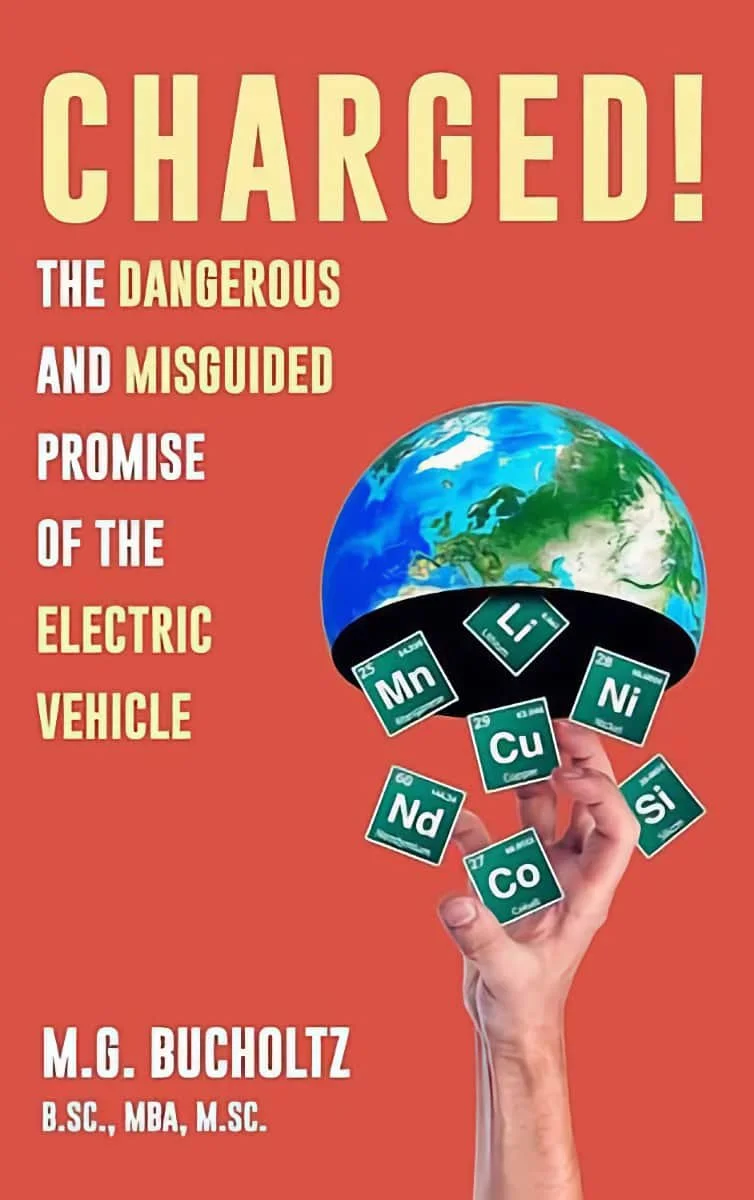
By M.G. Bucholtz
Published by Wood Dragon Books
Review by Toby A. Welch
I’ve always been wary about how so-called experts have pushed consumers to purchase electric vehicles over gas powered modes of transportation. Logically I can’t wrap my head around it. After all, running an electric vehicle takes electricity, a resource that requires energy to make. Just like gasoline and diesel take energy to get to the pump. Does electricity make more sense to power a vehicle? I never felt knowledgeable enough to make an informed decision about that. So when Charged hit my radar, I was thrilled for the opportunity to become more educated about electric vehicles. Should my next car be an electric one?
I dove into Charged with gusto, eager to learn everything I could on the topic. And Bucholtz is the perfect teacher. The Mossbank, Saskatchewan, resident is an engineer by trade and is clearly an expert on geopolitics, numerous areas of science, and future trends. But he didn’t just rely on his expertise to author Charged. There’s over twenty pages listing where Bucholtz sourced the information included in the book.
One of the many fantastic things that stood out to me about Charged was that it covered a tremendous amount of information while using simple to understand language. That is a skill I wish more writers had as it makes what could be a dry topic a lot more enjoyable to read. I give huge props to Bucholtz for pulling that off.
Charged covers so many issues that I’d never considered when I thought about electric cars. The batteries used in the vehicles is a massive subject with numerous pros and cons for each type. Bucholtz gets deep into all that. He explores how we get the electricity required to run the cars and the laws of thermodynamics, which is a vital component; it takes energy to make electrical energy. And history buffs will appreciate the chapters on how electric vehicles first came about through to how we ended up where we are today.
My favourite part of Charged was a brief blurb about a tour of the ethanol production facility in Unity, Saskatchewan. The facility efficiently makes ethanol from wheat twenty-four hours a day, seven days a week. Bucholtz then goes on to explore how the efficiency (or inefficiency) of ethanol production and the resulting carbon dioxide generation would impact whether ethanol is a good choice to power vehicles.
Charged definitely helped me decide if my next vehicle will be electric or gas. But I’m not going to share my opinion. Instead, I highly recommend you pick up a copy of Charged to make an informed decision for yourself as to whether an electric vehicle will be in your driveway one day.
THIS BOOK IS AVAILABLE AT YOUR LOCAL BOOKSTORE OR FROM WWW.SKBOOKS.COM