
80 years ago, Prairie farmers went on strike
Eighty years ago this month, approximately 60,000 farmers in Saskatchewan and Alberta joined a month-long strike, refusing to deliver their produce to market.
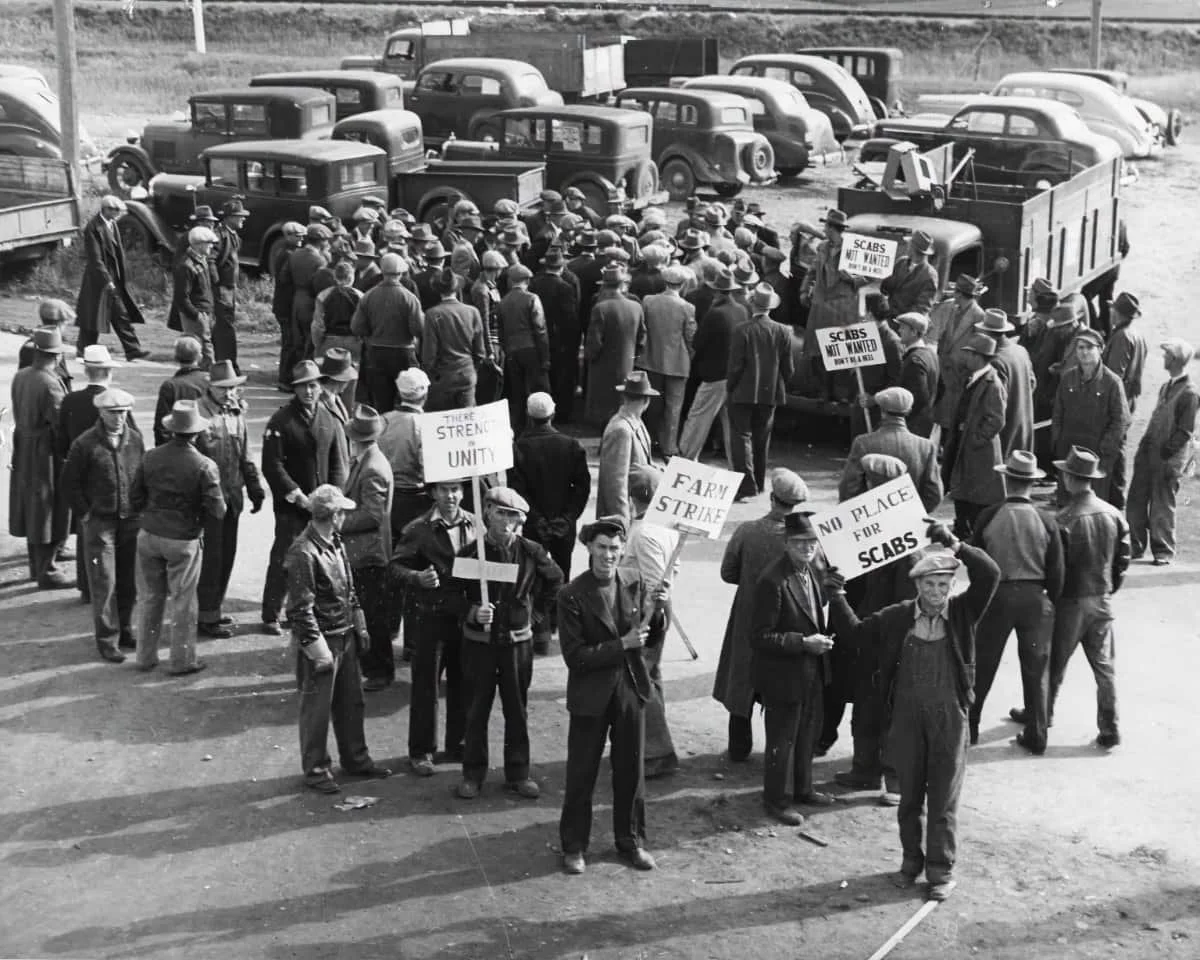
Farmers gather during the 1946 farm strike in Saskatchewan and Alberta. Beginning Sept. 6, approximately 60,000 farmers refused to deliver produce to market for 30 days as they pushed the federal government for parity pricing on agricultural products. Photo: Provincial Archives of Saskatchewan
According to the Provincial Archives of Saskatchewan, the strike began Sept. 6, 1946, and was led by the Saskatchewan section of the United Farmers of Canada and the Alberta Farmers Union.
For 30 days, participating farmers withheld produce from the market in an effort to pressure the federal government to introduce parity pricing for agricultural products.
Parity pricing was intended to tie the prices farmers received for their products to increases in production costs and income levels across Canada, providing producers with greater income stability despite fluctuations in market prices.
Representatives of the farm organizations met with federal government officials during the dispute, but little progress was reported. Economic conditions for agriculture eventually improved as Canada entered the post-war economic boom of the late 1940s.