
Pipeline Online: Shrinkflation strikes again
By Brian Zinchuk
I didn’t realize ice melter salt needed a padding of air like potato chips in a bag.
After all, it’s salt. So you should be able to pack it right full, devoid of air, right? After all, that’s what they do when you buy it in bags. But maybe not, at least when you buy it in buckets.
You see, Trudeau’s #shrinkflation remains at work.
A few days ago I opened a new bucket of Alaskan ice melter salt and wondered why it was four or five inches from the top. (I measured – it was 4.5 inches)
Then it became clear to me. This year’s bucket is 13.5 kg and last year’s, seen below, was 15 kg, for same price, as near as I can recall.
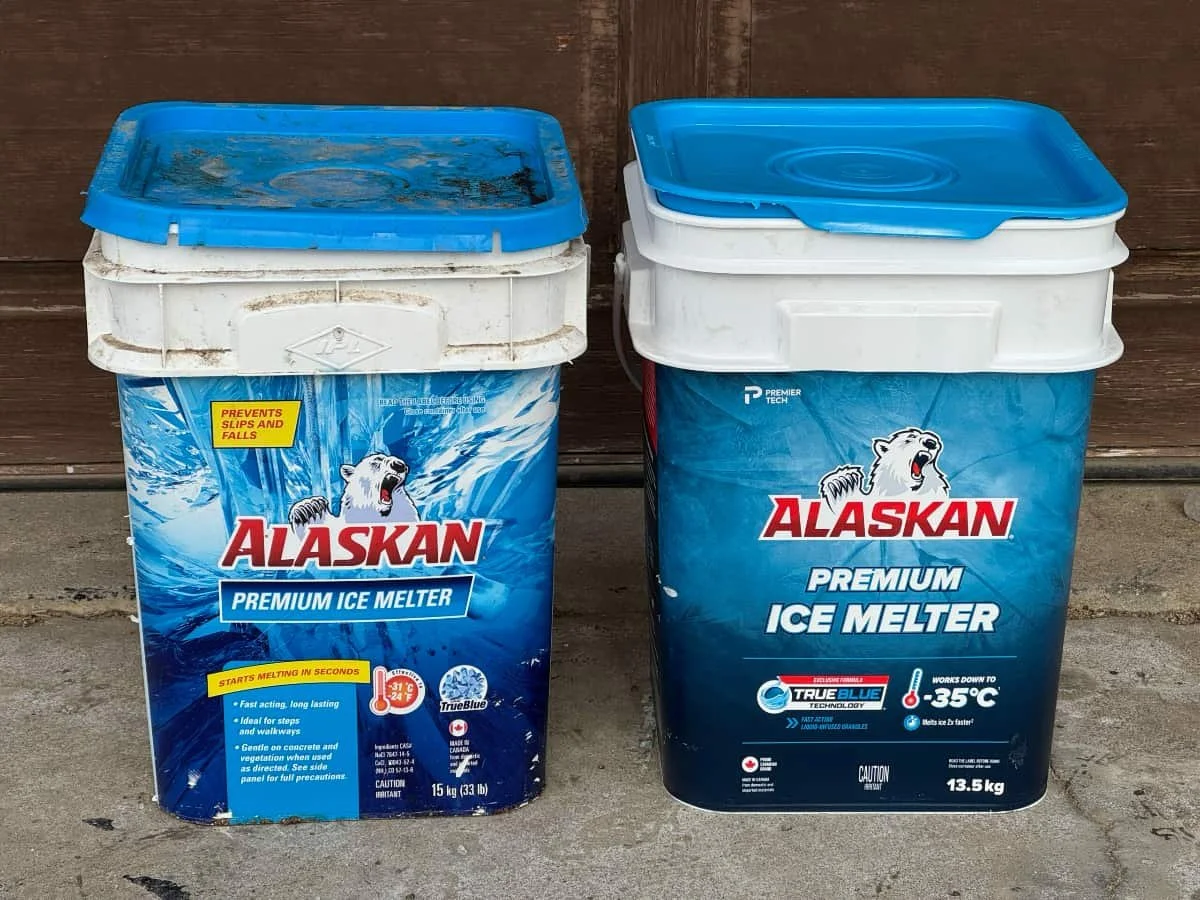
One of these jugs is not like the other. On the left – last year’s ice melter, with 15 kg of salt. On the right – this year’s, with 13.5 kg – a 10 per cent reduction. Photo by Brian Zinchuk
So when you put this year’s bucket beside last year’s bucket, you get 10 per cent less by weight. And when you measure the internal height of the bucket – 13 inches – you find that one third of that – 4.5 inches, as shown by my triangle, is air.
Now, Alaskan could have shrunken the size of its buckets and saved themselves a lot of shipping costs by reducing the volume by a third. But instead, they are keeping up appearances by shortchanging the customer, and hoping they don’t notice.
Such is the pattern of “shrinkflation.” Sell less product for the same price and hope the customer doesn’t notice and get choked about it.
Two days earlier I stopped at the local Co-op. There, near the front door was a display of pop, from Pepsi and Coke. Pepsi had it’s usual 24 packs of cans, known in this country as a “2-4” when referring to beer, at least. But low and behold, there’s a new package for the Coke – a “2-0.” Twenty cans in a case instead of 24. And I didn’t notice an appreciable reduction in price.
I bought $215 of groceries and only used the top basket in the No Frills cart.
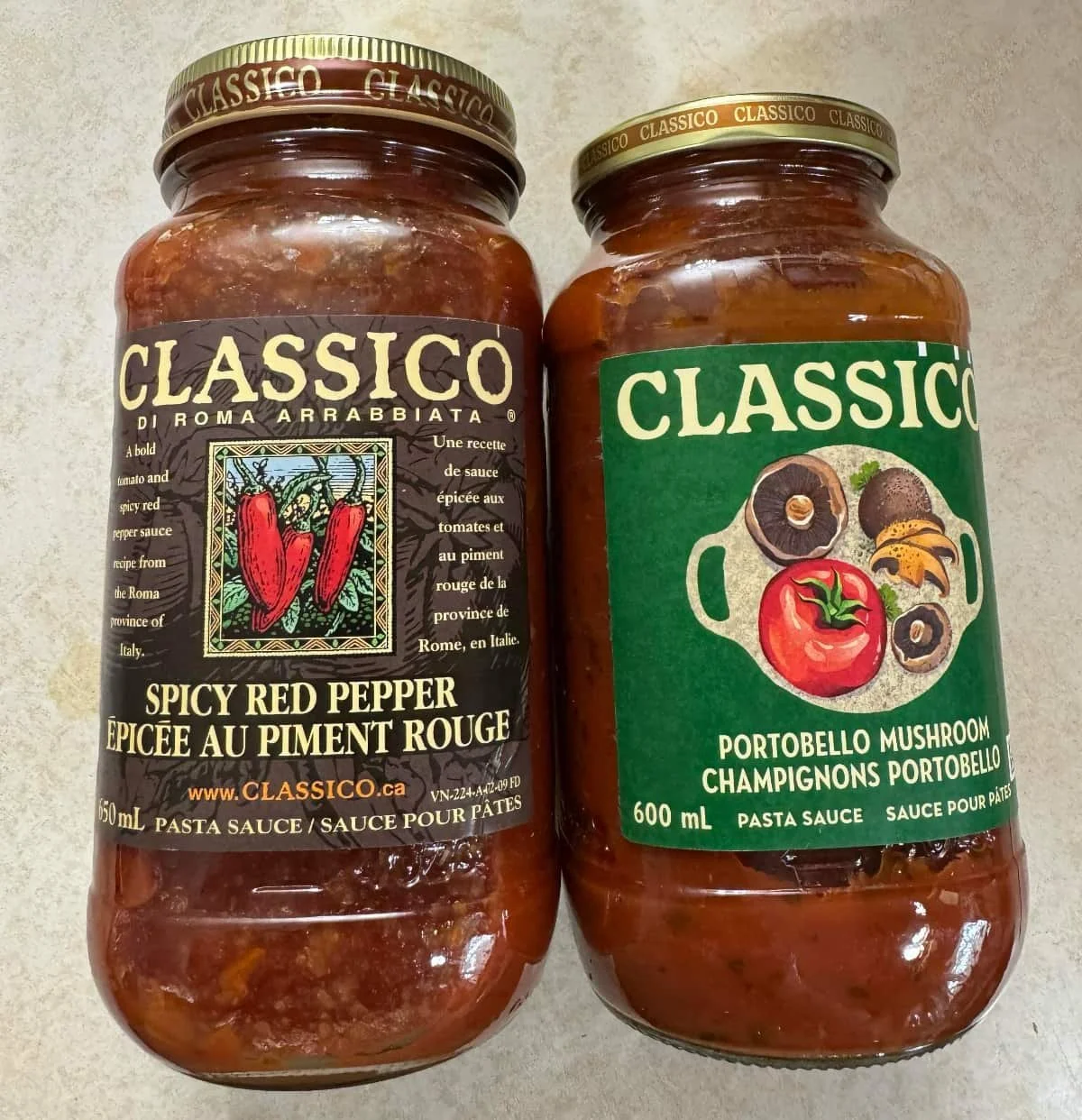
In April, 2025, I discovered this:
On the left, 650 mL Classico pasta sauce purchased a month previous. On the right, 600 mL purchased that day. The new purchase was $5.29, for what used to consistently be around $4 a few years ago and often on sale for $2. I immediately noticed the change in shape because I like to keep these mason jars to use for water glasses. Welcome to 2025 Canada. Maybe they’ll do another round of shrinking bacon packaging next? You know, when a pound of bacon (454 grams) became 375 grams?
Shrinkflation is the son of inflation.
Inflation is the thief that makes everyone poorer. Trudeau’s inflationary monetary policy flooded the economy with dollars out of thin air, and his enormous budget deficits, including before and after the COVID-19 pandemic, only served to worsen things.
And since companies are loathe to increase prices, they are instead providing less product for the same price.
I absolutely do not agree with government published inflation rates. According to Statistics Canada, the November annual inflation rate was 2.2 per cent. And for 2024, it was 2.4 per cent. Indeed, here’s their chart, found here:
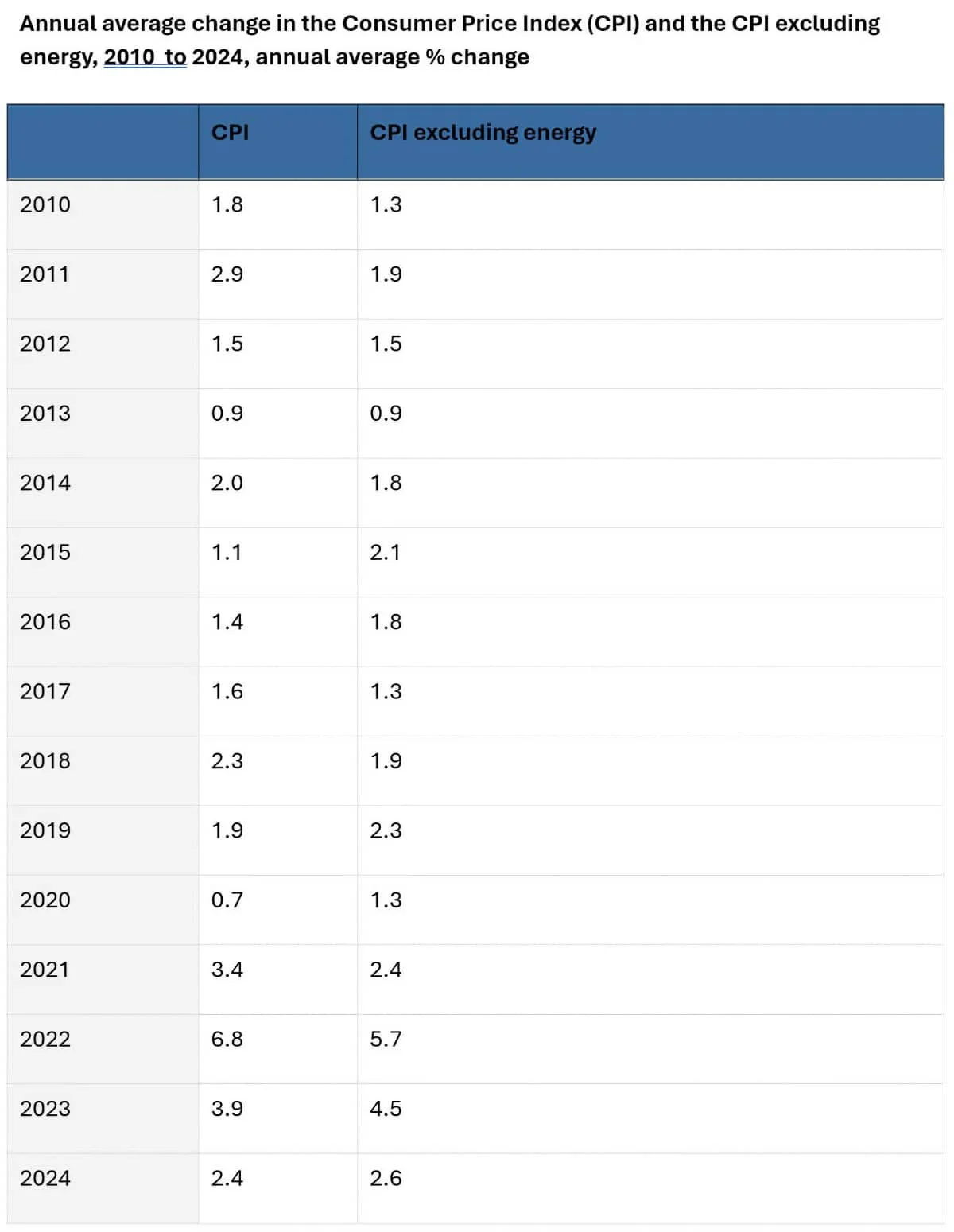
I did a little math. Using Jan. 1, 2020 as a starting point, and compounding the Consumer Price Index inflation rate, prices should have gone up 20.9 per cent by the end of November, 2025.
That might be what Ottawa says, but from everything I’ve seen, food prices are up more like 40 per cent in that time period. So I don’t trust Ottawa’s numbers one bit. I trust my worn out debit card, and what my bank statement tells me.
So now that we’ve had a renowned banker for a prime minister since Trudeau’s departure, what have we seen to combat inflation? Oh, right, another massive budget deficit.
Expect more shrinkflation in 2026, and pony up the bucks to compensate.
Brian Zinchuk is editor and owner of Pipeline Online. He can be reached at brian.zinchuk@pipelineonline.ca.