
Pipeline Online: SaskPower and International Brotherhood of Electrical Workers reach contract deal
By Brian Zinchuk
REGINA – SaskPower and the International Brotherhood of Electrical Workers (IBEW) Local 2067 have reached a new collective bargaining agreement.
Minister Responsible for SaskPower Jeremy Harrison said, “On behalf of the Government of Saskatchewan, I would like to personally thank the leadership of IBEW Local 2067 for the professionalism and good faith they demonstrated throughout the collective bargaining process. Our government has greatly valued the working relationships we share. The best agreements are reached at the bargaining table, and this outcome is a credit to their leadership.
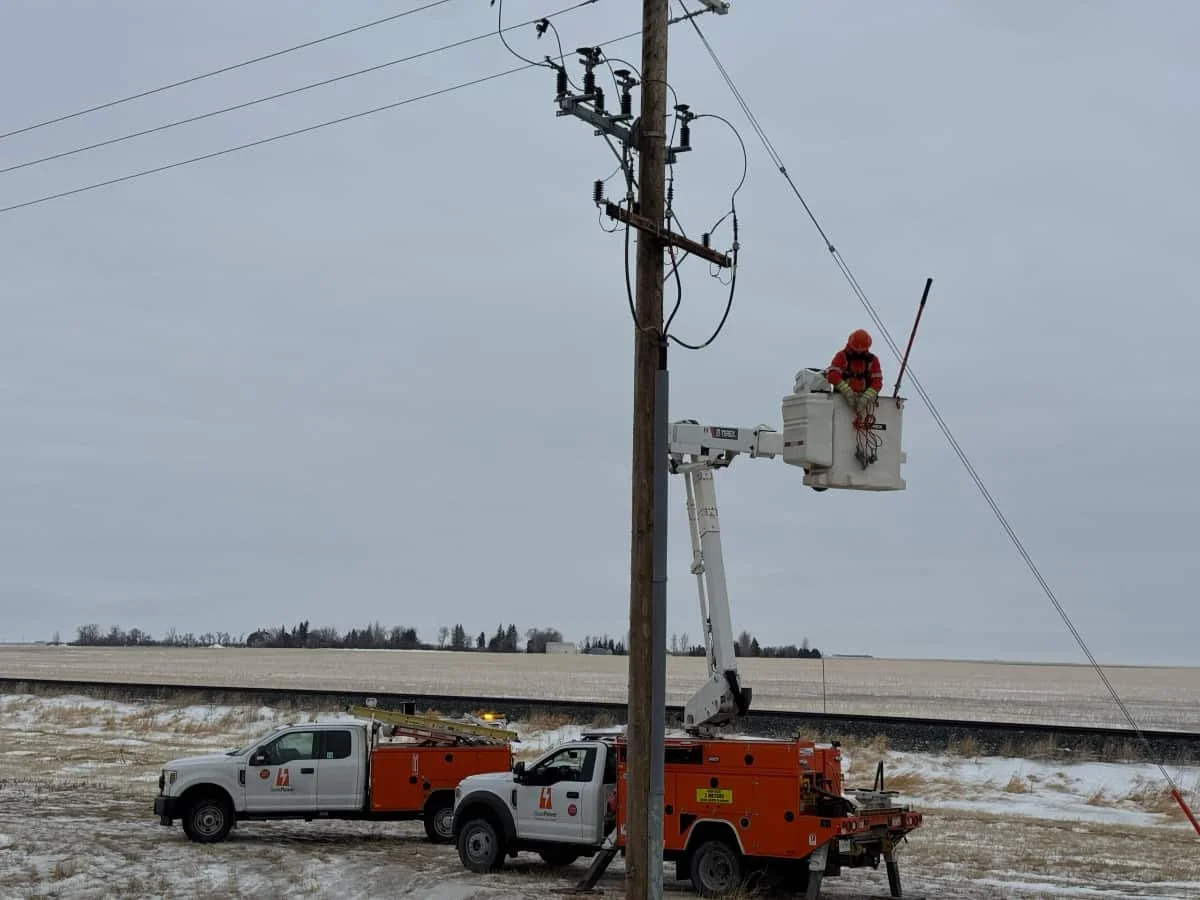
“I would also like to express my deep respect for the employees of SaskPower. We see their remarkable commitment and dedication demonstrated every day. In the most difficult and challenging of circumstances they are the ones on the ground working to keep the power on for Saskatchewan citizens. This agreement provides certainty for those employees and supports a strong, bright future for SaskPower.”
The new three-year agreement is retroactive to Jan. 1, 2026, and includes general wage increases of 2 per cent in each year of the agreement.
The previous agreement expired Dec. 31, 2025.
IBEW members approved a tentative agreement during a province-wide vote. The agreement was also approved by SaskPower’s Executive and Board of Directors.
Members of the IBEW Local 2067 make up 45 per cent of SaskPower’s workforce, according to the Crown corporation. They provide front-line operation and maintenance of SaskPower’s transmission, distribution, and generation functions. “IBEW employees also play an important role in planning, logistics, and support functions across SaskPower,” the company said in a release.
The remaining 55 per cent of SaskPower’s workforce are either Unifor members or out-of-scope.
Impact
The agreement comes at a time when the future of hundreds IBEW workers’ jobs was in doubt, as federal regulations require the shutdown of conventional coal-fired power generation by Dec. 31, 2029, one year after the end of this new contract. But under Harrison’s ministry, SaskPower will be rebuilding the coal fleet and operating it for many years to come as a bridge to nuclear power generation. It will take many years to get sufficient nuclear power online to replace coal, and it can be expected that much of the SaskPower staff working in coal generation will eventually transition to nuclear.
But if the SaskParty government had not made this move, the employees of three coal-fired power plants would have all but certainly been downsized unless replacement generation was built on a crash program over the next three years, five months and 14 days.
The New Democratic Party has said it wished to phase out coal “as practical.”