
LNG Canada ships first cargo, making Canada a global player
BY BRIAN ZINCHUK
KITIMAT – A very long time in coming, LNG Canada announced late on June 30 it has shipped its first cargo of liquified natural gas (LNG). That path took many years, and involved protests blocking the key pipeline, TC Energy’s Coastal GasLink, where workers were terrorized and equipment was destroyed. It put LNG on the Canadian political landscape, with proponents bemoaning the fact over a dozen such projects were in the works at one point, but this is the only one to cross the finish line, years after the U.S. built an LNG export capacity from nothing and now leads the world in LNG exports.
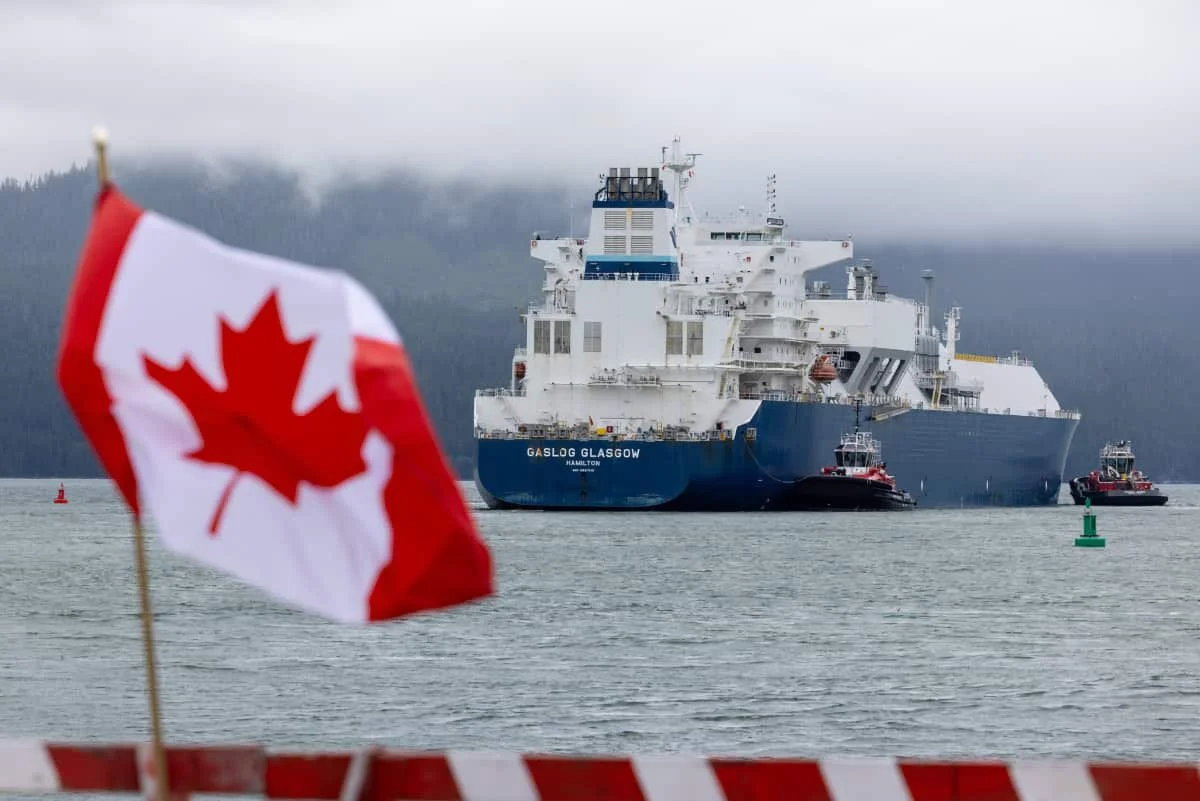
The first ship was LNG carrier GasLog Glasgow. According to MarineTraffic.com, the ship set sail from Kitimat to Incheon, South Korea, where it is expected to dock on July 20. That also shows there is, indeed, a market for Canadian natural gas in the Far East.
As of 9:30 p.m. Saskatchewan time, the ship was still within sight of Kitimat, travelling down the Douglas Channel. Two hours later, it was halfway down the Douglas Channel.
The Coastal GasLink pipeline and the usage of the Douglas Channel are significant, in that the pipeline passed through the very same Great Bear Rainforest that former Prime Minister Justin Trudeau declared was “no place” for a crude oil pipeline when he cancelled the Enbridge Northern Gateway Pipeline. And the waters currently have an oil tanker ban, as per federal Bill C-48. So natural gas can flow through that rainforest, and be shipped through those waters, but oil cannot.
Impact on Saskatchewan
First of all, no Saskatchewan-produced natural gas will find its way onto an LNG tanker at Kitimat. Saskatchewan has drilled only approximately 10 gas wells in the last decade, and it would be no exaggeration to say Alberta drilled that number by noon, today. Except for associated gas production of the natural gas that comes up with oil, most of the gas used in Saskatchewan now comes from Alberta.
According to SaskEnergy, Saskatchewan has been a net importer of natural gas since 2009, and is now importing around three quarters of the province’s gas needs from Alberta. In other words, we use all that we have, and then some.
The key question now is what will the impact be on Canadian natural gas prices? On June 29, AECO’s gas price was listed at 75 cents per gigajoule, according to GasAlberta.com. On both June 26 and June 25, AECO gas prices hardly registerd at all, just pennies, if that.
But that might be the end of worthless gas. AECO futures pricing shows prices expected to go up to the $2.75 to $3.75 per gigajoule range, and staying there, for nearly all of the next four years. If that plays out, could impact of gas prices for Saskatchewan consumers over time (SaskEnergy’s current residential commodity rate is $3.20 per gigajoule, since Oct. 1, 2023)
And it could also mean higher electrical rates for SaskPower customers, as Saskatchewan increases its natural gas-fired power generation with the addition of the Great Plains Power Station at Moose Jaw in late 2024 and Aspen Power Station near Lanigan in the 2027-28 range. If those futures prices hold, not only will SaskPower be paying more for gas, but it will be using considerably more natural gas, as well. SaskPower’s annual report, released in late June, noted the company’s weighted average hedged price was $3.15 per gigajoule for one year, and $3.11 for 2 to 5 years. The weighted average forward market price per gigajoule is $2.80 per gigajoule for one year, and $3.06 for 2 to five years.
Press release
But now that LNG Canada now in place, and here’s what the the company release had to say:
“LNG Canada has successfully loaded a first cargo of liquefied natural gas that is now destined for global markets, marking the start of operations at Canada’s first large-scale LNG export facility,” the company said in a press release.
The new LNG Canada export facility is located in Kitimat, British Columbia, in the traditional territory of the Haisla Nation. It is a long-life asset that will initially export LNG from two processing units or “trains” with a total capacity of 14 million tonnes per annum (mtpa).
“Today is a historic moment for LNG Canada and our five joint venture participants (JVPs), Haisla Nation, the District of Kitimat, British Columbia and all of Canada,” said Chris Cooper, LNG Canada President and CEO. “We began with a clear vision: To work side-by-side with First Nations and local communities as the catalyst for a thriving new energy sector in Canada, and to set a new standard for safe and responsible LNG production. As world events continue to demonstrate, a reliable supply of responsibly produced energy should never be taken for granted. We’re proud to be part of the effort to help Canada diversify its export markets and to deliver lower carbon energy to the world, for many decades to come.”
On making its final investment decision in October 2018, LNG Canada agreed to meet the Government of British Columbia’s conditions for LNG development in the province, to provide jobs, training opportunities and additional benefits to residents.
Some of the benefits LNG Canada has delivered to British Columbians and Canadians over the span of construction include:
More than 50,000 Canadians have directly contributed to building LNG Canada Phase 1. The connecting Coastal GasLink pipeline employed more than 25,000 Canadians. In operations, more than 300 full-time, permanent LNG Canada jobs have been created.
The cumulative value of LNG Canada’s contracts and subcontracts to local, Indigenous and other businesses in B.C. to date has exceeded CAD$5.8 billion; this includes more than CAD$4.9 billion to Indigenous-owned and local area businesses. It includes a CAD$500 million contract with HaiSea Marine, a joint venture between the Haisla Nation and North Vancouver-based Seaspan providing harbour and escort tugboat services to LNG Canada with its innovative fleet of battery-powered and low emissions vessels.
LNG Canada has to date invested more than CAD$10 million in workforce development programs—meaningful trades training and development programs designed to increase the participation of local area residents, Indigenous communities and British Columbians in trades and construction-related activities including but not limited to the LNG Canada project.
We have also contributed more than CAD$13 million to programs and equipment benefiting Kitimat, Terrace and First Nations communities, and enabled and supported the addition of new long-term housing in the Kitimat and Terrace region.
LNG Canada and its JVPs continue to explore pathways for a potential Phase 2 expansion, which may include the construction of two additional LNG trains, resulting in a total plant capacity of 28 mtpa.
Each LNG Canada joint venture participant will provide its own natural gas supply and individually offtake and market their respective share of liquified natural gas from LNG Canada, starting today.