
Kovels Antiques & Collecting: Venetian Glass
By Terry and Kim Kovel
Venetian Glass
Venetian glass has been prized since the 13th century, but it has never been stuck in the past. The Venini glass factory in Murano has been at the forefront of modern design since it was founded in 1921. It also brought in talent from other parts of Europe.
In 1936, Paolo Venini hired the company's first freelance designer, Tyra Lundgren. She was also the first woman to design for the company. Like many modern designers, Lundgren worked in several media, including ceramics and textiles.
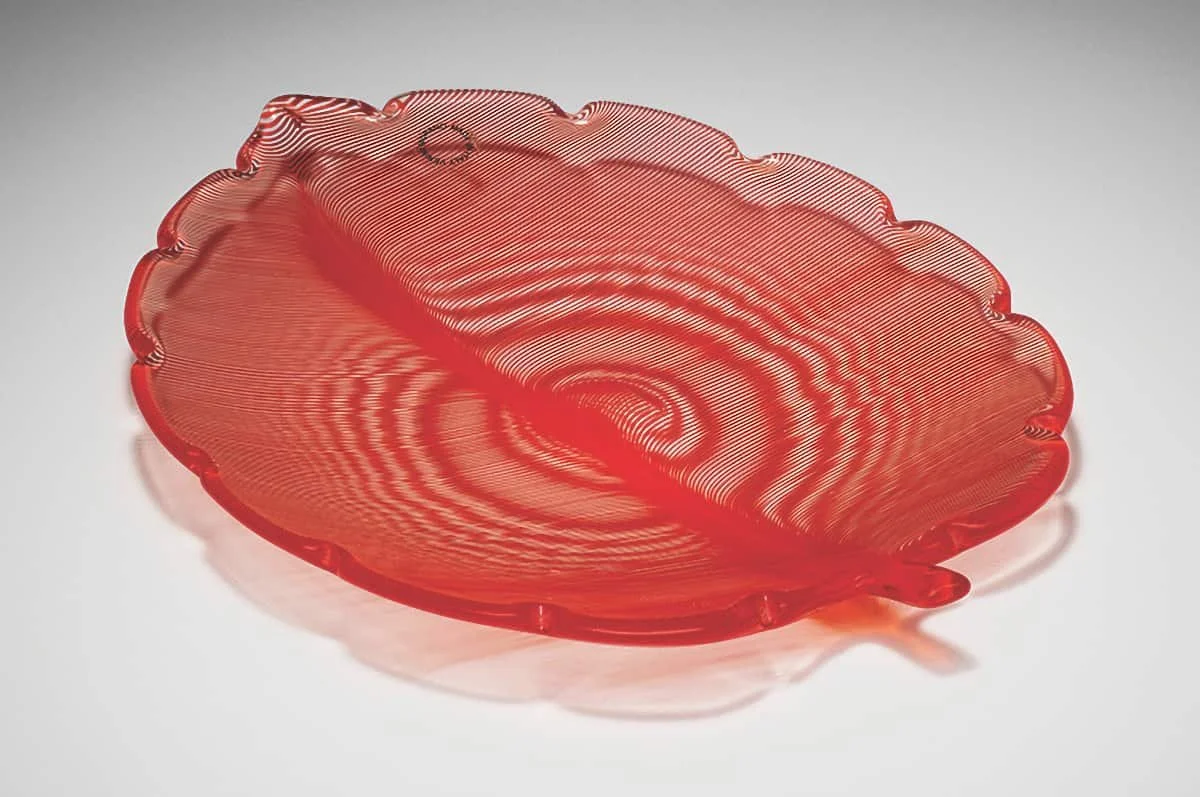
Venetian glass factories brought modern style and international influence to their products. This leaf-shaped bowl made by Venini was the work of Swedish designer Tyra Lungren. PHOTO CREDIT: Wright
By the time Paolo Venini met her, she had years of experience designing glassware for major companies. She worked at the famous Moser factory in Karlsbad, known for its heavily enameled pieces and later experimental glass, in the 1920s.
Her designs for Venini rendered forms from the natural world, like birds, fish, leaves and flowers, in the clean, abstract lines of modernism. They are some of her most enduring works. This leaf-shaped dish by Venini, which sold for $756 at a Wright auction, was made in 1995 from a design Lundgren created in 1938.
Q: My brass spyglass has been in my family for years, and I was wondering if there was anything you might be able to tell me about it. If there is a way you might tell me what it would be worth, I would appreciate it. There is a small dent on the end cap.
A: Brass spyglasses were made throughout the 19th century and used for surveying, for nautical purposes and by hobbyists. Most follow similar designs, with three or four draws and a wood or leather grip. Some are marked with the maker's name on the end cap or eyepiece. It is extremely difficult to identify the maker of an unmarked spyglass. There were many makers throughout England, France and the U.S. Brass spyglasses sell for about $150 to $300 at auctions.
The dent on yours will probably not affect the value unless it affects its function. Most antique spyglasses and telescopes show signs of wear and age. For more information, you may want to contact a collector's club like the Antique Telescope Society (antiquetelescopesociety.org) or a science museum in your area. Your library may have books on the history of telescopes or collecting scientific instruments.
TIP: Look through the wrong end of a telescope you plan to buy. If it can be focused, all the parts are there.
CURRENT PRICES
Pottery, midcentury, bowl, cabbage, fluted sides, textured exterior, red to mottled green, bright yellow interior, signed, dated, RAK, 1970, 5 x 13 inches, $75.
Sports, snooker, scoreboard, mahogany, walnut, shaped top, gilt urn finial, three mirrors, sliding markers, Victorian, 27 1/2 x 38 inches, $255.
Teddy bear, Shuco, panda, mohair, black and white, yes/no, glass eyes, stitched nose, 13 inches, $595.
Furniture, chest, painted, blanket, painted, sailor on shore, mermaids, on stand, green paint, door, shaped base, signed, Martha Cahoon, 13 1/2 x 29 1/2 x 18 inches, $1,455.
For more collecting news, tips and resources, visit www.Kovels.com
(c) 2026 King Features Synd., Inc.