
Kovels Antiques & Collecting: Swatow Porcelain
By Terry and Kim Kovel
Swatow Porcelain
Collectors often categorize types of East Asian porcelain by region or place name. For example, within the broad category of Chinese export porcelains, you have Canton and Nanking, both of which are blue and white with scenic patterns. Swatow porcelain, also named after a port city that exports passed through, may not be quite as popular, but it is more distinctive. It often has a more rustic look than other types of Chinese porcelain, with a coarse texture and gritty base. Designs have a looser, freehand look, and color fields often spread slightly past their outlines. It can be blue and white, but it can also be seen in other colors, like red, green, turquoise, and sometimes yellow. Many designs and patterns exist, including landscapes, animals, and mythical creatures.
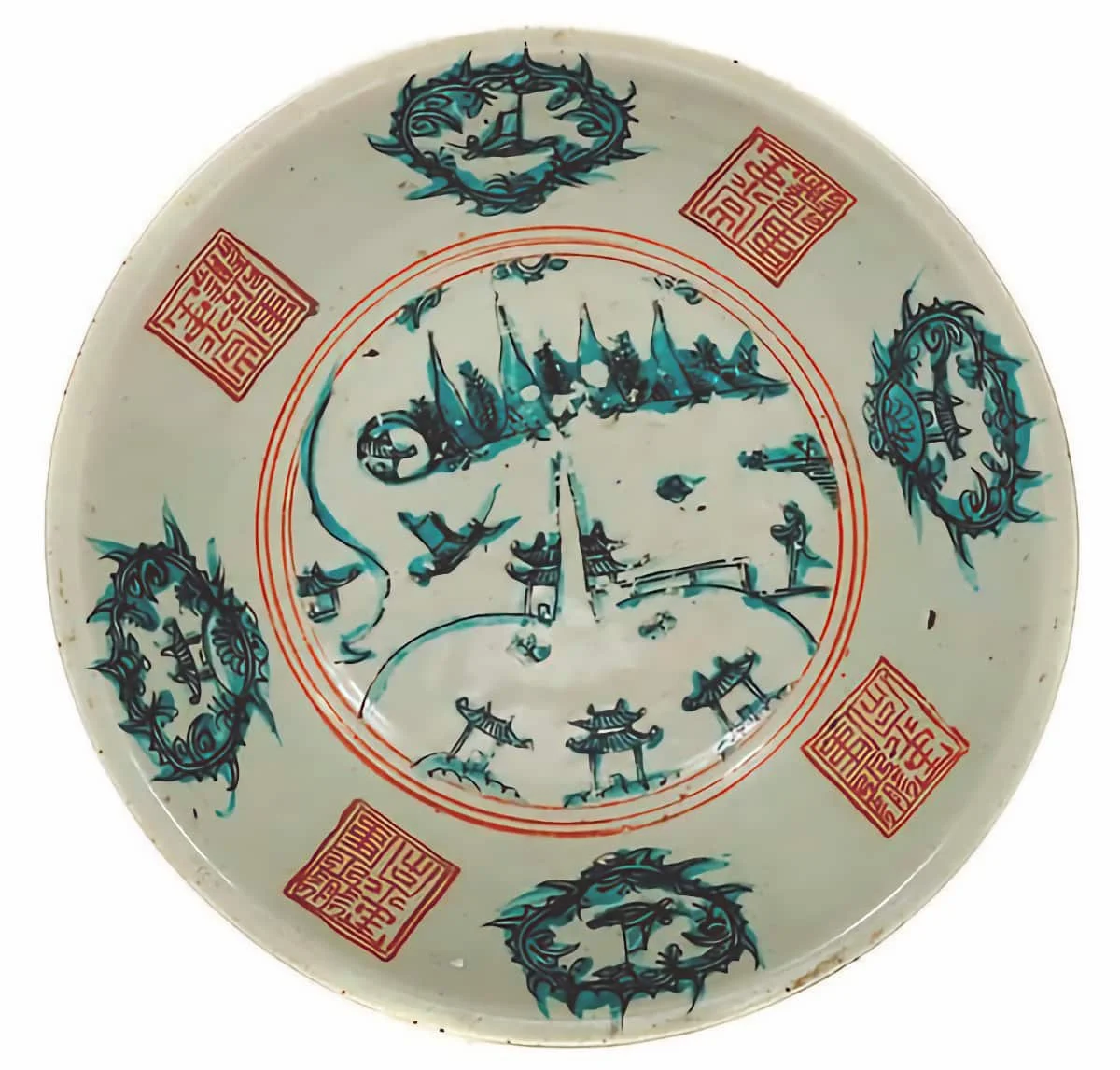
Swatow porcelain can be recognized by its rustic look. PHOTO CREDIT: Turner Auctions + Appraisals
The Swatow dish shown here, which sold for $322 at Turner Auctions + Appraisals, has a popular pattern in turquoise and red, with a split pagoda in the center and oval vignettes alternating with blocks of seal script. It dates back to about the 17th century, which was believed to be the peak of Swatow ware production. The script on this dish may be entirely decorative, without an intended meaning. Swatow porcelain was made to export; its prospective buyers were not expected to be able to read Chinese characters. Some known examples have Arabic lettering. Others depict European ships. Designs like those indicate where the pieces were meant to be sold.
Experts consider the name "Swatow ware" a misnomer. Historical and archaeological evidence indicate that the porcelain was made in Zhangzhou, another Chinese port city.
Q: I have a black-and-white photo that my father took when we visited New York City in 1954. It was at a theatre showing King Kong and Abbot and Costello. There is a large King Kong figure outside the theatre. Is it worth anything?
A: It may be. Even if your father isn't a known photographer, "found photographs" of everyday subjects taken by amateurs have sold as art since the 1990s. You may want to contact an antique dealer in your area. Some antiquarian book dealers buy and sell antique photographs, too. Because of the subject of your photograph, it may also interest movie memorabilia collectors. They would probably give you the best price. Look for a dealer or auction house that sells classic movie posters or other memorabilia.
TIP: Maroon and yellowish chrome-green colors were never used to decorate porcelain during the 18th century.
CURRENT PRICES
Toy, car, coupe, Fire Department, Siren Fire Chief, red, yellow lettering, black tires, Marx, 16 inches, $240.
Bookends, Prometheus, figural, kneeling figure, holding dish with flaming torch on shoulders, bronze, square base, art deco, 15 1/2 inches, $515.
Lantern, paper, multicolor scene, red characters on reverse, hand-painted, wrought iron stays, brass collar, collapses, Chinese, 42 inches, $905.
For more collecting news, tips and resources, visit www.Kovels.com
(c) 2026 King Features Synd., Inc.