
West-central harvest reaches 45 per cent as sprouting raises quality concerns
Humid mornings slow progress, while some crops are showing better-than-expected yields
Harvest has reached 45 per cent completion across west-central Saskatchewan, but humid conditions and significant sprouting in some crops are creating concerns about grain quality.
According to the Saskatchewan Ministry of Agriculture’s crop report for Sept. 15 to 21, harvest progress has been slowed by humid mornings, with producers hoping for a stretch of favourable weather to get combines back into the fields.
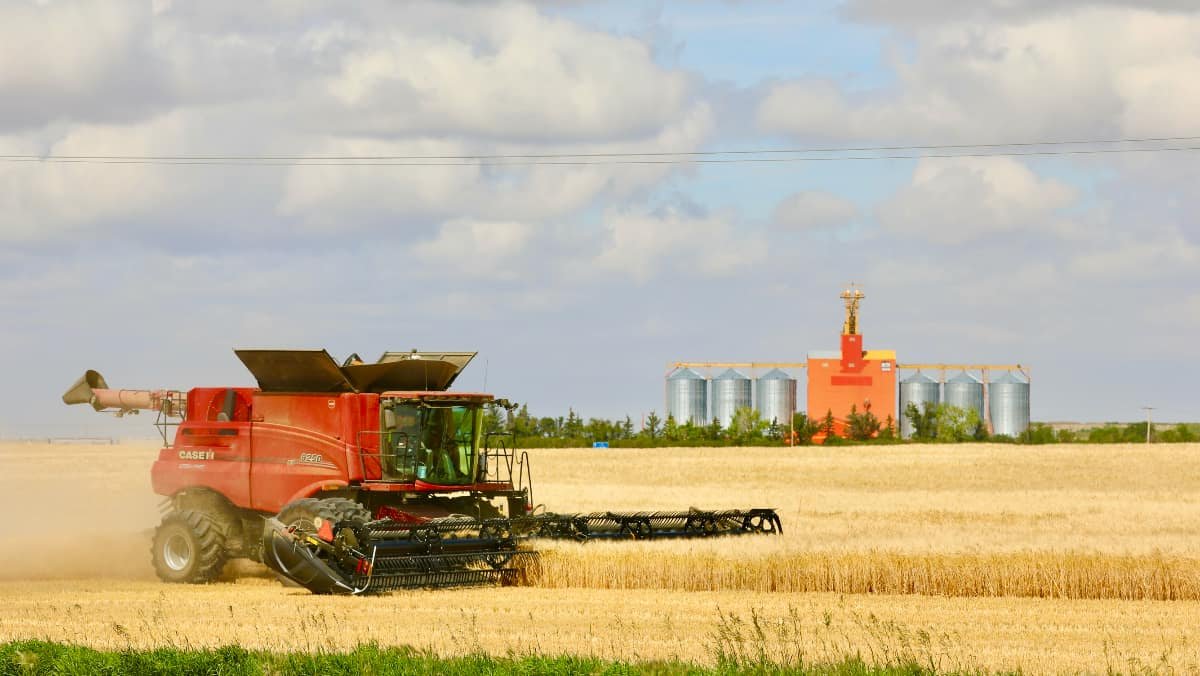
Census Division 12, which includes the Biggar, Delisle, Rosetown and Sonningdale areas, was 47 per cent harvested as of Sept. 21. Census Division 13, which includes the Cut Knife, Kerrobert, Kindersley, Macklin, Plenty and Wilkie areas, was 44 per cent complete.
Reporters throughout the region noted a significant amount of sprouting in cereal and pulse crops, which is reducing grain quality.
Harvest is complete for fall rye, winter wheat and triticale in the west-central region.
Pulse harvest is also nearing completion, with 94 per cent of field peas and 90 per cent of lentils in the bin. Chickpea harvest was considerably further behind at 13 per cent.
Among spring cereals, barley harvest was 68 per cent complete, followed by oats at 58 per cent, durum at 38 per cent and spring wheat at 36 per cent. Canary seed harvest was five per cent complete.
Oilseed harvest varied considerably. Soybeans were 61 per cent harvested, while mustard and canola were each at 43 per cent. Flax harvest was six per cent complete.
Very little precipitation was reported across west-central Saskatchewan during the week. The exception was the Milden area, which received six millimetres of rain.
Topsoil moisture remained mostly adequate. Cropland topsoil moisture was rated eight per cent surplus, 87 per cent adequate and five per cent short. Hayland and pasture topsoil moisture were both rated nine per cent surplus, 85 per cent adequate and six per cent short.
Despite the challenges caused by sprouting, estimated yields vary throughout the region, with some areas reporting yields that are better than expected.
Pasture conditions have also improved. Seven per cent of west-central pastures were rated excellent, 76 per cent good and 17 per cent fair. No pastures in the region were reported in poor or very poor condition.
Minor to moderate crop damage was reported from wind, flooding and waterfowl.
With more than half of the west-central crop still standing, producers are looking for a stretch of dry, favourable weather to speed harvest progress and limit further losses in grain quality.