
Watch Out for Shrikes: Local threatened songbird entering critical fledgling window
If you drive past a shelterbelt this week, slow down.
July is the most dangerous month of the year for Loggerhead Shrike fledglings. The young birds leave their nests drawn to roadside insects, but they cannot fly well yet. Road mortality is one of the biggest threats they face right now.
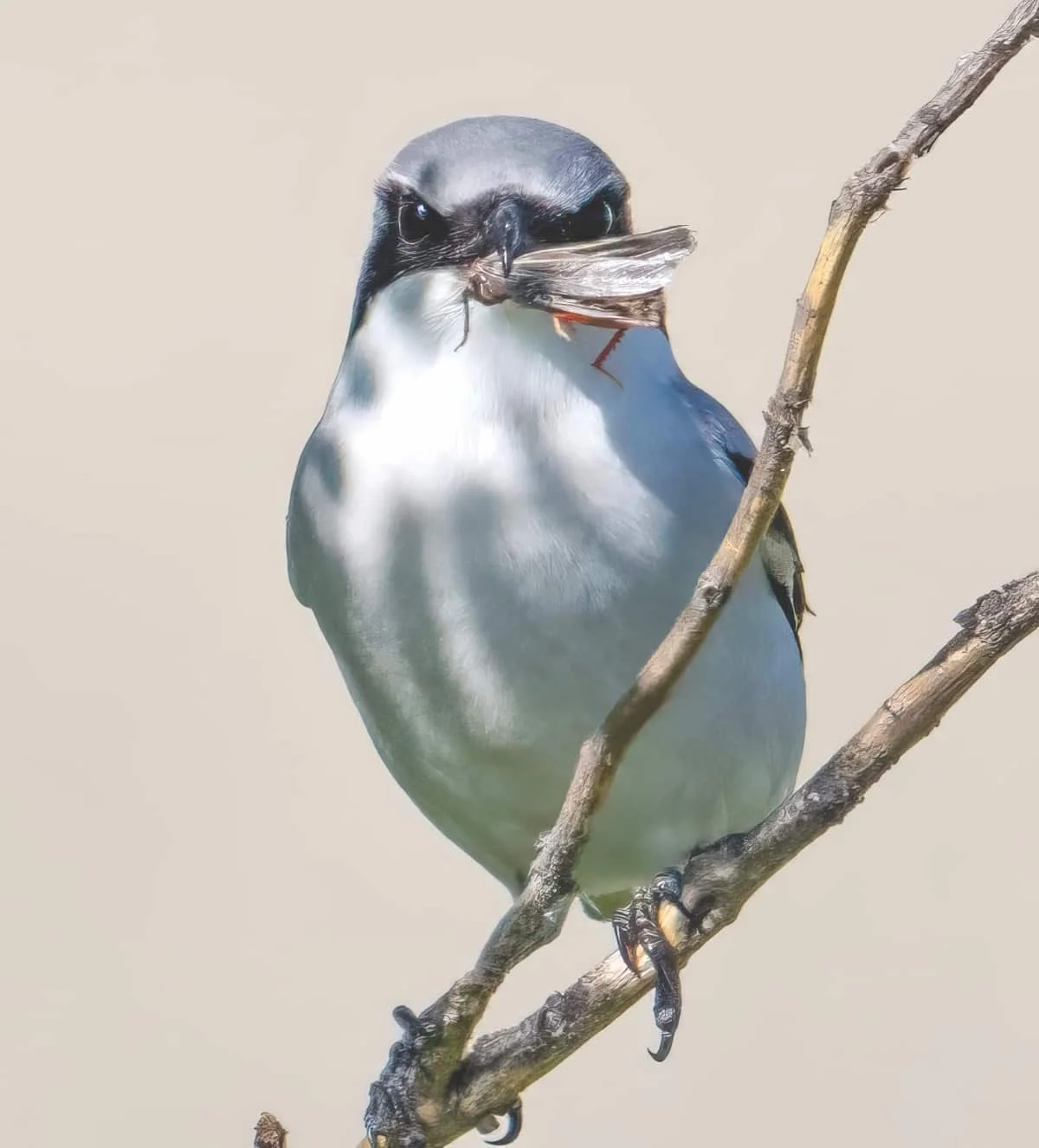
A Loggerhead Shrike holds an insect at its bill, demonstrating the hunting behaviour that makes it one of Saskatchewan's most distinctive songbirds. The threatened species is currently in its fledgling season across the province. Photo: Hamilton Greenwood
Nature Saskatchewan is urging residents across the province to keep an eye and an ear out for the species this month. The Loggerhead Shrike is a threatened predatory songbird that spends its summers in Saskatchewan breeding and raising its young before heading south in the fall.
What makes the shrike unlike any other bird on the prairie is how it hunts. It lacks the sharp talons of a hawk or eagle, so it uses something else entirely. Thorns. The shrike impales its prey, including grasshoppers, beetles, mice, and even small frogs and snakes, on thorny shrubs or barbed wire to hold it while feeding.
"One of the best ways to check if you have shrikes around is to keep an eye out for the impalements," says Emily Putz, Habitat Stewardship Coordinator for Nature Saskatchewan's Shrubs for Shrikes program. "If you see one impaled, you have a shrike nearby."
Shrikes prefer native thorny shrubs like Buffaloberry and Hawthorn for nesting, but they have adapted to mature caragana shelterbelts across the agricultural landscape. That adaptation puts them closer to grid roads and closer to danger during fledgling season.
Landowners can help. Keeping mature shelterbelts standing is one of the most direct things you can do for shrike habitat. Planting native thorny shrubs adds long-term value. And if you spot a shrike on your land, reporting it to the Shrubs for Shrikes program costs you nothing. All sightings are kept anonymous and feed directly into the annual population census that tracks where shrikes are nesting year over year.
"If you are a landowner with Loggerhead Shrikes on your land, we would love to have you participate," Putz says.
The program monitors known nesting locations each year to track population trends for this threatened species.
To report a sighting or learn more, contact Emily Putz at 306-780-9832 or outreach@naturesask.ca.