
Scribble and rinse, my ‘cure’ for cancer
By Madonna Hamel
Simon Boas’ book “A Beginner’s Guide to Dying” is one of the books that has helped me along in this brain tumour “adventure,” what many refer to as a “journey.” (I just can’t bring myself to use that word “journey” to describe this passage – it is a word that has sadly become for me a vapid cliché, not fitting for a very wild venture beyond my beckoning and control.)
But, back to Boas. Like me, he wrote a small column for a regional paper, his located in Jersey, in the Channel Islands. And also like me, he tried to write about dying with a sense of humour and inquiry and with as much honesty as one can muster given a terminal diagnosis.
One thing Boas was honest about was how he eschewed various treatments. Knowing the chemo would not save him in the end, he opted for vast quantities of Muscadet wine and magic mushrooms. (Having done my limited share of both mind-altering agents, and being a member of a 12-step recovery group that focuses on emotional and spiritual sobriety, neither wine nor narcotics are of any help or interest to me.)
However, I’ve come to appreciate and believe that my best “drugs” of choice are deep breathing and water. I practise a method called “box breathing,” wherein I take a long breath in for a count of 20, hold for another 20 and then let go slowly for another 20. Sometimes I just focus on a count of 100 total – the point is to just keep breathing.
My other treatment is water, and lots of it: staying hydrated. It’s good for our organs, and a nurse told me that hydration helps prevent seizures.
I’ve been calling my method/treatment/“cure” “rinsing.” I like to think of myself as rinsing the tumour away. I also see it as a way of rinsing away the stickiness of fear, sadness and tenacious doubts. Maybe the effects will be physiological, maybe not – but either way, there’s certainly no harm in deep breathing and fresh water.
Just this morning the words of Jesus to the Pharisee Nicodemus came to mind: “Unless one is born of water and the Spirit, a person cannot enter the kingdom of God.” Hmm, I wondered, maybe I’m onto something. The Holy Spirit is about inspiration – breathing and being breathed into life. As is the sacrament of baptism.
The third part of my attempted self-cure is scribbling. Writing, to be precise. I am ever-thankful that I can still read and write. That I have the desire to communicate through words. That books still get me through, thanks to others like Boas who grapple with the finality, intimacy, inevitability of death through words.
Scribbling may not be a cure for brain cancer, but it certainly is a cure for brooding, stewing, whining and worrying.
I am thankful for my “scribblers” – the name we gave our school notebooks – and my journals, for being places of refuge, consideration, experimentation. We all need a good scribbler to find out what we think and feel. We need them to scribble down the consolations, poems, jokes, advice and assurances that come from others and, in my case, in the middle of the night.
The scribbler, journal, notebook is a furnace of creative sparks, keeping us alive.
One of my favourite creatures in literature is Ratty of “The Wind in the Willows,” one of the most important books of this whole expedition and a gift from my pals Avril and Page, who informed me that, of all the creatures in the story, I am most like Rat. Or Ratty, as he is called by his friends. Ratty keeps a notebook with him at all times, recording the events of the day, fashioning rhymes and nibbling his pencil. When he neglects his writing, he falls despondent.
There is a section in the book where Mole and Ratty encounter a creature that terrifies and mystifies them both. Mole insists that Ratty write about the encounter, but Ratty was losing heart. So Mole decided it was time to get Ratty writing again. So …
“Presently the tactful Mole slipped away and returned with a pencil and a few half-sheets of paper, which he placed on the table at his friend’s elbow. ‘It’s quite a long time since you did any poetry,’ he remarked. ‘You might have a try at it this evening, instead of – well, brooding over things so much. I’ve got an idea that you will feel a lot better when you’ve got something jotted down – if it’s only just the rhymes.’
“The Rat pushed the paper away from him wearily, but the discreet Mole took occasion to leave the room, and when he peeped in again some time later, the Rat was absorbed and deaf to the world; alternately scribbling and sucking the top of his pencil. It is true that he sucked a good deal more than he scribbled; but it was joy to the Mole to know that the cure had at least begun.”
Every evening, after covering myself with the quilt stitched by the women of Climax, I pull out my journal and pen and try to recall the events of my day, the questions I have for my surgeon, the prayers I want to pray despite my unbeliefs: I try to be a creative creature, still mystified, and grateful to even be able to articulate what’s going on in this brain/mind/consciousness of mine, if even to maybe spark some inspiration in another fellow creature.
Scribbling may not be a cure for brain cancer, but it certainly is a cure for brooding, stewing, whining and worrying. And I am in no position to say that inhalation and hydration are guaranteed to rinse tumours away, but frankly, even coming up with the word “rinsing” cheered me up. So I shall continue to scribble and rinse and share the results with anyone willing to listen in and egg me on.
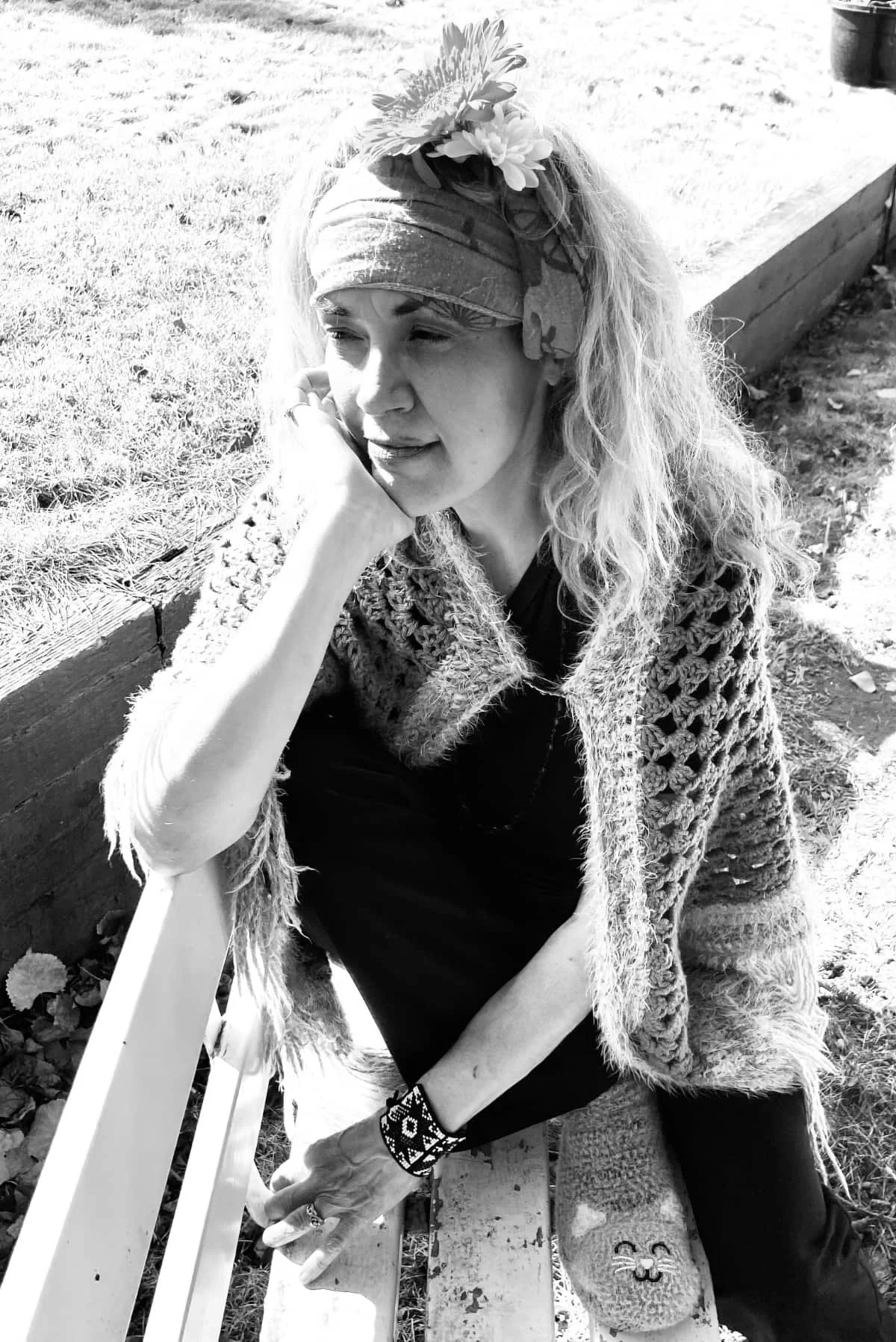
Madonna Hamel