
SASKATCHEWAN PERENNIAL SOCIETY: Vine-Ripened Watermelon and Cantaloupe
There’s Nothing Like Vine-Ripened Watermelon and Cantaloupe from the Garden
By Jackie Bantle
Cantaloupe and watermelon are members of the Cucurbit family of plants. This family also includes pumpkins, cucumbers and winter squash however, of all of these vine crops, watermelon and cantaloup are the most challenging to grow during the relatively short growing season in Saskatchewan.
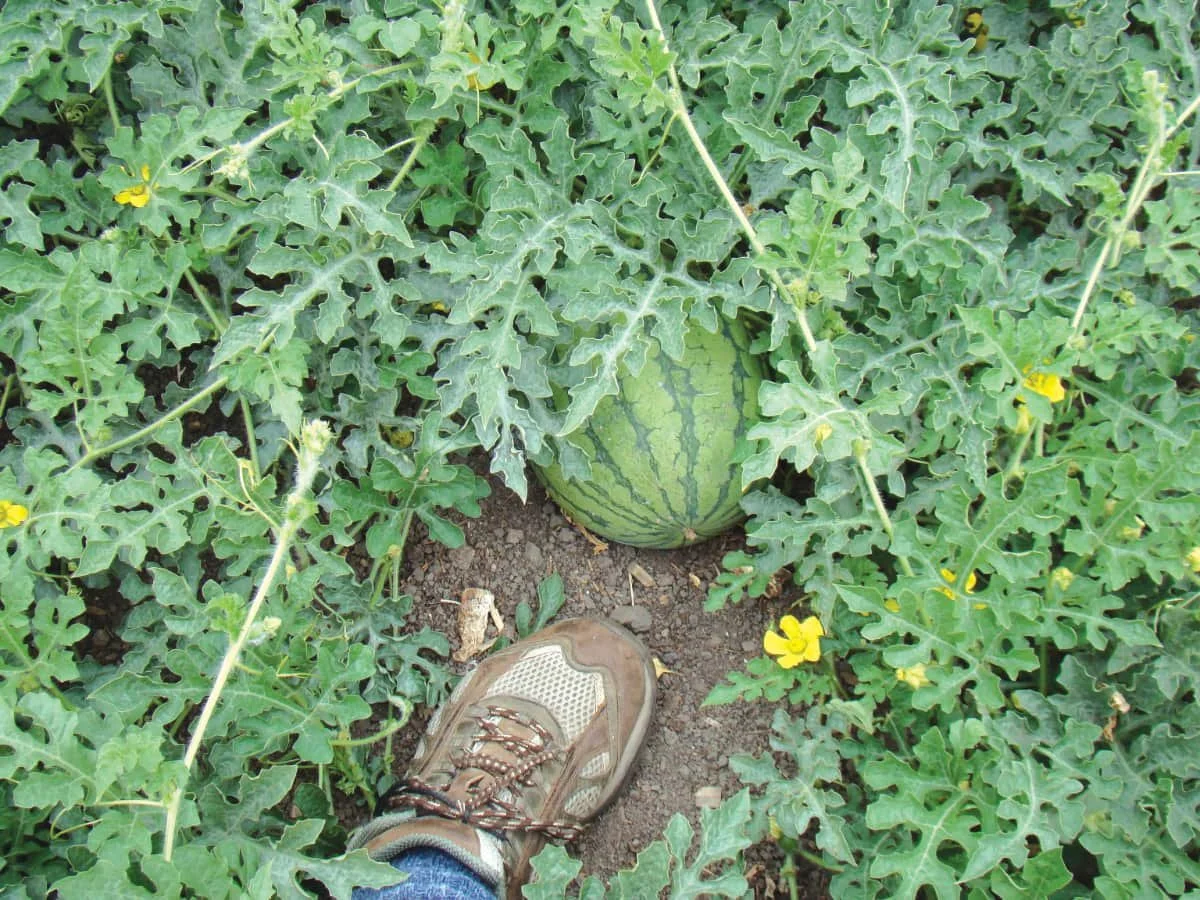
Cantaloup and watermelon require soil temperatures of at least 15°C for seed germination and optimal growth to occur. To get a head start on the season, it is best to start plants indoors and transplant outdoors once the outdoor soil and air temperatures are at least 20˚C. Cucurbits (ie. vine crops) do not like to have their roots disturbed: germinate seeds in Jiffy 7’s and transplant the Jiffy 7 directly into the soil – without disturbing the plant roots.
Cantaloup and watermelon transplants should only be 10-14 days old before planting out (cotyledons have emerged along with only one or two true leaves). Larger transplants will experience transplant shock when they are planted outdoors: plants will not grow for several weeks (or at all) depending on the level of transplant shock they experience. Be sure to harden off transplants at least 5 days prior to planting out. Start by setting the transplants outdoors in a protected, partially shaded location for several hours/day. Increase the length of time spent outdoors as the hardening-off period continues. When transplanting into the garden, avoid extremely hot or windy conditions.
Instead of starting transplants, it is possible to direct seed cantaloup and watermelon directly into the garden however, when direct seeding, I recommend laying down clear or black plastic mulch along the soil at least one week prior to seeding. Lay the plastic mulch (approximately 1mil thickness) onto the garden soil and secure the edges of the plastic with soil, rocks or heavy boards. It is important that the plastic mulch is pulled tightly against the soil to discourage weed growth under the plastic and to effectively heat up the soil. Punch holes in the plastic (approximately 5cm in diameter) and bury seeds about 1cm deep in the holes. Lightly water in the seeds. Plastic mulch can also be used in conjunction with transplants: plant transplants in the holes rather than the seeds. When transplanting, cover the Jiffy 7 peat pellet completely with soil to prevent the pellet (and the transplant) from drying out.
All cucurbits benefit from clear perforated plastic tunnels or crop covers. Use crop covers with a weight of 0.5 oz/yd2 or that allow at least allow 85% light transmission. Be sure that the perforated plastic is supported by wire hoops as clear plastic directly on plant leaves will burn the leaves. Cover seeded rows or transplants with crop cover or plastic tunnels immediately after seeding or transplanting. Leave covers in place until flowers are formed on the plants or until the 3rd week in June, whichever is later. Remove covers to allow pollinators to pollinate the flowers. After fruit has set, crop covers can be replaced, especially if outdoor temperatures are cool (mid-July). Protect the plants from frost by using crop covers or heavier frost blankets.
Watermelon and cantaloup plants have both male and female flowers on their vines. Male flowers are the first flowers to appear on the plant. It is normal to observe some of these initial male flowers falling off. Female flowers appear 7-10 days after the male flowers start to appear. The female flowers are identified by what looks like a small fruit where the stem meets the base of the flower.
Poor fruit set on plants can occur for several reasons: lack of female flowers on the plant and/or poor pollination by bees or insects. Poor pollination can be due to a lack of pollinators, extreme heat making pollen sterile or poor weather (cold, rainy, cloudy) that discourages bees and other insects from flying around to pollinate.
During the growing season, provide 2.5cm of water per week early in the season. By mid-July, provide 2.5cm of water, twice weekly. Apply soluble 20-20-20 fertilizer weekly prior to fruit set, and bi-weekly after fruit set. Apply fertilizer according to label directions.
Cantaloupe is ready to harvest when the fruit skin looks slightly orange in colour and the stem end of the fruit easily slips free from the vine. (full slip) Once harvested, the cantaloupe is best stored at cool room temp (10°C); 15°C if picked slightly immature. After the cantaloupe is cut, store cut in the fridge at 5°C.
Determining when a watermelon is mature can be challenging. Mature watermelon fruit will sound hollow when they are tapped with your fingers; the tendril closest to the stem end that attaches to the fruit will be dried up; the skin surface of the watermelon loses its shine and becomes dull, and the rind on a mature watermelon fruit will be difficult to puncture with a thumb nail. Watermelon fruit does NOT slip from the vine like cantaloupe.
Once harvested, watermelon can be stored at room temperature for several days. Long term storage of watermelon should be in the fridge at 5°C.
Not every cantaloup and watermelon cultivar are created equal. Look for varieties that will mature in 75 days or less. ‘Athena’, ‘Goddess’, ‘Tasty Bites’ and ‘Pixie’ cantaloup are recommended cantaloup cultivars to try. ‘Sugar Baby’ (red), ‘Favourite Ball’ (red seedless), ‘Sangria’ (red) and ‘Yellow Doll’ (juicy, sweet, yellow flesh) are all recommended as watermelon cultivars to try in Saskatchewan.
By growing the best cultivars recommended for our region along with some ‘tricks’ to enhance the growing conditions, almost any Saskatchewan gardener can experience the unmatched flavour of a vine ripened watermelon or cantaloup from their own garden.
This column is provided courtesy of the Saskatchewan Perennial Society
Photo Credit: Jackie Bantle