
By Joan Janzen
Former Kindersley resident Ron Lamont shared his memories of the Second World War, when he was just 14 years old. “My dad was a station agent then,” he recalled. “If someone was killed overseas there were no phones. Instead the government sent the name of the person who had passed or been injured to the station agent. My dad would copy it and go to the families to give them the news. Those were bad trips.”
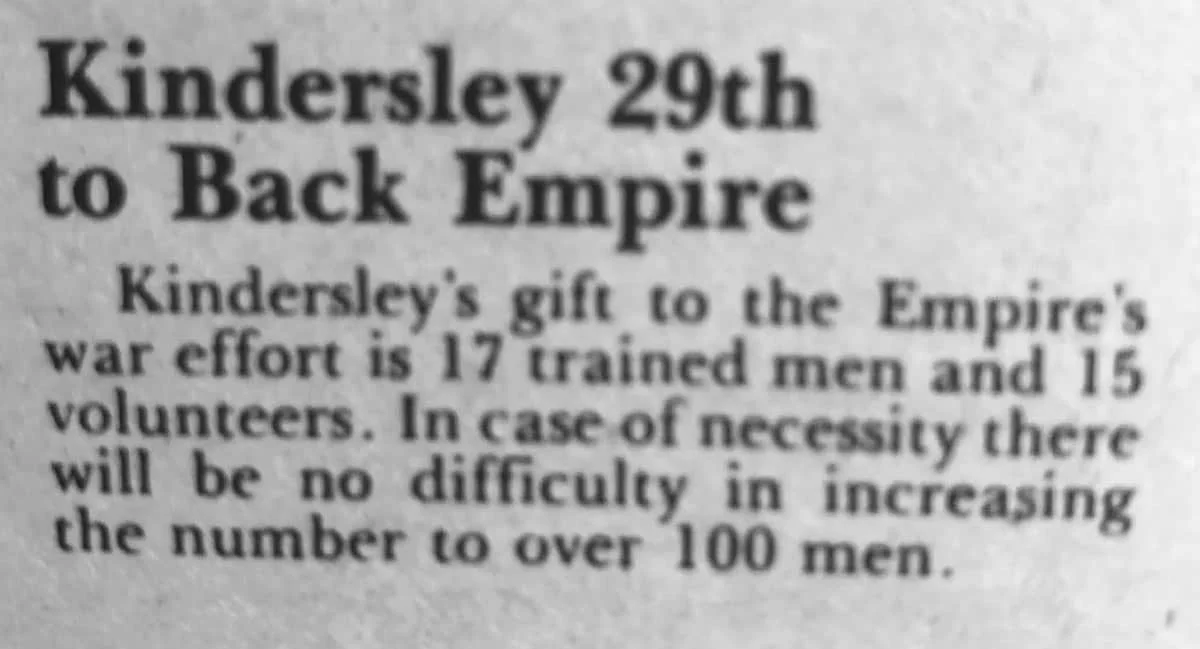
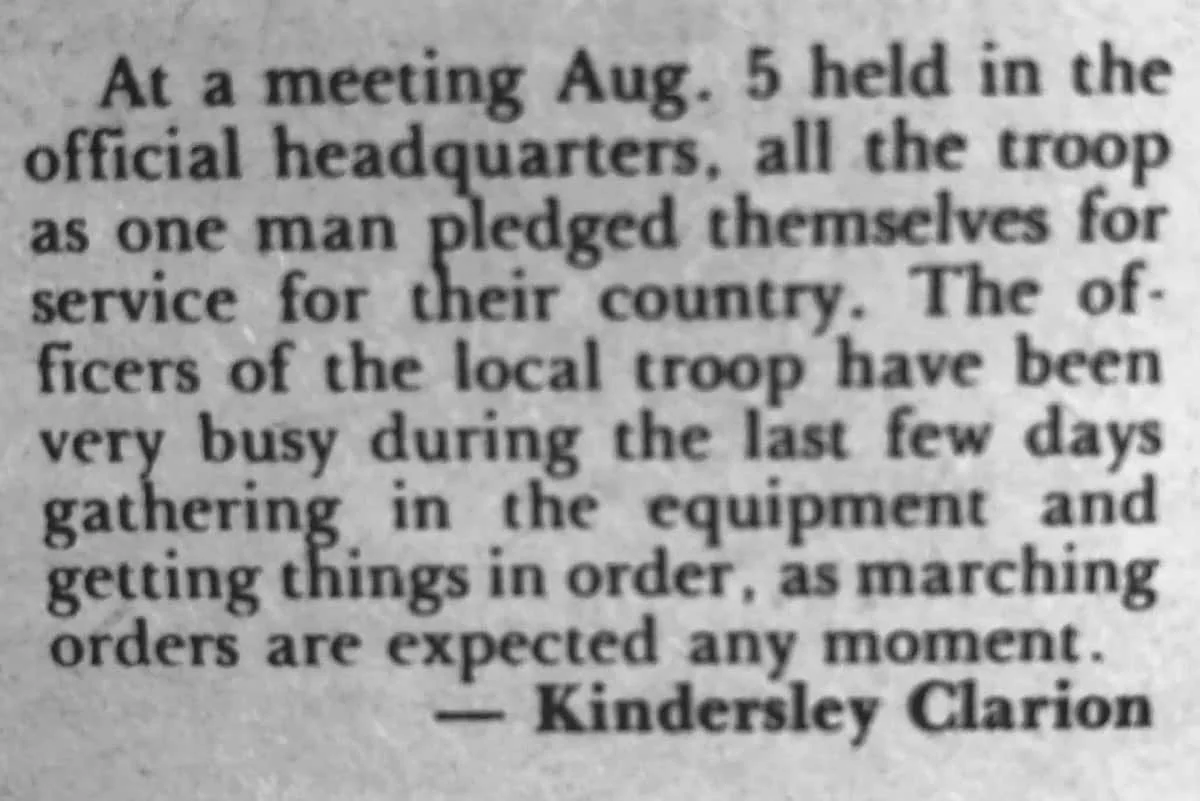
Ready to march. Days after Britain declared war in August 1914, the Kindersley Clarion reported the local 29th troop had pledged itself for service, with 17 trained men, 15 volunteers and marching orders expected at any moment. SUBMITTED BY RON LAMONT
SUBMITTED BY RON LAMONT
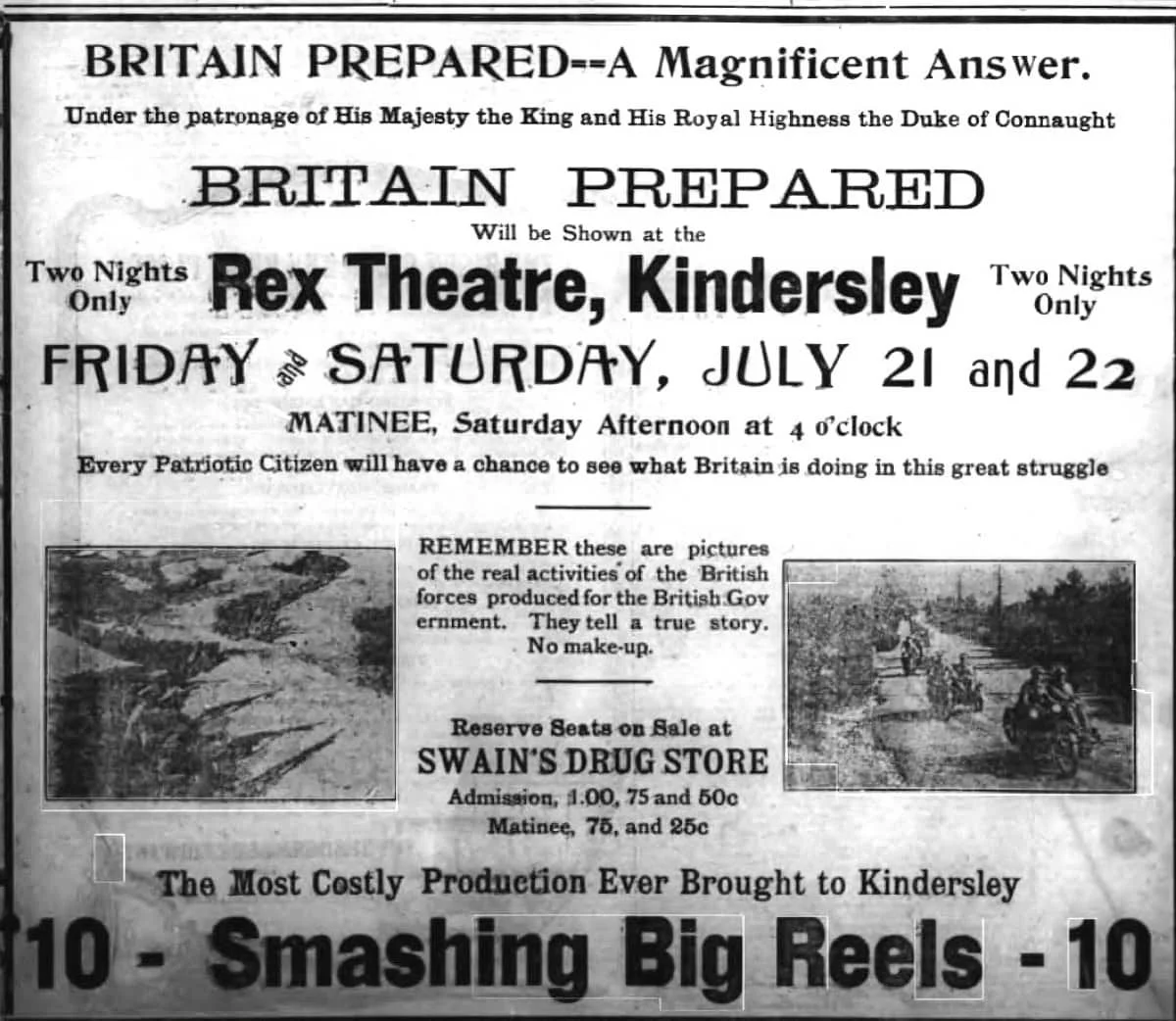
Ten smashing big reels. An advertisement for Britain Prepared, a British government war film that played two nights at the Rex Theatre in Kindersley in July 1916. Reserved seats sold at Swain’s Drug Store for up to a dollar. SUBMITTED BY RON LAMONT
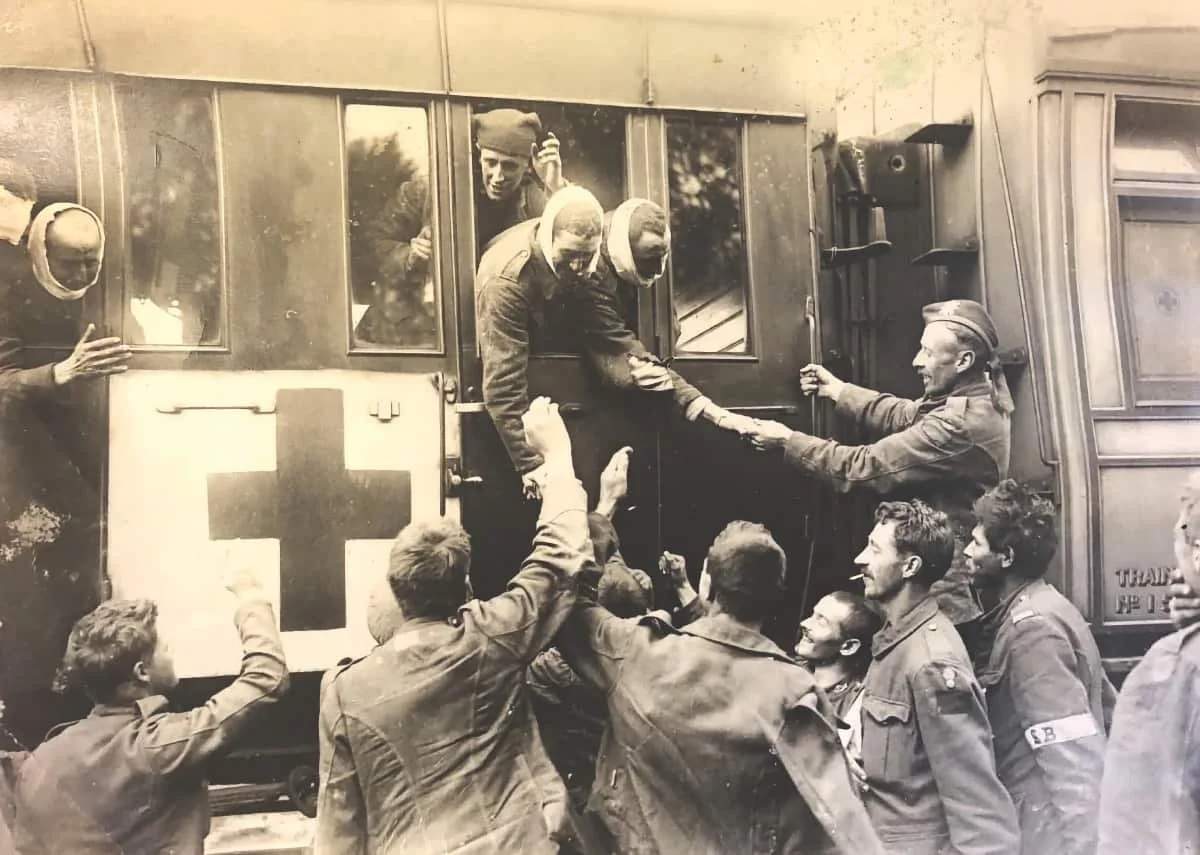
A hand through the window. Wounded soldiers lean out of a Red Cross hospital train to clasp hands with comrades on the platform. SUBMITTED BY RON LAMONT
Ron and his family were living in a small town where everybody knew each other. Towns were only twenty miles apart with populations of around one hundred souls, so the wounded were either friends or family members.
“My dad took the local minister with him when he delivered the news. It was really the only communication they had,” he said. “I knew lots of men who were in the war.”
Ron worked on fox ranches when he was 14 years of age, while he was still going to school. At that time he was able to drive a vehicle by obtaining a permit.
“They didn’t have people to drive because most of the men were in the war and there were very few men left. As the war went on, if you were a certain age you went whether you wanted to or not if you were medically fit,” he reported.
He also remembered the men when they returned. “I had a couple of buddies who were gunners, and their chances of surviving in those aerial battles were not good,” Ron said. “Many of those fellows came back and their health was bad and their nerves were terrible. A lot of them were shell shocked.”
There were only a few battery-operated radios, and every night at six o’clock everyone would listen to the war news. Ron remembered being with his grandparents at Wetaskiwin, Alberta, when the war ended. Wetaskiwin was an army training base, so there was a lot of celebrating taking place at the end of the war.
“It was wild there! They were really celebrating! Jeeps were on the street, everybody was honking horns and was excited!” Ron recalled.
He noted that the area along Railway Avenue in Kindersley was Veterans’ Land Act (VLA) land. When men returned from the war they could apply for land and were allotted an area where they were able to build a house at an affordable price. “They each got an acre or two; it was all acreages in that area. Three or four of those houses still exist,” he said.