
Party lines connected rural communities long before social media
By Joan Janzen
Up until the late 1960s, wooden hand-cranked telephones were a common fixture in many homes. A photo of one of the antique devices recently posted on the Historic Saskatchewan Facebook page sparked a wave of memories from people old enough to remember using them.
“My grandparents had a phone like that in their house until 1969 when they retired and moved to the city,” one man recalled. His grandmother was upset when her five-year-old grandson cranked the handle, making the phone ring. He did not realize that a long ring was reserved for emergencies.
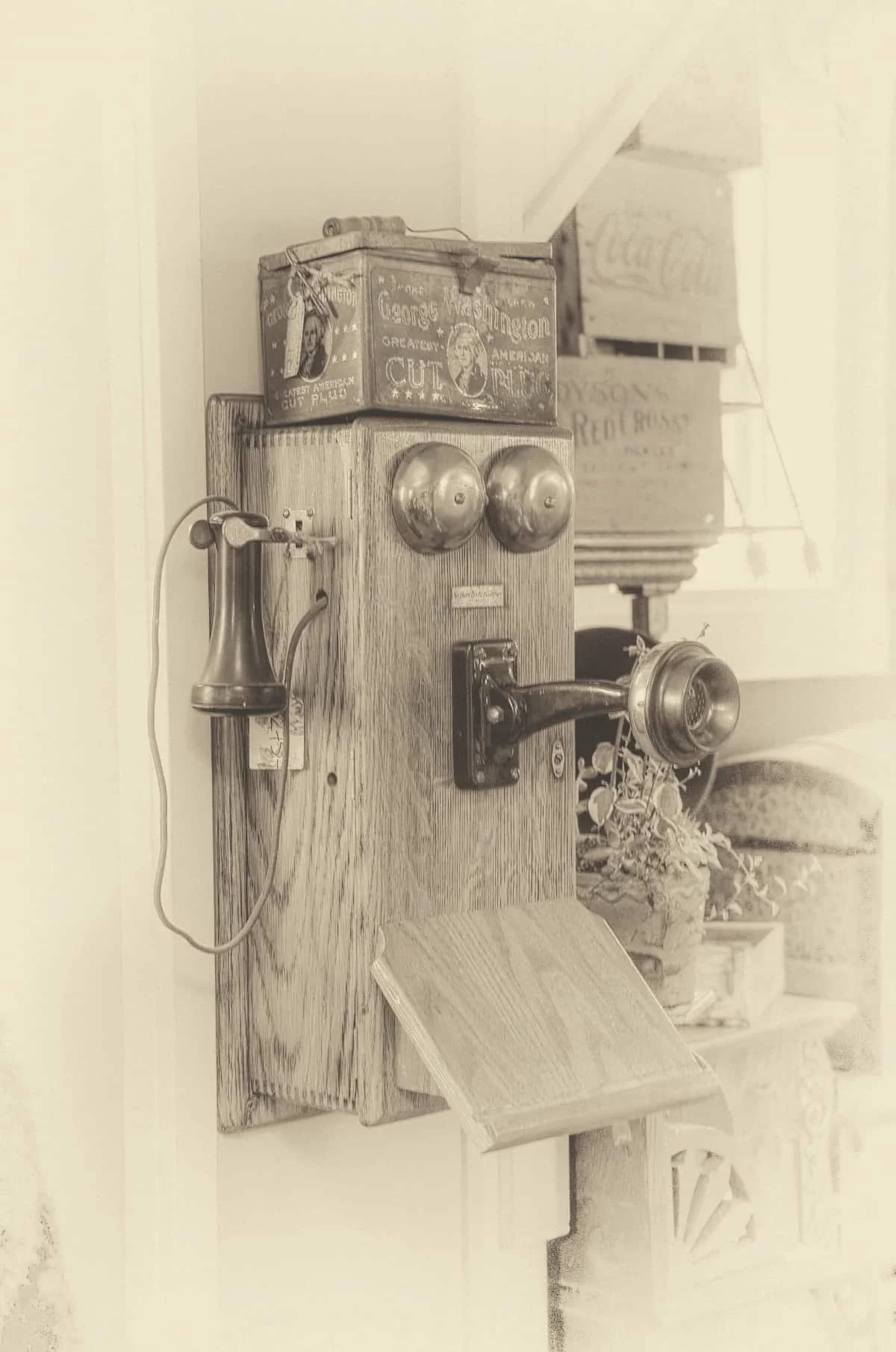
These phones existed along with underground phone lines, operators, switchboards, party lines and designated rings. Photo Historic Saskatchewan
These early phones operated alongside underground phone lines, operators, switchboards and shared “party lines,” where several households were connected to the same line. Each home had a designated ring pattern so residents would know when a call was meant for them.
In some areas, calls were limited to 10 minutes so everyone sharing the line had a chance to use it. The rule helped when four or more families were on a party line.
But the time limit was not enforced everywhere.
“I remember my neighbour driving up the road to use the phone because we teenagers were hogging the party line,” one woman recalled.
Another resident remembered waiting impatiently while a neighbour carried on a long daily conversation with her daughter.
After 15 minutes of waiting to make a business call, he finally interrupted.
“I was trying to be polite,” he said. “But I ended up saying, ‘Would you please be so kind as to get the hell off the phone!’”
Eavesdropping was also common during the party-line era. Anyone wanting to listen in had to quietly lift the receiver at the same moment the call was answered so the telltale click could not be heard.
Long before social media existed, neighbours often knew what was happening throughout the community.
“One neighbour had a cord so long she could do most of her housework downstairs without letting the phone off her neck and shoulder,” an elderly man wrote. “She knew more about everyone than even their own family.”
Party lines could also be invaluable in emergencies.
One resident recalled a late-night call when a farmer phoned a neighbour to report a shed on fire. Everyone on the line heard the message and rushed out to help within minutes.
There were hazards too. One senior remembered lightning striking a phone line and travelling through the phone before arcing between the legs of a treadle sewing machine positioned underneath it. Another person recalled a phone being knocked off the wall after a lightning strike.
The ring combinations themselves could be memorable. One long ring and four short rings might signal a particular household, while a “general ring” alerted everyone on the line.
For many rural residents, the most exciting general ring was the one announcing school was cancelled because of snow or extreme cold.
For those who still own one of the old wooden phones, they may now be considered valuable collectibles.
One former telephone company employee recalled the transition to dial phones decades ago.
“When they changed over to dial phones, I had to throw 150 of these phones in the garbage,” he said. “It was against the law to keep them.”