
OPINION: Trump’s takeover of Venezuela means Canada needs those west coast pipelines ASAP
By Brian Zinchuk
Anyone remember when Trump said back on Jan. 23, 2025, “We don’t need their oil and gas. We have more than anybody”?
It was in the same statement where Trump was making some of those initial 51st state comments, a couple days after his second inauguration. You know, the ones we were supposed to get our elbows up for.
Well, as of Jan. 3, 2026, he may soon be proven correct, but not in a way you might expect.
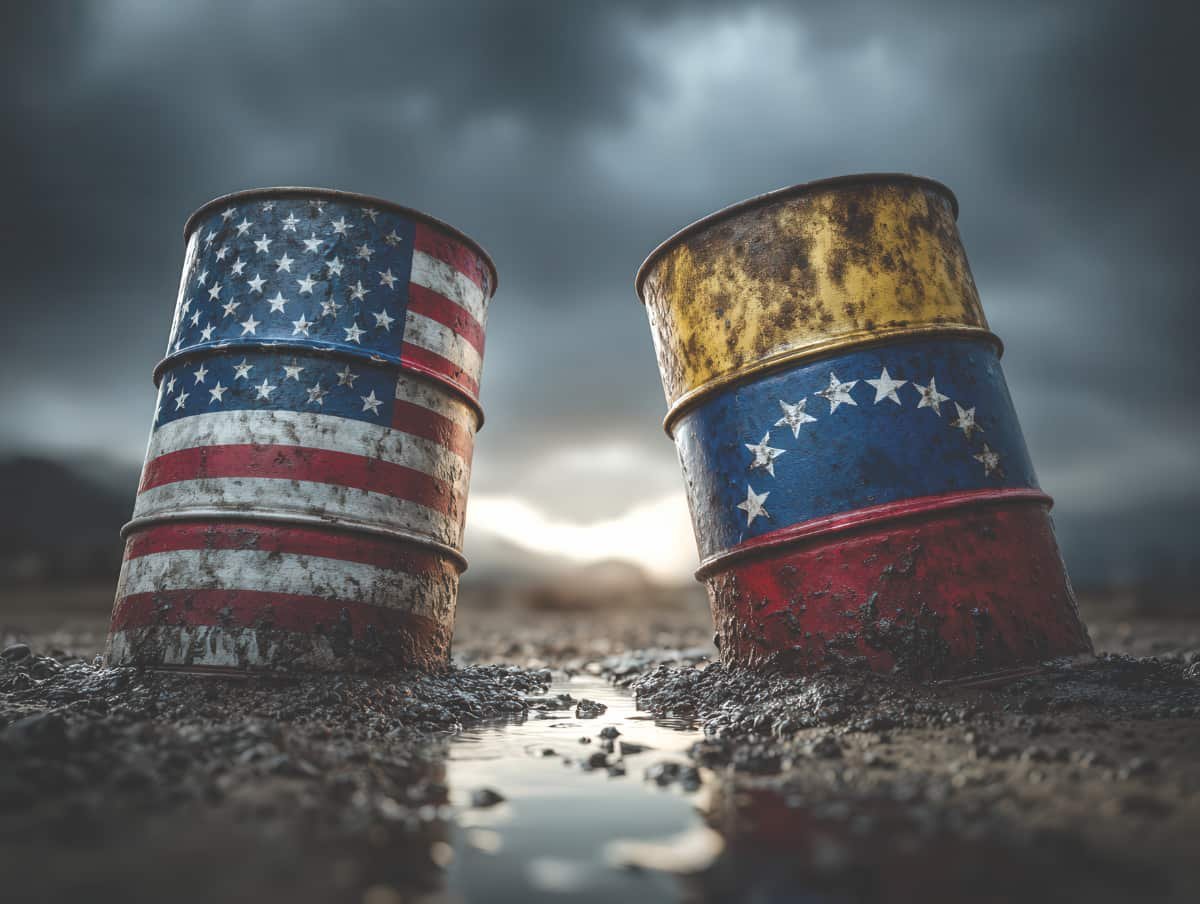
ADOBE STOCK PHOTO
For the last nearly 20 years, there’s been a maxim of Canadian oil production – even though most of our oil comes from the oilsands, making it heavy and sour, the US will take as much as it can. We just needed the pipelines to deliver it.
That’s why we got the original Keystone pipeline built. That’s why Enbridge built its Alberta Clipper. That’s why crude-by-rail trains rumble past my mom’s backyard along one of the CPKC mainlines, through Yorkton.
But we never really asked ourselves why? Why would the US need our heavy, sour crude?
Industry insiders would understand, but the general public likely does not.
It’s because the US needed Canadian oil to backfill declining imports of heavy, sour crude from Venezuela and Mexico.
Go back in history long enough, and you will find that the US was initially the largest oil producer on the planet (and is again, by the way, despite not being in the highest echelon of oil reserves). But as light, sweet crude production declined, as did American oil production overall, US Gulf Coast refineries retooled to take in what was readily available and close – heavy, sour crude from Mexico and Venezuela.
Venezuela turned out to have the largest oil reserves on the planet, eclipsing even that of Saudi Arabia. Depending on your source, these days the nations with top reserves are, in order, Venezuela, Saudia Arabia, Canada. Some sources say Iran has more than Canada. Whatever. Two of those top three (or four) are within spitting distance of the US of A.
Back in 2002, Venezuela was producing 3 million barrels per day, exporting most of it, and most of that to the United States. By 2020, Venezuelan production had fallen to closer to 300,000 barrels per day, less than Saskatchewan. Now it’s closer to 1 million barrels per day.
But since 1998, Venezuela under socialist President Hugo Chavez, and then his appointed successor Nicolás Maduro, became increasingly hostile to the US and American oil companies and services. I distinctly remember talking to folks at the 2008 Lloydminster Heavy Oil Show whose company did a lot of work in Venezuela. Why? Because Lloydminster area heavy oil had a lot of similar production processes to Venezuela. A few years later, they were out, and for good reason.
The result of all this was a dramatic decline in oil production and revenue for the country, falling off a cliff in 2016. American sanctions rubbed salt into the socialist wound. In a nation that should be one of the richest on the planet, people were fleeing by the millions, and famine was a real thing. Everyone was losing weight, and not because they bought a Peloton (nor could they afford one). China cozied up to Maduro, and so did the Russians.
Analyzing Trump’s press conference
You can say what you want about whether Trump and the US should or should not have knocked over the Venezuelan government, 35 years to the day after it captured Manuel Noriega of Panama – both of which were charged with drug offences in US courts. It happened. It’s done.
If you watch the press conference, as I have, you may be astonished how many times Trump and his cabinet secretaries spoke of Venezuelan oil. It was a lot. According to this transcript, it came up 26 times.
Here’s the pertinent quotes from the press conference. Here’s the transcript. Pay particular attention to how Trump refers to Venezuelan oil as “our oil”, as in “You know, they stole our oil,” when referring to the nationalization of the oil industry in Venezuela.
President Donald Trump:
“As everyone knows, the oil business in Venezuela has been a bust for a long period of time. We’re going to have our very large United States oil companies go in, spend billions of dollars, fix the badly broken infrastructure, and start making money for the country.”
“They took all of our property. It was our property. We built it. The socialist regime stole it from us during previous administrations. This constituted one of the largest thefts of American property in the history of our country.”
“We couldn’t let them get away with it. You know, they stole our oil. We built that whole industry there, and they just took it over like we were nothing. We had a president who decided not to do anything about it. So, we did something about it.”
“We’re rebuilding their whole infrastructure. Much of it is stuff we put there 25 years ago, and we’re going to replace it, take out money, and take care of the country.”
“We’ll run it properly, professionally. The greatest oil companies in the world are going to invest billions of dollars, and the biggest beneficiaries are going to be the people of Venezuela, and the people that were forced out of Venezuela who are now in the United States.”
“A lot of money is coming out of the ground. We’re going to get reimbursed for everything that we spend. Very important. We have to have energy that’s real energy, not where they’re getting 4% or 5% of it out of the ground. The people of Venezuela will be the biggest beneficiaries.”
Secretary of War Pete Hegseth:
“President Trump is deadly serious about stopping the flow of gangs and drugs to our country, deadly serious about getting back the oil that was stolen from us, and deadly serious about reestablishing American deterrent and dominance in the Western Hemisphere.”
Secretary of State Marco Rubio:
“You have a guy who decides he’s going to invite Iran into his country, confiscate American oil companies, flood our country with gang members, and try to hold Americans hostage.”
Now if it seems like that’s a lot of quotes, it’s because it is. There’s no way you can listen to that press conference and not realize that removing Maduro wasn’t so much about shutting down a drug pipeline as it was restructuring oil markets, and the US and its oil companies taking control of the largest oil reserves on the planet. It’s abundantly clear.
And if they are able to do so without an insurgency rising up a la Iraq, then Trump will have proven himself right – they won’t need our oil.
(Mexican production has dropped to the point where their exports are falling like a stone over the last two decades. They could soon only have enough production for domestic consumption.)
Now, there are some very, very large caveats here. The US has proven to be exceptionally adept at regime change, getting rid of foreign presidents they don’t like. Think Noriega, Hussein, Khadafi, and now Maduro, accomplished in three hours.
But they are exceptionally bad at making it stick through a peaceful transition to a friendly, democratic regime. How will American oil companies and their associated service companies be treated on the ground? With open arms or with AK-47s? With all the fireworks that happened in the three hour operation on Jan. 3, surely some Venezuelans were killed. The surefire way of creating a highly motivated insurgent is to kill his father, brother, uncle or son. The same applies for mother, wife or daughter.
The Americans found that out the hard way in Iraq.
If an American occupying force ends up guarding American oil workers, the probability of an insurgency grows by the day, as does the chances of Americans coming home in body bags. And then all bets are off with regards to increasing Venezuelan oil production.
So where does that leave Canada?
In the coming years – and it will take years – we may see Venezuelan oil rebound, adding millions of barrels per day to the global market. Remember that a surplus or deficiency of 2 million barrels per day on a global market of around 100 million barrels per day is the difference between a $50 barrel and a $100 barrel. And right now, we’re trading in the $50s. So if Venezuela adds a further two million barrels, we could see depressed oil prices for a much longer period.
We could also be slowly pushed out of our primary market. So what do we do then? If we listened to Steven Guilbeault or Justin Trudeau, we’d “phase out” our oilsands and oil production, to “leave it in the ground.”
And in so doing, we would be curtailing our nation’s most lucrative primary industry. We’re not going to replace that with tourism to Fort McMurray.
While Alberta Premier Danielle Smith and Saskatchewan Premier Scott Moe have been talking about doubling oil production in each of their provinces, Jan. 3 may immensely change the calculation. We might not need additional pipelines to the West Coast to handle additional product – we might need them instead to divert our current production as we lose customers on the Gulf Coast. And we may need those pipelines built in short order as Venezuelan production comes back onstream.
Even if Venezuelan oil does not displace Canadian oil directly, if they do eventually succeed in added one then two million barrels per day to the world market, it will have a negative impact on global prices. And their product – heavy, sour crude – is a direct competitor with our oilsands production.
This, in turn, may have substantial impacts on the Canadian economy, and Alberta and Saskatchewan in particular. It could lead to even more years of depressed oil prices – after 11 years of doldrums (with a brief spike due to the Russian 2022 invasion of Ukraine.) The Saskatchewan 2025 budget was planned around a US$71 per barrel oil price. We haven’t seen that since June, and likely won’t see it any time soon. If you want to know why Saskatchewan’s in deficit, that’s a big part of your answer.
Budget planners in Edmonton, Regina and Ottawa had better start considering the implications of Trump’s Venezuelan actions in their planning.
So what can we do? We should put a serious impetus on building those pipelines, plural, to the coast. Initially they were planned for increased production. They could instead be needed to replace flow that currently heads south.
That’s about all we can do. If nothing comes of Venezuelan production, we can add capacity and sell more overseas. Either way, build that pipe.
Brian Zinchuk is editor and owner of Pipeline Online. He can be reached at brian.zinchuk@pipelineonline.ca
Edited for length. Visit PipelineOnline.ca for all of the relevant news from the oilpatch. Content used with permission.