
NATURE SASKATCHEWAN: Prairie Life in Colour: Telling our Two Longspurs Apart
REGINA – Breeding season is in full swing and our prairies are alive with the sound of birdsong. This includes two very special songs, that of our two resident longspur species; the Chestnut-collared Longspur and the Thick-billed Longspur!
Both of these species are colourful grassland specialists and can be found in Southern Saskatchewan in remaining patches of native prairie. Both of these species are also at risk, the Thick-billed Longspur listed federally as threatened and the Chestnut-collared Longspur listed as Endangered. With both species potentially found on the same patch of land, identifying which longspur you are looking at can be tricky.
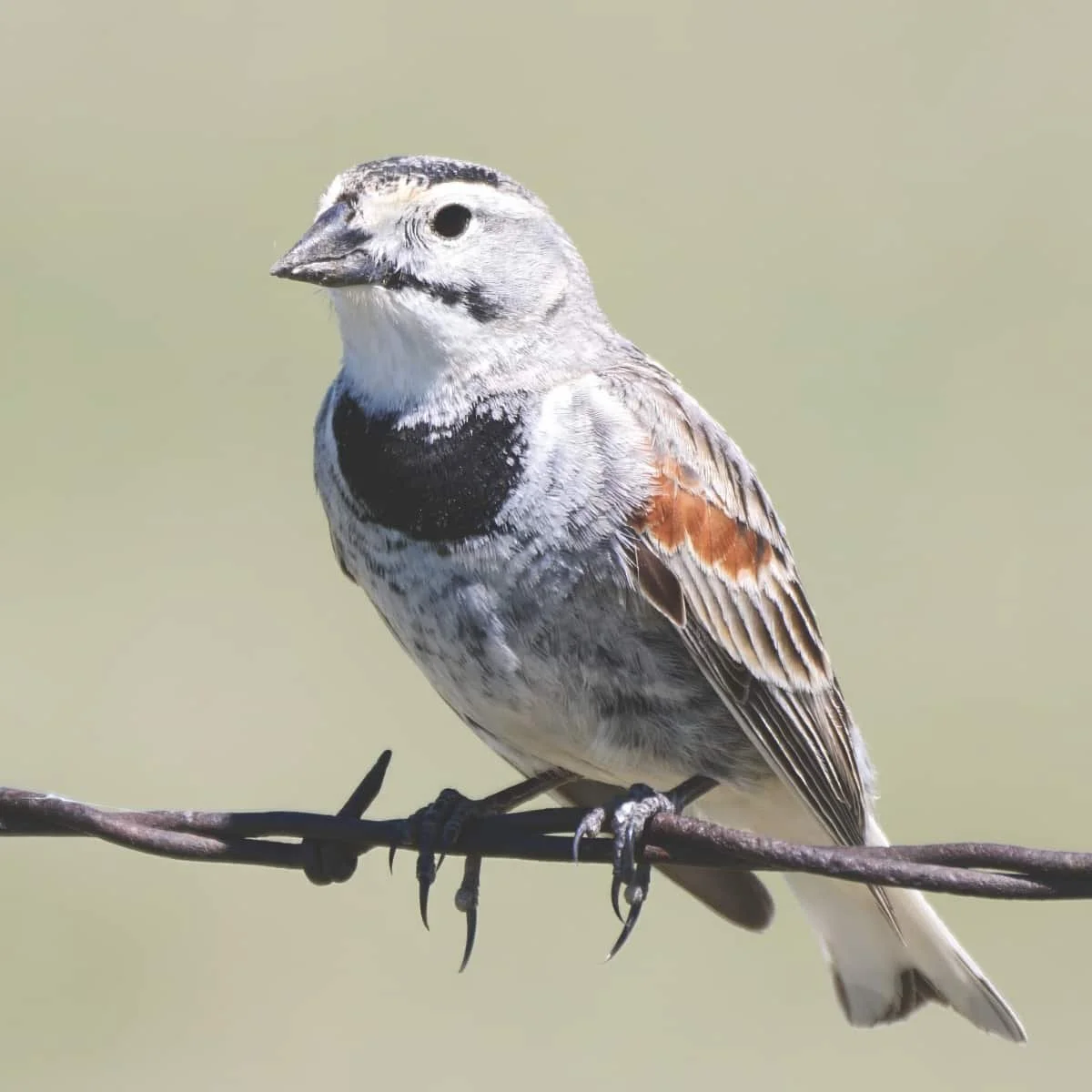
Thick-billed Longspur. Photo by Mike Melton
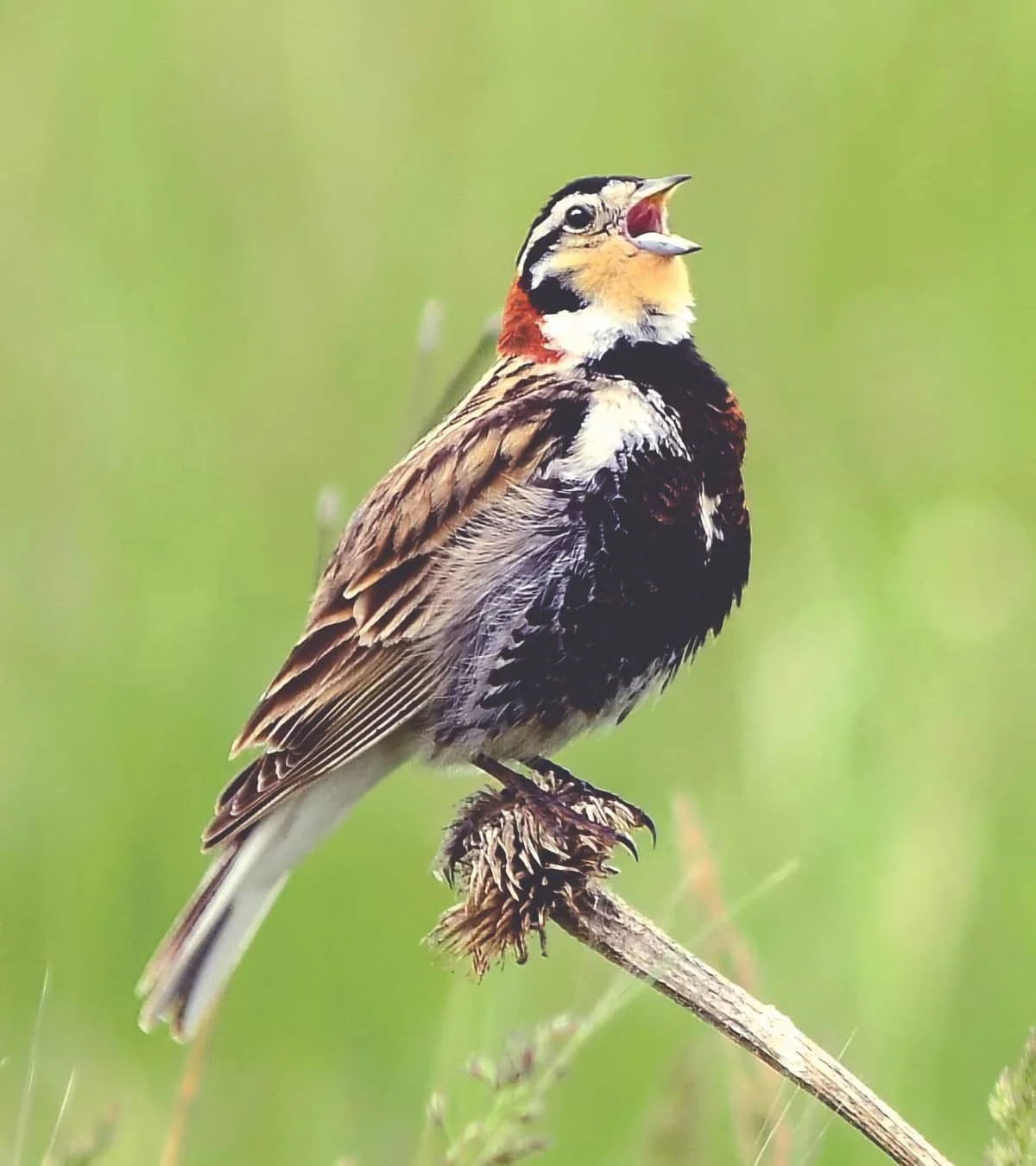
Chestnut collared Longspur. Photo by Rick Mohns
“When trying to ID, you want to look for specific markers to help give you a clue,” Emily Putz, Habitat Stewardship Coordinator for Nature Saskatchewan’s Stewards of Saskatchewan program explains. “One such marker is where their chestnut patch is,” she further notes. Both species have streaky brown backs, black facial markings, a thick stocky bill, a long hind toe (a “longspur”) and both black and chestnut patches. Thick-billed Longspur have a black patch on their chest, a gray belly, and a chestnut patch on their wings. Chestnut-collared have a fully black belly and, like their name suggests, a chestnut patch on the collar or nape of their neck. Chestnut-collared are also a bit more colourful overall.
While found in similar habitats, Chestnut-collared Longspur typically prefer shorter grazed areas and will follow cattle herds around year to year to find their ideal spots, while Thick-billed will use areas of taller vegetation within grazed areas. “Both species are facing several threats, the biggest of which is the loss and degradation of their breeding habitat, the shortgrass native prairie,” Putz explains, “and both rely heavily on the ranching community that provides and safeguards their remaining habitat. We encourage anyone that has these species on their land to report their sightings and get involved in our stewardship programs.”
If you spot a either a Chestnut-collared or Thick-billed Longspur, call Nature Saskatchewan’s toll free HOOT-line at 1-800-667-4668 or email outreach@naturesask.ca. Every sighting helps monitor the population size and distribution. Stewards of Saskatchewan works directly with rural landholders and managers to conserve and monitor this species at risk. Funding is also available to help improve their habitat by supporting grazing on the landscape through fencing and water development. Personal information is never shared without permission.