
Just A Gal From Glidden: She never asked for sympathy. She just kept going.
By Kate Winquist
Every spring, when MS Walk season rolls around, I think about my Mom.
Not in a sad way. In a determined way.
This year, the MS Walk returns to Eastend once again, led by people like my longtime friend Bonnie Gleim, who has spent years raising money, building awareness, and refusing to let Multiple Sclerosis define her life. Bonnie reminds me so much of Mom in that regard. Tough. Practical. Persistent.
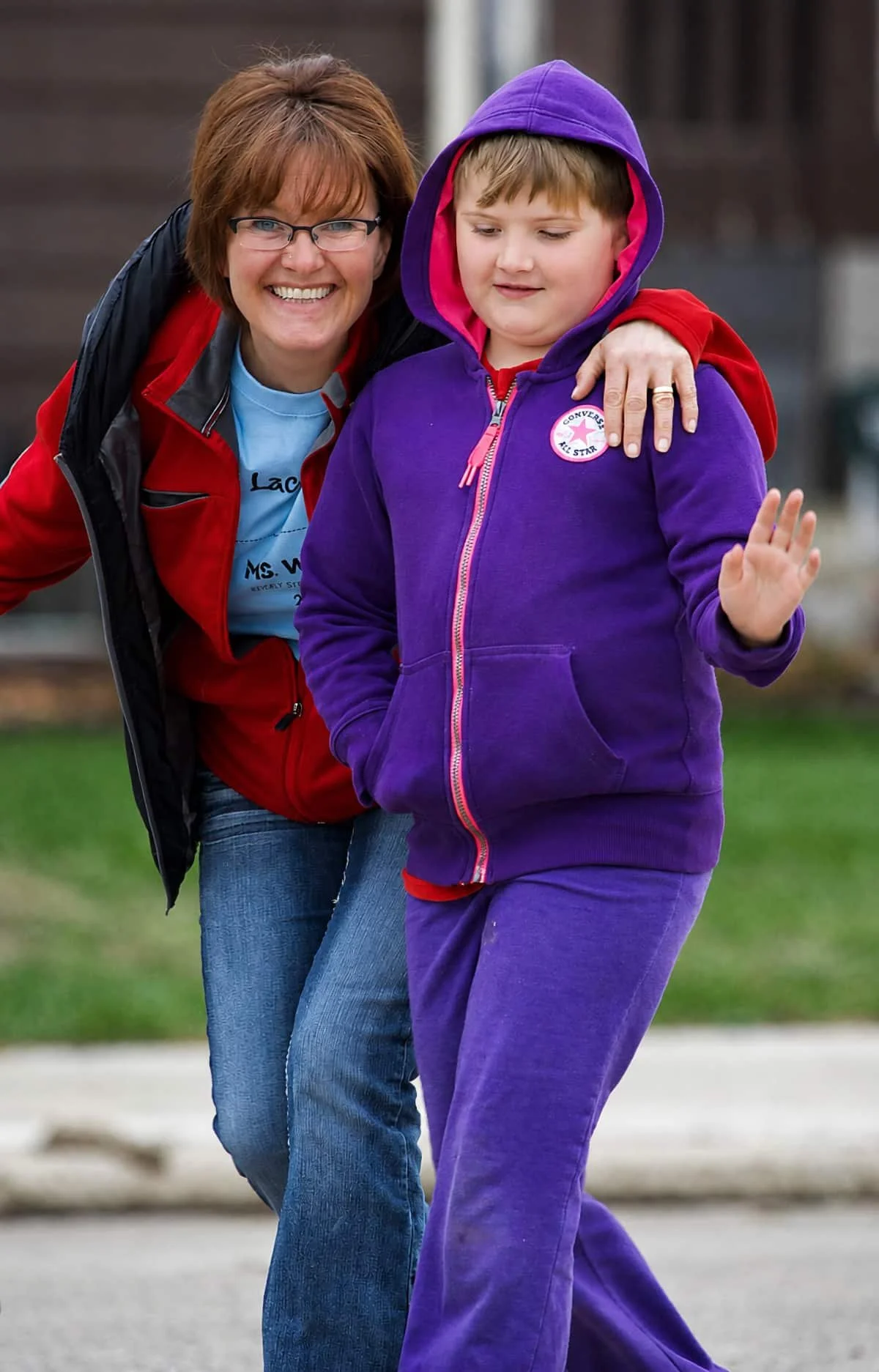
Bonnie Gleim (left) and Jaidyn Winquist at the Eastend MS Walk in 2014. PHOTO BY KATE WINQUIST
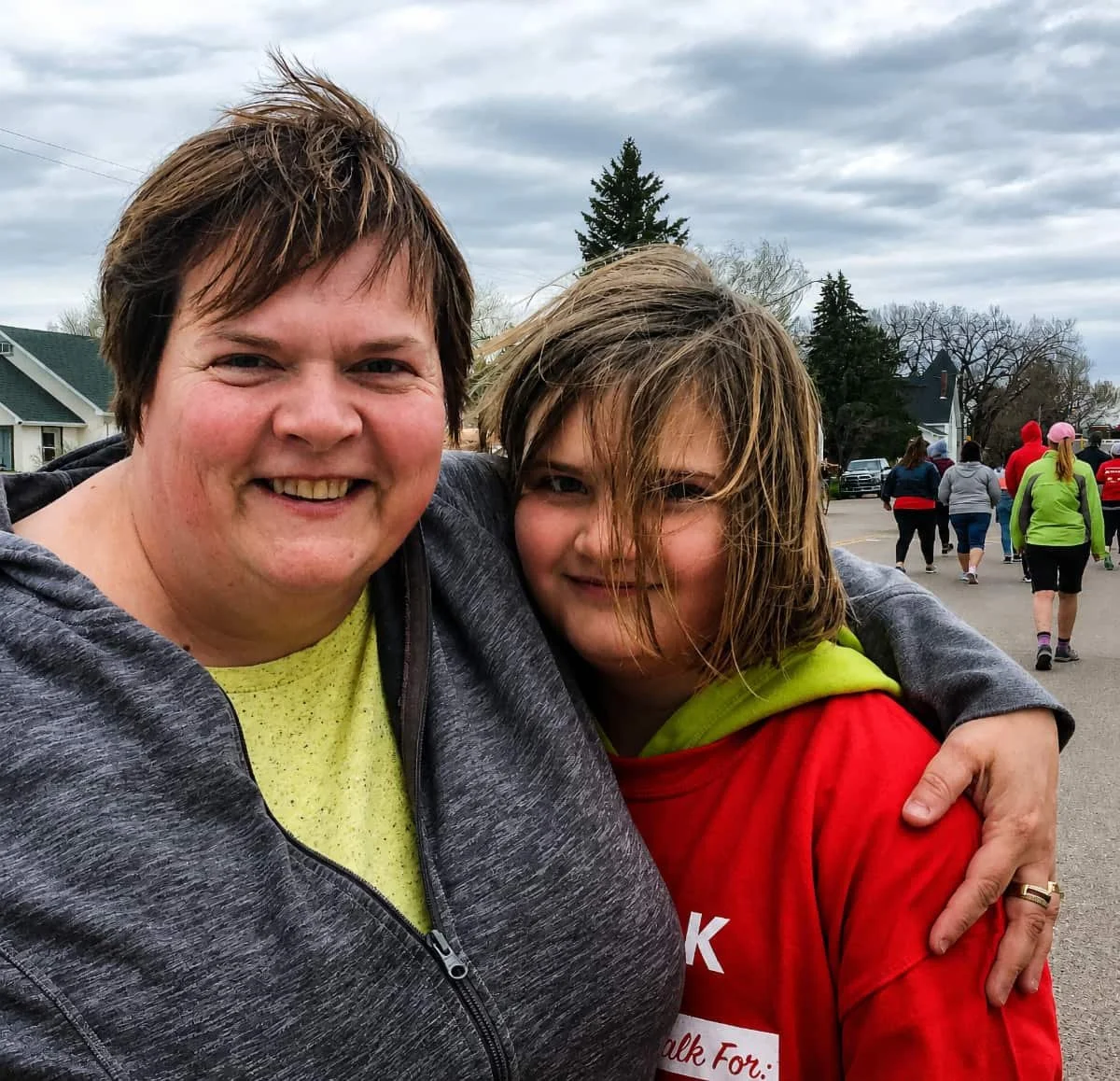
Jaidyn and I at the Eastend MS Walk in 2017. Over $41,000 was raised that year in the southwest Saskatchewan community. PHOTO BY BONNIE GLEIM
Back in 2013, I sat down and interviewed my mother, Beverley Drummond, about living with MS. Looking back now, I realize I wasn’t just writing a feature story. I was documenting resilience.
Mom had been diagnosed with Relapsing Remitting MS the year before I was born. By the time I came along in 1969, MS was already part of our family story. Not the centre of it. Just part of it.
She was only 32 years old. A farm wife. Five children under 12. Busy, capable, stubborn as all get out.
Then came the symptoms.
Double vision. Sudden falls. Hands that suddenly refused to cooperate. One side of her body feeling hot while the other felt cold. Strange things that came and went without explanation.
At first, doctors feared something even worse. A brain tumour, maybe. Instead, she got a diagnosis few people in rural Saskatchewan had even heard of at the time. Multiple Sclerosis.
And then she did what prairie women do.
She carried on.
That sounds simple until you really think about it. MS is unpredictable. Some days your body cooperates. Some days it doesn’t. Some mornings you wake up feeling almost normal. Other days, you sit quietly waiting for your vision to straighten out or for your legs to respond again.
Mom described it best during that interview:
“You learn to live with it.”
Not conquer it.
Not defeat it.
Live with it.
There’s a difference.
Growing up, I never remember Mom using MS to ask for pity. She adapted. She adjusted. She kept moving forward. Maybe slower some days, but always forward.
There were hard moments, of course.
I still remember hearing her scream one day while canning. She had tried lifting boiling water when she shouldn’t have and spilled it down herself. MS forced her to learn painful lessons about what her body could and could not do anymore.
But even then, she didn’t quit living.
She travelled. She played competitive bridge. She laughed. She built friendships through MS support groups around Kindersley with people facing the same uncertain future.
And she kept planning for tomorrow.
One line from that 2013 interview still stops me cold:
“When I go to bed at night I think of something that I have to do come morning.”
That’s not just survival. That’s purpose.
Today, MS research has come a long way from when Mom was diagnosed in the 1960s. There are more treatments. More understanding. More support systems. But there is still no cure.
That’s why events like the MS Walk still matter.
Not because they are symbolic.
Because they are necessary.
Every dollar raised helps fund research, support programs, mobility equipment, advocacy, and hope for families who are still hearing those life-changing words for the first time: “You have MS.”
The disease looks different for every person. Some live with invisible symptoms. Others lose mobility. Some battle exhaustion that healthy people cannot fully comprehend. Many carry on quietly while the world around them has no idea what they are managing internally.
That’s why I think about Mom this time of year.
And about Bonnie.
And about all the people who refuse to surrender their identity to a diagnosis.
Mom passed away in 2024 after living with MS for nearly six decades.
Six decades.
Most people cannot comprehend the endurance that takes. Not just physically, but mentally. To wake up every day not knowing what your body may or may not cooperate with, and still choose optimism anyway.
But that was Mom.
She once told me:
“I figured if I could live to raise you kids, that’s all I asked for.”
Mission accomplished, Mom.
And then some.