
Growing up along the rails: Ron Lamont’s prairie story
By Joan Janzen
Ron Lamont is a familiar face to Kindersley residents. He and his wife Stella lived in Kindersley for over 70 years and were very active in the community. Ron currently lives in Ontario but was happy to share many fond memories of his childhood and the journey that brought him to Kindersley.
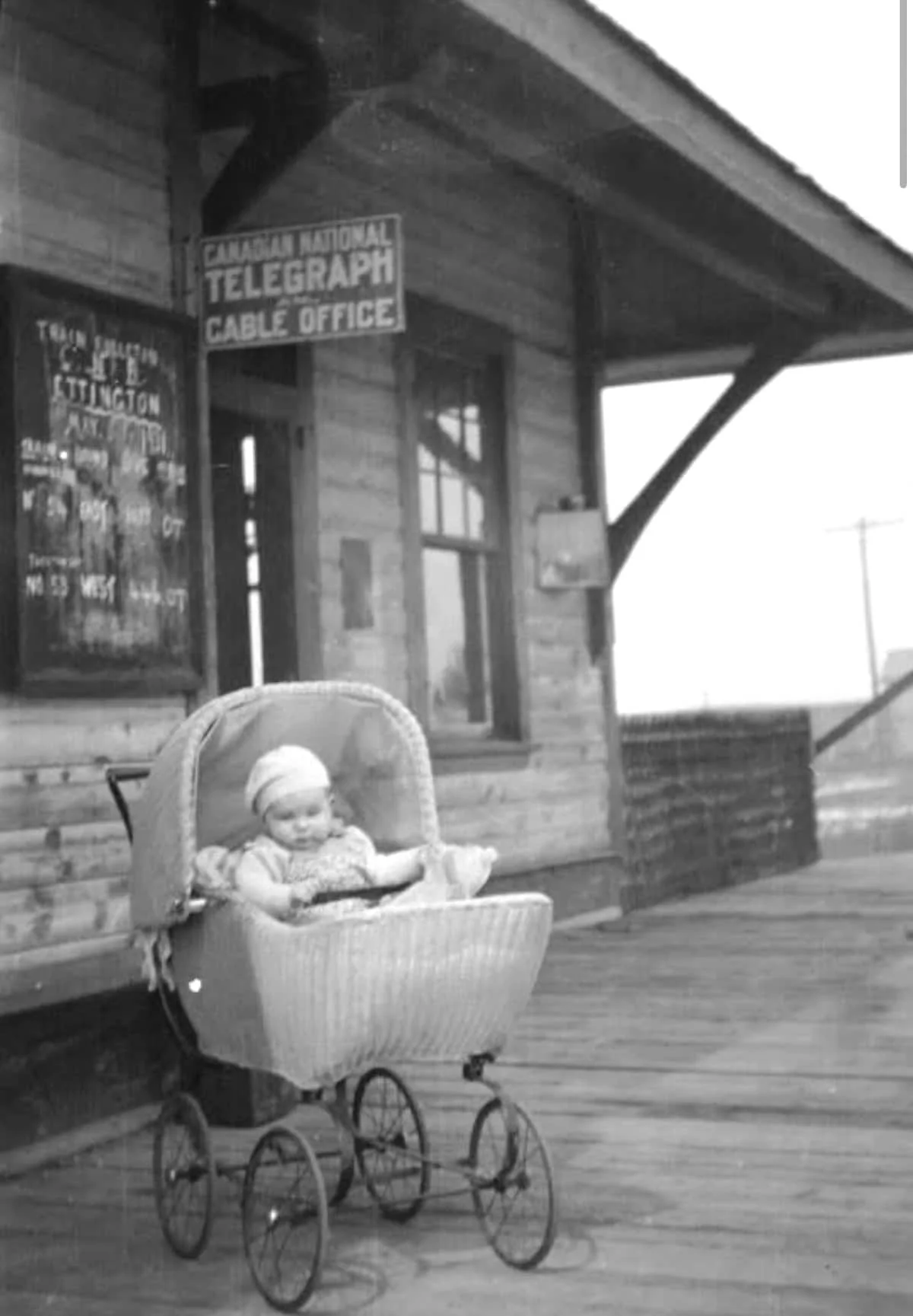
He was born in Assiniboia, Sask., on August 27, 1930. At that time his dad was station agent at the CNR station at Ettington, Sask. Later the family moved to Dummer, located one hour south of Regina, where his father was the CNR station agent. Most of the stations had living quarters, and the agents paid a few dollars’ rent, which included coal and ice.
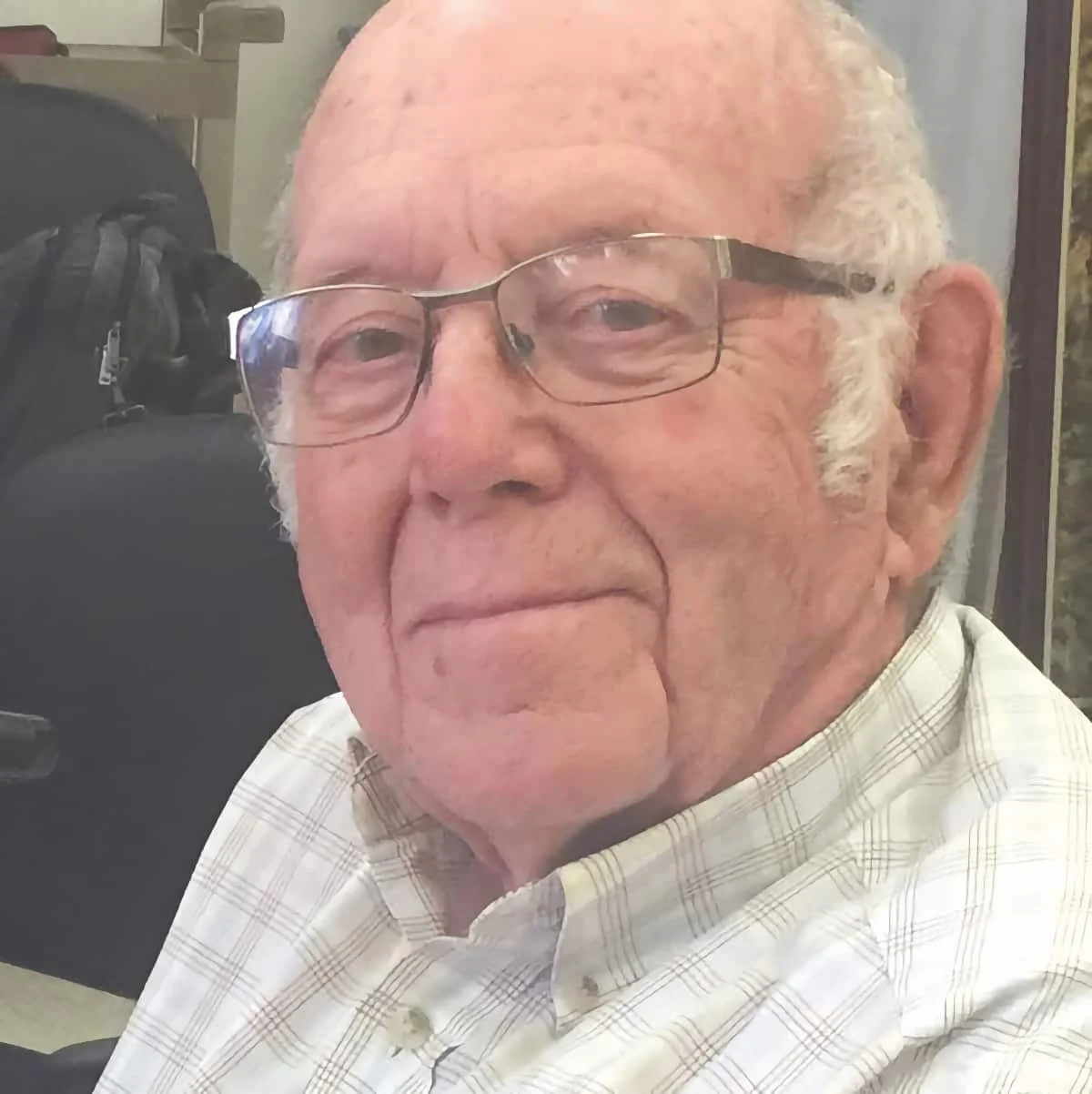
Ron Lamont and his wife Stella, who passed away in 2020, lived in Kindersley for more than 70 years. Ron currently resides in Ontario. Photo supplied by Ron Lamont
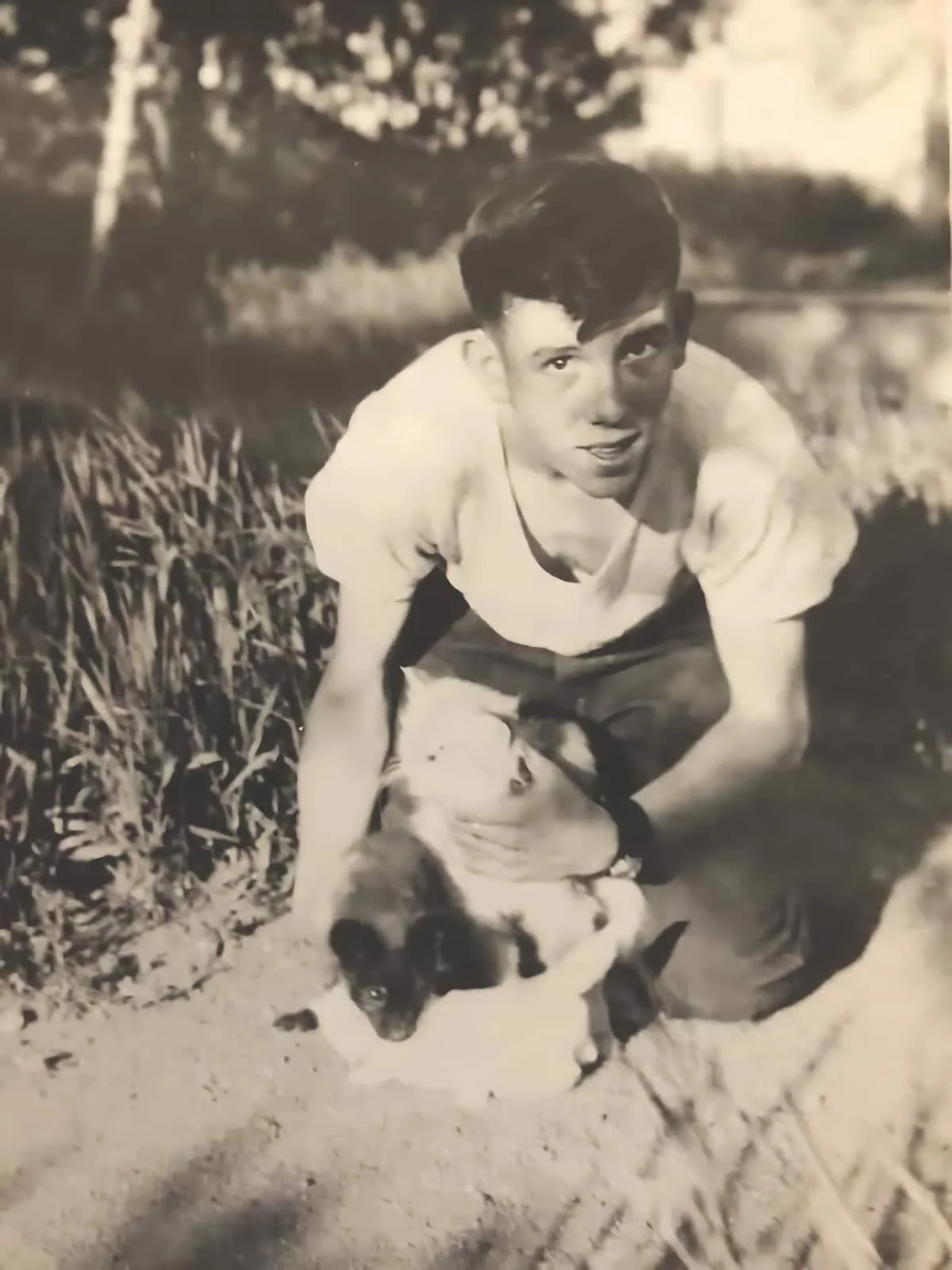
Fourteen-year-old Ron Lamont and his baby silver fox pup, Snapper, who was orphaned at birth. His pet cat adopted the pup along with her own kitten. Photo supplied by Ron Lamont
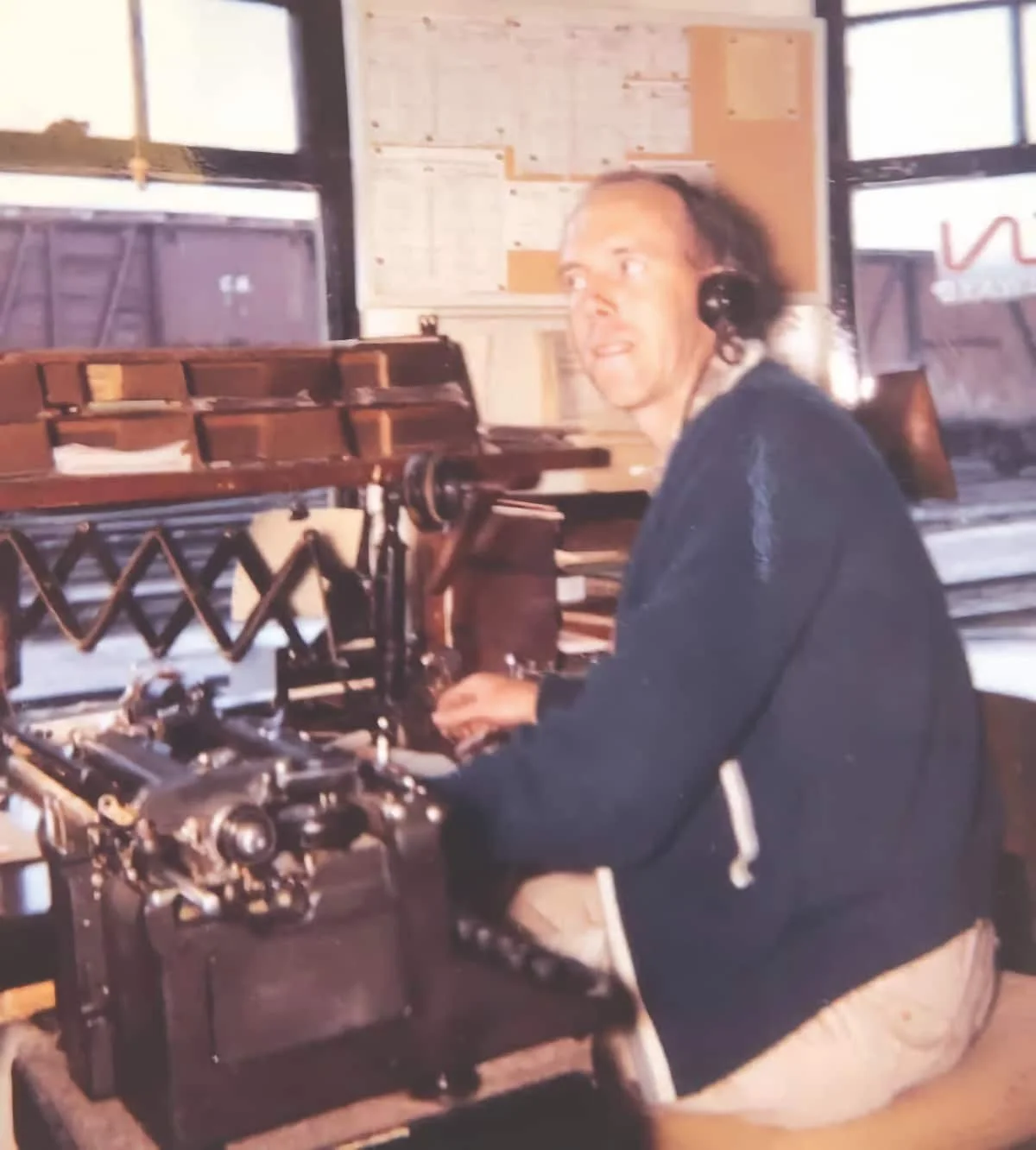
Ron Lamont working in the station office at Kindersley. Telegrams for Kindersley customers were delivered by a telegraph delivery boy at noon and after school using a bicycle in the summer and on foot in the winter. Photo supplied by Ron Lamont
“My sister Betty and I lived in railway stations from birth until we were eighteen years old,” he said. His sister was one year younger than Ron. Extra attention was required by his parents as they raised their family fifteen feet from the railway tracks, where trains ran 24 hours a day, as well as motor cars and hand-operated hand cars.
“It was difficult to keep toddlers away from the tracks when the play yard was on the other side of the station,” he reported. “We were not allowed on the platform or near the tracks without our parents’ supervision.”
He only recalled one accident occurring near the tracks. A husband and wife were driving a team and buggy near the railway tracks when the train whistle scared the horses and they ran away. The buggy tipped over, causing injuries to one of the occupants.
In 1936 Ron’s family moved to Truax, 75 km southeast of Moose Jaw. His father was station agent there until 1942. “My father had to tend three stoves, one in the waiting room, as well as the living quarters and kitchen. Water came on the freight train from Moose Jaw once a week to fill our barrels,” he recalled.
The old wood and coal kitchen stoves had a reservoir that held water, which was warmed by the heat from the stove. “Many homes burned coal as there was very little wood in the area,” he explained. Coal was more beneficial because it burned all night.
Ron began attending school at Truax. In the winter months a student would light the stoves in the school one or two hours before classes started. “Many days we left on our outside clothes as the school could still be cool,” he said.
During the years of drought he remembers he and his sister wearing wet hankies over their faces on the way to school because of the dust storms. “We had scary trips to school. At times the sun was a red glow through the blowing dust,” he said.
Russian thistles were the only plants that grew well; some farmers fed them to their livestock. Tumbleweeds would lodge along the barbed wire fences, and the dirt would pile up, enabling the livestock to step over the fences.
The government would ship in boxcars full of slabs of dry cod fish, as well as fresh apples from parts of Canada. Farmers would come by horse and wagon to pick up their allowance. “Since my dad had a full-time job as station agent, we were not allowed rations,” he said.
Many farmers left with a few possessions in wagons pulled by thin horses as they headed to northern Saskatchewan, where there was still green grass, water and firewood.
Money was scarce. Ron remembers losing a dime in the cracks of the wooden sidewalk. “The money was for a haircut at the barbershop, and we had to pry up a board to recover the dime,” he said.
“We did put pennies on the tracks before the train arrived, but not until we were older. We had to remember that once the penny was squashed it was garbage, while that coin cashed in at the Chinese café would buy three or four jawbreakers, which were a treat,” he recalled. “I usually felt I was better off with the candy.”
Cream and eggs were shipped on the railway; cream was shipped in five-gallon cream cans and the eggs in 30-dozen egg crates, which were loaded on and off the express cars.
There wasn’t a Brinks truck to transport money to the local banks. Instead, the railway had a portable steel strongbox to store the cash while it was being transported. “The baggage man was issued a revolver to protect the money,” he recalled. When the train arrived, the station agent signed for the money and kept it in the station safe until it was picked up.
“The rules of the bank were generally that two people were sent to pick up the money, and one of them had to carry a revolver issued by the bank,” he remembered. “People used to joke that the manager probably also carried one to collect overdue bills. During the Depression there were probably lots of them.”
Since there was no electricity or phones at that time, the CNR telegraph was the only means of transferring money at the banks. The elevators also received their grain sample results there, and during the war years the government would send telegrams advising families of loved ones who had been captured, wounded or killed. As station manager, Ron’s father would have a clergy minister accompany him as he delivered the sad news to families.
His dad also relayed messages from nearby towns. A message saying “The cow has freshened, come and pick her up” meant another batch of home brew was ready.
The railway station was always one of the busiest places in town since everything was delivered by train, including mail, town groceries and supplies, and coal that came from mines in Alberta. Thousands of cars of coal were shipped in forty-ton enclosed boxcars. Coal sheds were built lower than the boxcars so when unloading, a steel chute could be placed from the boxcar door into the shed. Coal was unloaded using two-handled coal buckets. The farmers and local draymen loaded coal on wagons or sleighs for delivery to local homes and farms.
Lighting in homes was provided by coal oil lamps and gas mantle lanterns. The gas lamps produced a much brighter light and had to be pressurized by a pump to force the gas to the glowing mantles. “It is a wonder there weren’t more fires caused by these early lamps,” Ron mused.
In 1939 the beginning of WWII was announced. Ron said he remembers that news really well. “I was only nine years old at that time, and I was fifteen when the war was over. My parents were worried as I grew closer to the age of the draft. This time period was hard on Saskatchewan people since they had just finished with the Depression years,” he said.
Food and gas were rationed and, since battery radios were not common, his family used their radio sparingly to make the battery life last.
After the family’s next move, Ron attended Springwater School from 1942 until 1949. It was a two-storey brick school. “Many identical brick schools were built when the small country schools were being closed in Saskatchewan,” he recalled. Springwater is located in the RM of Biggar.
Ron’s main means of transportation as a teen was a girl’s bike. “We learned to share everything in those days … clothes and toys included,” he said.
During the war years there were a number of fox and mink ranches across Saskatchewan. Silver fox pelts were shipped to England where they were sold by auction. At the age of 14 Ron worked for Culbert Bourk, who owned a fox ranch by the CNR station in Springwater in 1944.
“During the Second World War there was a shortage of workers as most of the young people were occupied with the war effort,” he said. “I was fourteen years old when I received my first fox as payment for helping at the ranch.”
Ron remembers taking home his baby silver fox pup that had been orphaned at birth. “I had an old orange mother cat with only one kitten who adopted the little fox pup like one of her own,” he said. “They all really enjoyed oatmeal porridge, so my mother made many bowls of it for them. All three ate out of the same large dish. They were together until Snapper was almost an adult. I used to turn him loose in our yard behind the railway station where we lived. If strangers came along he would run and jump into my arms and hide his head under my jacket.”
Ron moved to Kindersley in 1949, where he worked as a CNR telegraph operator. He worked the spare board, relieving station agents and telegraph operators around Saskatchewan, and was sent to Kindersley to relieve the telegraph operators there.
He remembers purple gas still being used in the 1950s. Back then farmers purchased their fuel in forty-five-gallon steel barrels. The dealer had cubes of purple dye to drop into the barrels so the police could identify if people were using farm fuel for other uses.
“During the fall the game wardens and police would set up highway checks. I was contracting with Canadian Wildlife Service, so we checked and recorded all waterfowl in vehicles,” he said. The RCMP had a long hose which they placed in the gas tank, checking for purple fuel. They pumped a rubber bulb which sucked up fuel into a glass chamber.
“The police would walk by snapping the hose and just by the reaction of the driver they usually knew who had purple gas even before they checked,” he chuckled.
“A permanent operator’s job came up while I was at Kindersley and I was able to stay working at the CNR station,” he said. A few years later he met Stella, who was working as a nurse, and they were married on June 2, 1954. They raised three children and were very active in the community.
Thanks for sharing your memories, Ron. We enjoyed hearing your stories.