
From strawberry fields to robotic milking: A behind-the-scenes look at colony life
Story and Photos By Joan Janzen
Customers have been taking advantage of the summer markets in the Kindersley Co-op food store parking lot, where local Hutterite colonies offer fresh produce, baking and handmade crafts each week. Last week, Lorna and Tamra Kleinsasser from the Smiley Colony invited me to tour their home colony, and I gladly accepted.
My three tour guides, Lorna, Helen and Amy Kleinsasser, were friendly, knowledgeable and eager to explain how life and work are organized within the colony.
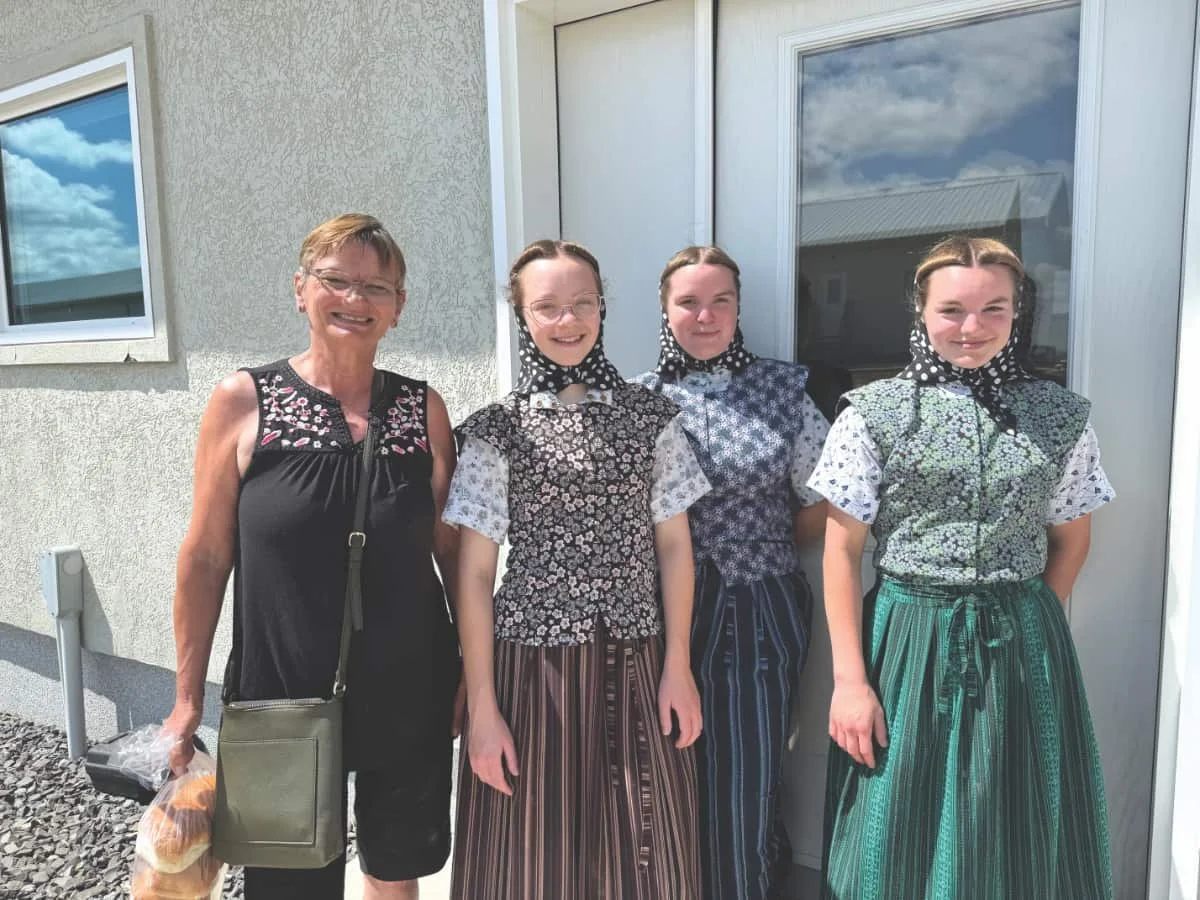
TOUR GUIDES: Lorna, Helen and Amy Kleinsasser (left to right) served as friendly tour guides during the visit to the Smiley Colony.
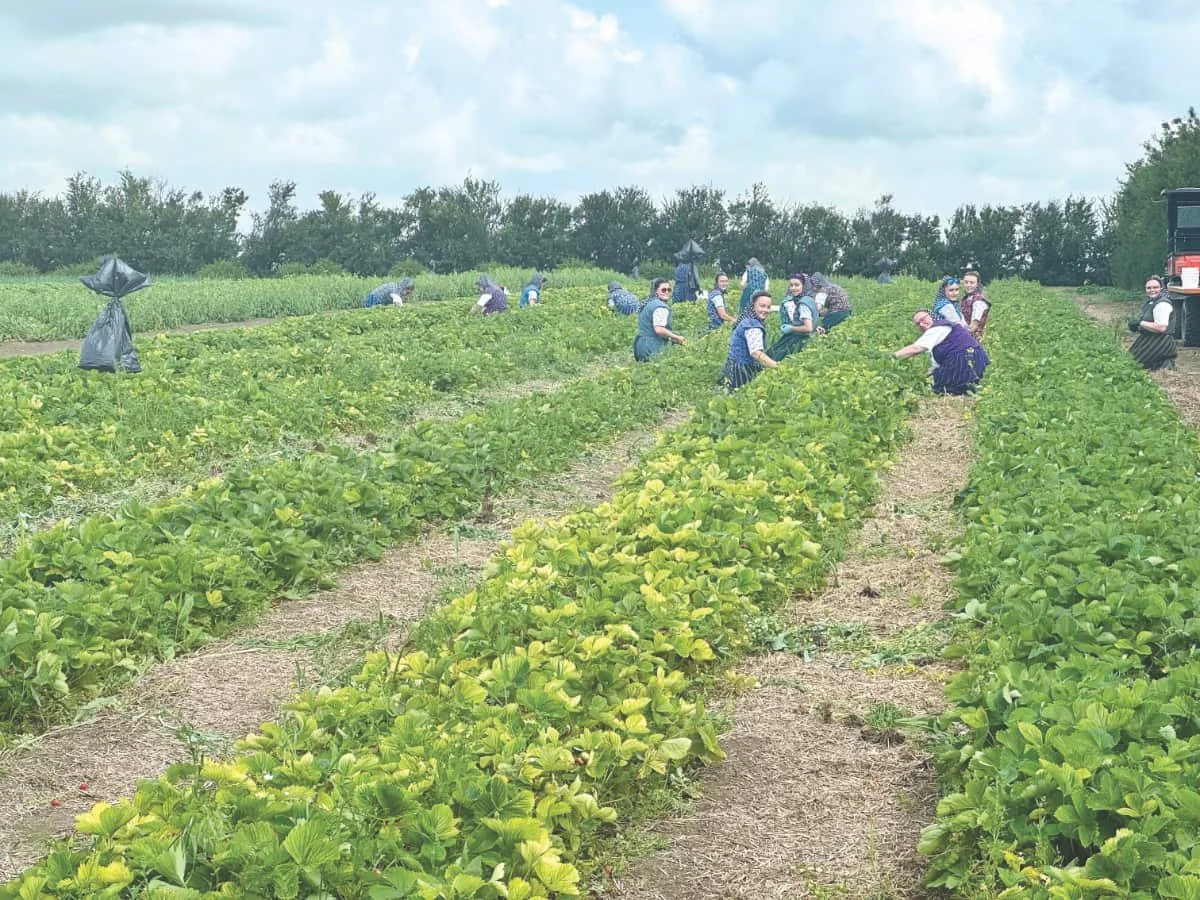
BERRY HARVEST: A group of women picks strawberries in the colony's garden, where approximately 120 ice cream pails are harvested twice each week.
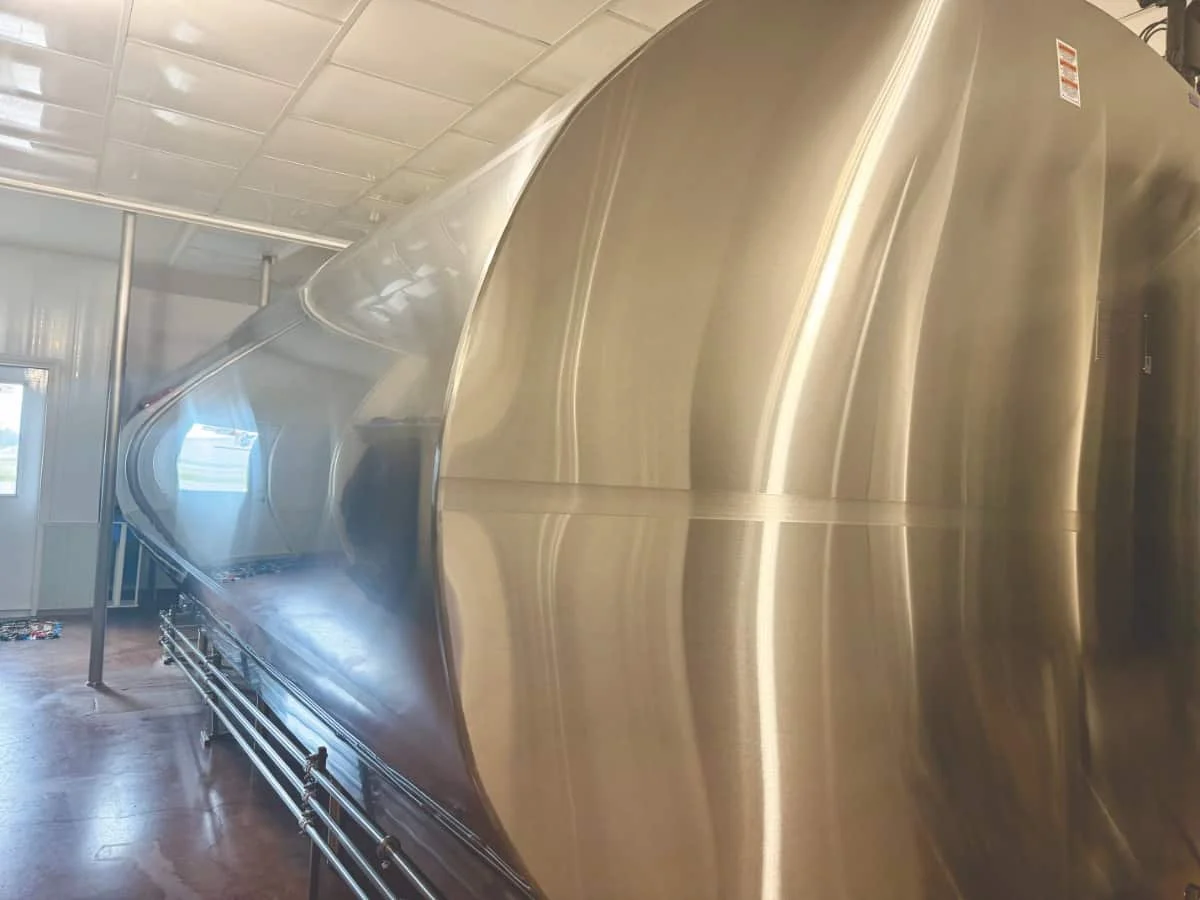
MILK STORAGE: Milk from the colony's dairy herd is cooled and stored in a large stainless steel tank before being hauled to Saskatoon twice a week.
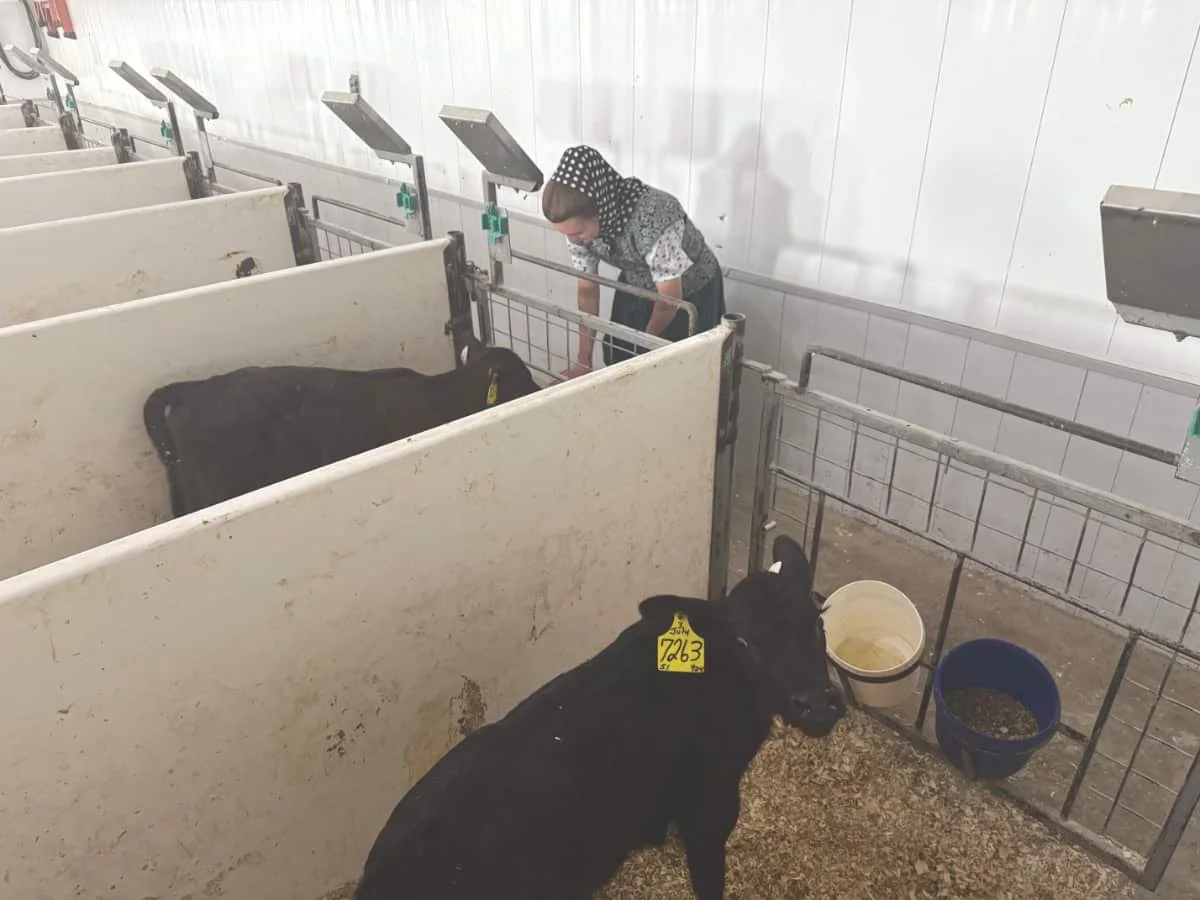
CALF CARE: One of the colony's young members tends to a calf in the barn, where approximately 350 calves are raised.
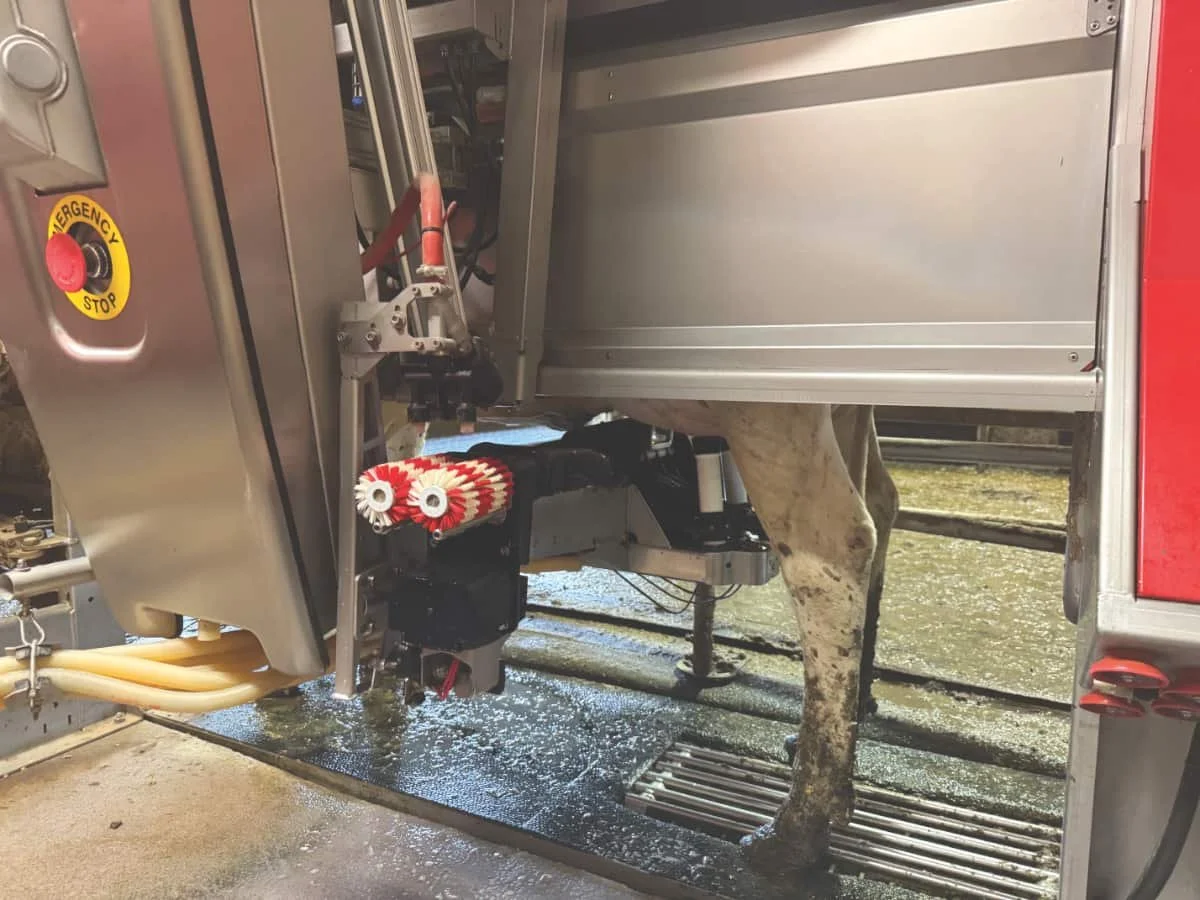
ROBOTIC MILKING: A cow enters the robotic milking station, where cows are milked voluntarily three times a day.
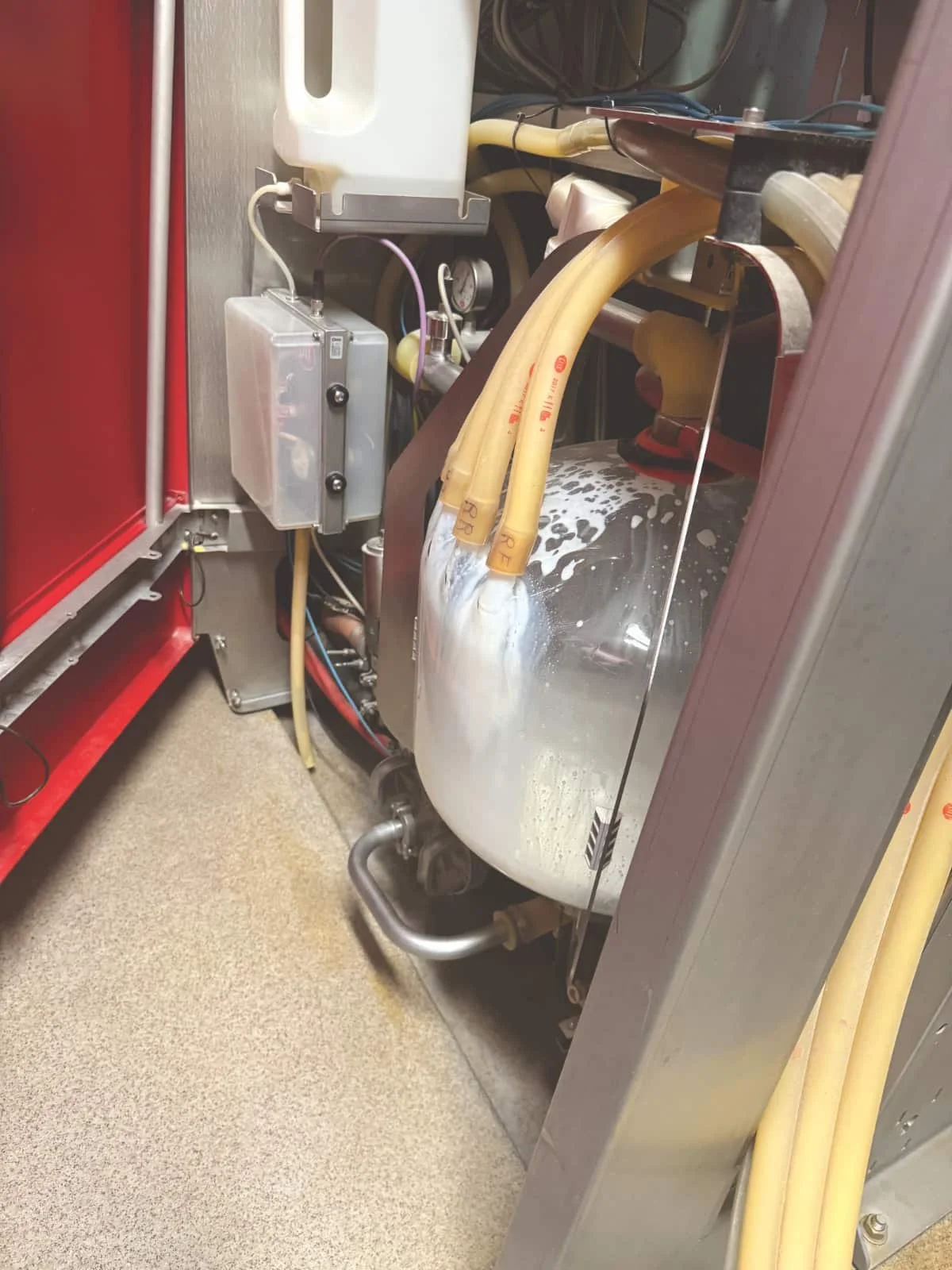
MODERN DAIRY: Fresh milk flows through the robotic milking system before being transferred to the refrigerated storage tank.
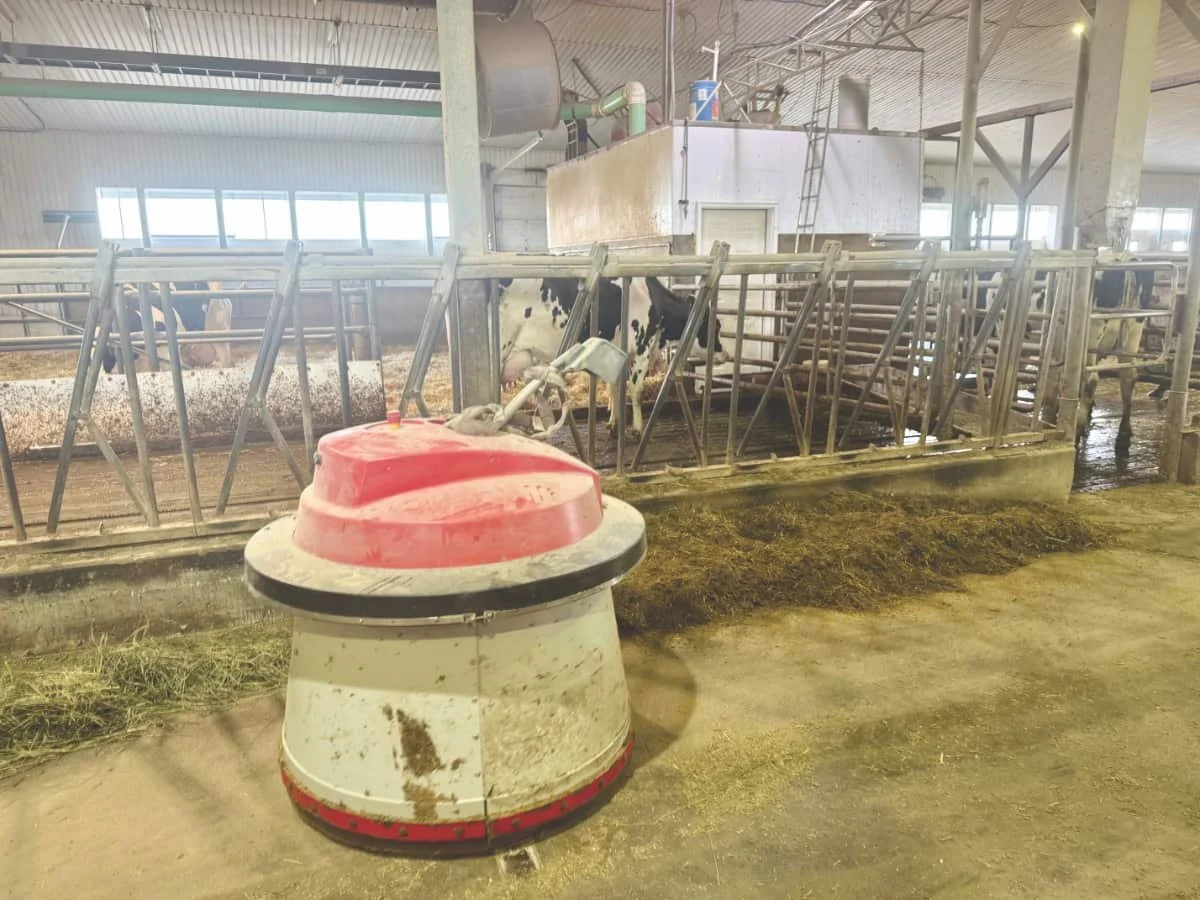
AUTOMATED FEEDING: A robotic feed pusher moves feed closer to the cows every hour throughout the day.
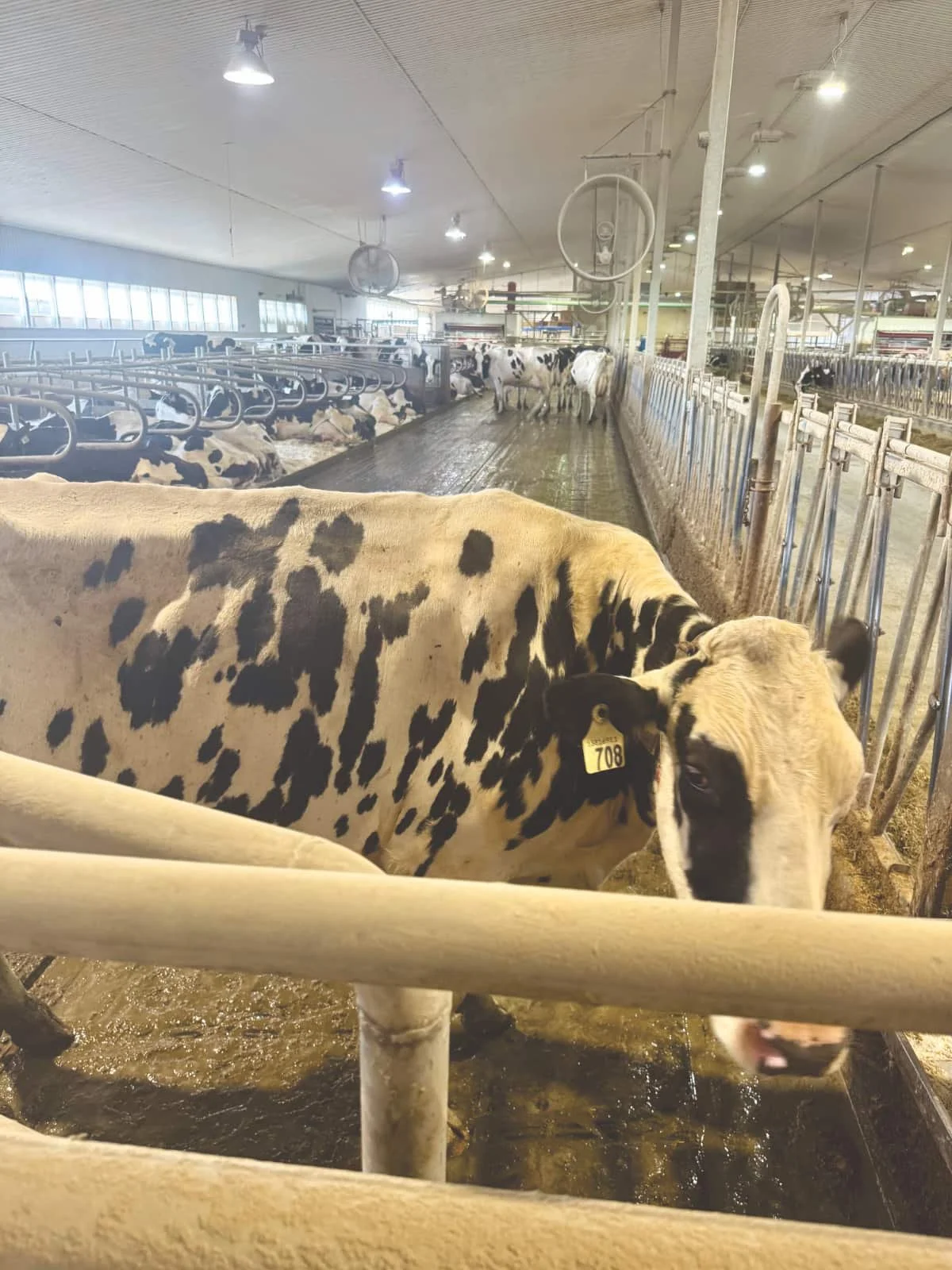
DAIRY HERD: The free-flow dairy barn houses approximately 110 milking cows.
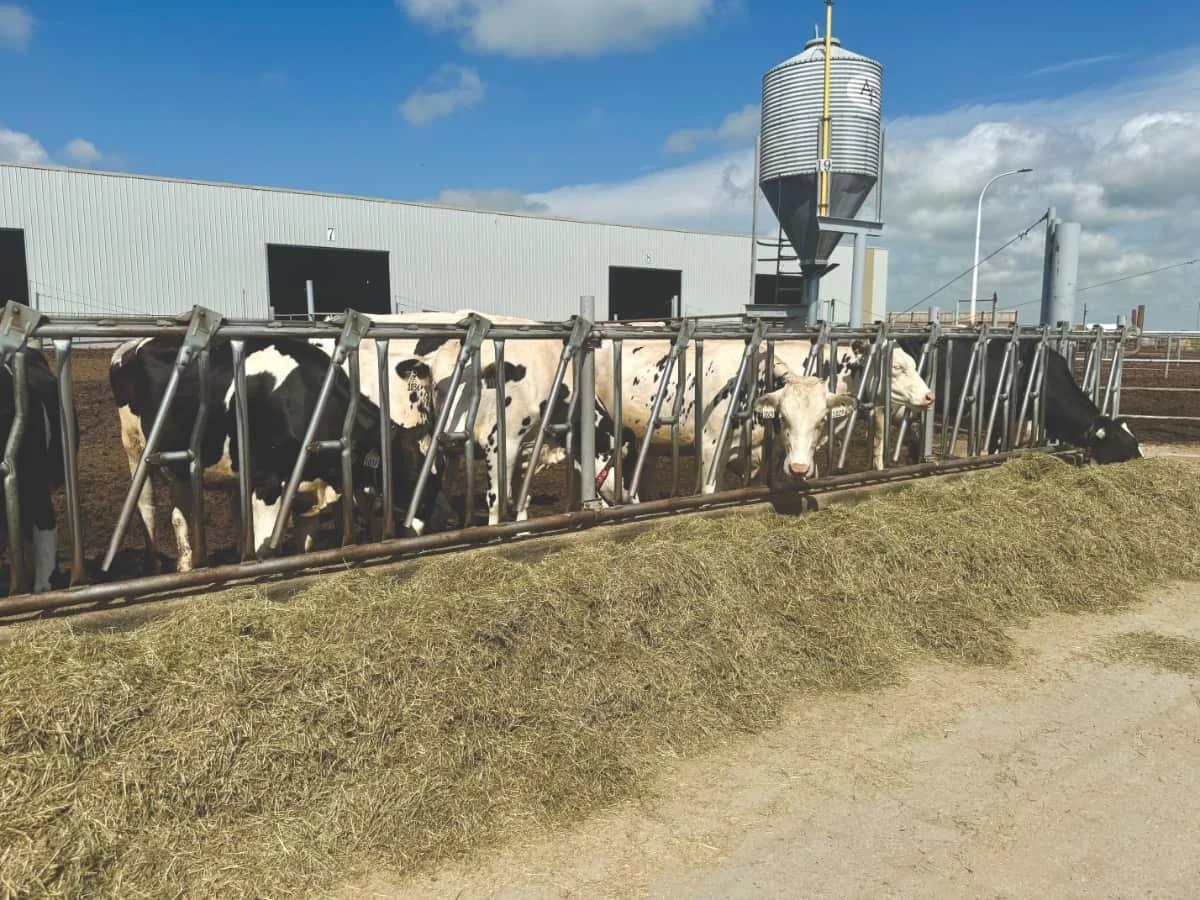
REGISTERED BULLS: A row of registered bulls stands in an outdoor pen at the colony.
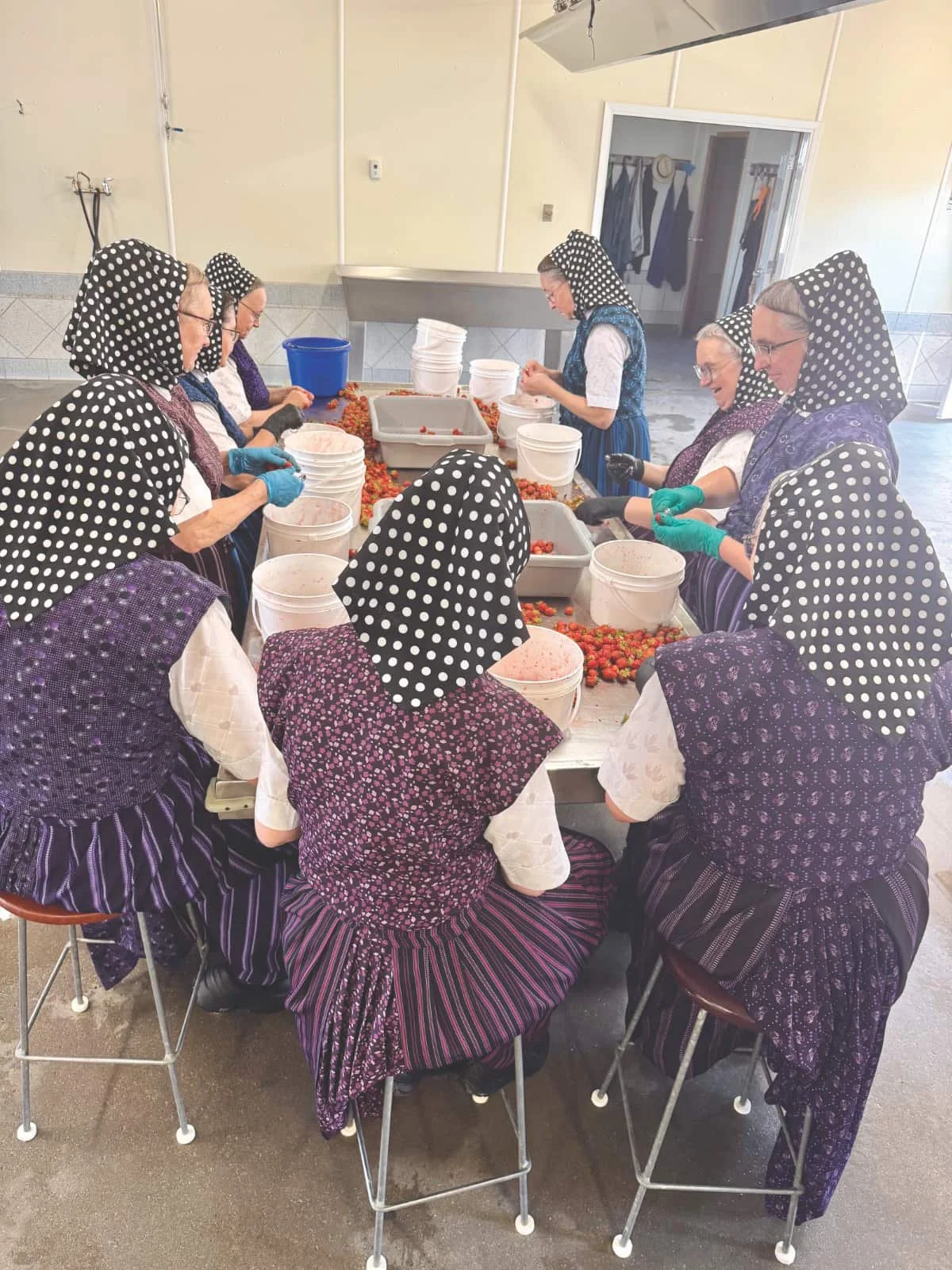
SORTING THE HARVEST: Women sort freshly picked strawberries before they are packaged for sale at local markets.
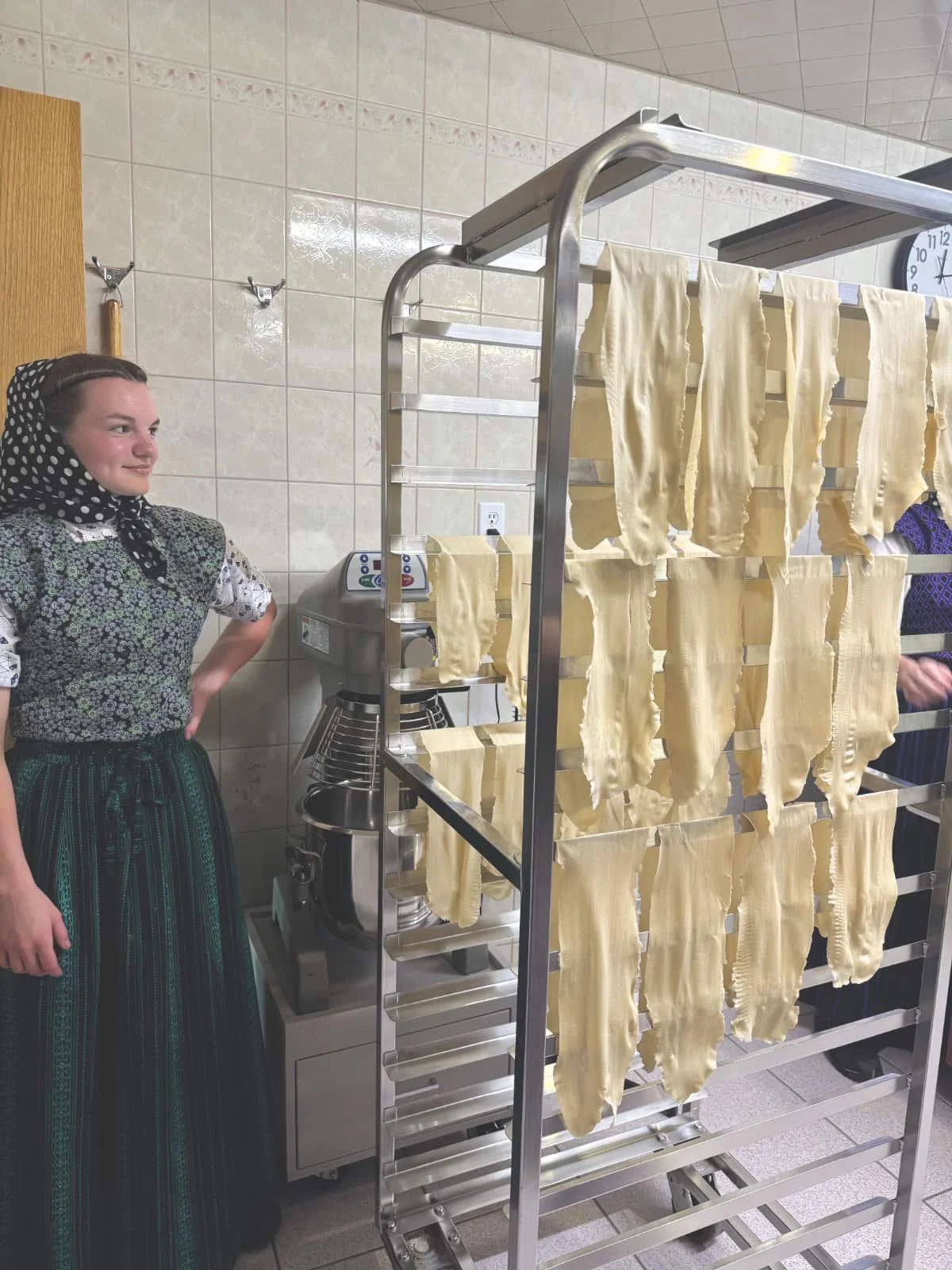
HOMEMADE NOODLES: After lunch, the women gather to prepare homemade noodles.
Our first stop was the strawberry patch, where a group of women had been picking berries since 7:30 that morning.
"We pick 120 ice cream pails of strawberries twice a week," Lorna explained.
The berries are then sorted by another group of women. Smaller berries are kept for the colony's use, while the larger ones are sold at the weekly markets. That afternoon, the same crew planned to move on to picking cucumbers.
Next, I was shown the colony's cooler, where a large stainless steel rack holds chickens after they have been plucked and cleaned.
"We butcher chickens every eight weeks, 1,200 at a time. The whole colony helps," my guide said.
From there we visited the dairy operation, home to approximately 110 milking cows and 350 calves. Matthew Kleinsasser, the cattle boss, demonstrated how technology has become an important part of modern farming. Using his cellphone, he operated a robotic feed pusher that automatically moves feed closer to the cows every hour. Automatic alley scrapers clean the barn six times a day, with the manure later used as fertilizer.
The barn also features large rotating brushes that cows eagerly use to scratch their backs and ears.
"They'll stand here for hours scratching themselves," Matthew said with a smile.
The free-flow dairy barn allows cows to visit the robotic milking station whenever they choose. The cows are milked three times a day before the milk is pumped into a large refrigerated storage tank. Tanker trucks arrive twice each week to haul the milk to Saskatoon for processing.
Outside, a row of registered bulls stood quietly in their pen.
After touring the dairy, my hospitable guides invited me to stay for lunch. Afterwards, I watched another group of women making homemade noodles while others continued sorting the freshly picked strawberries. Every task on the colony seemed to be carried out efficiently by teams of hardworking members, each contributing to the daily operation.
As my visit came to an end, I was presented with a complimentary bag of homemade buns before heading home. As I drove away, I couldn't help but admire the beautifully manicured yards surrounding each family home.
Thank you for the warm hospitality, girls. Your customers and friends will be looking forward to seeing you again at one of the upcoming summer markets.