
From Ceylon to Kindersley: Carol Gerle shares treasured memories
By Joan Janzen
Carol Gerle is a familiar face in Kindersley, having lived here with her husband, Dan, since 1979. She recently took time to share memories from her journey that eventually led her to this town.
She was born in the tiny community of Ceylon, Sask., located 70 miles south of Regina, on December 29, 1942. “I was born in a nursing home, but there was a doctor present. I was a blue baby with a cord around my neck,” she explained. The doctors had given up on her and handed her to her dad before she had taken her first breath. Years later, her dad recalled her birth and said, “I wanted you more than anything else, and I wasn’t giving up.” Carol thrived along with her two older siblings and later a younger sister.
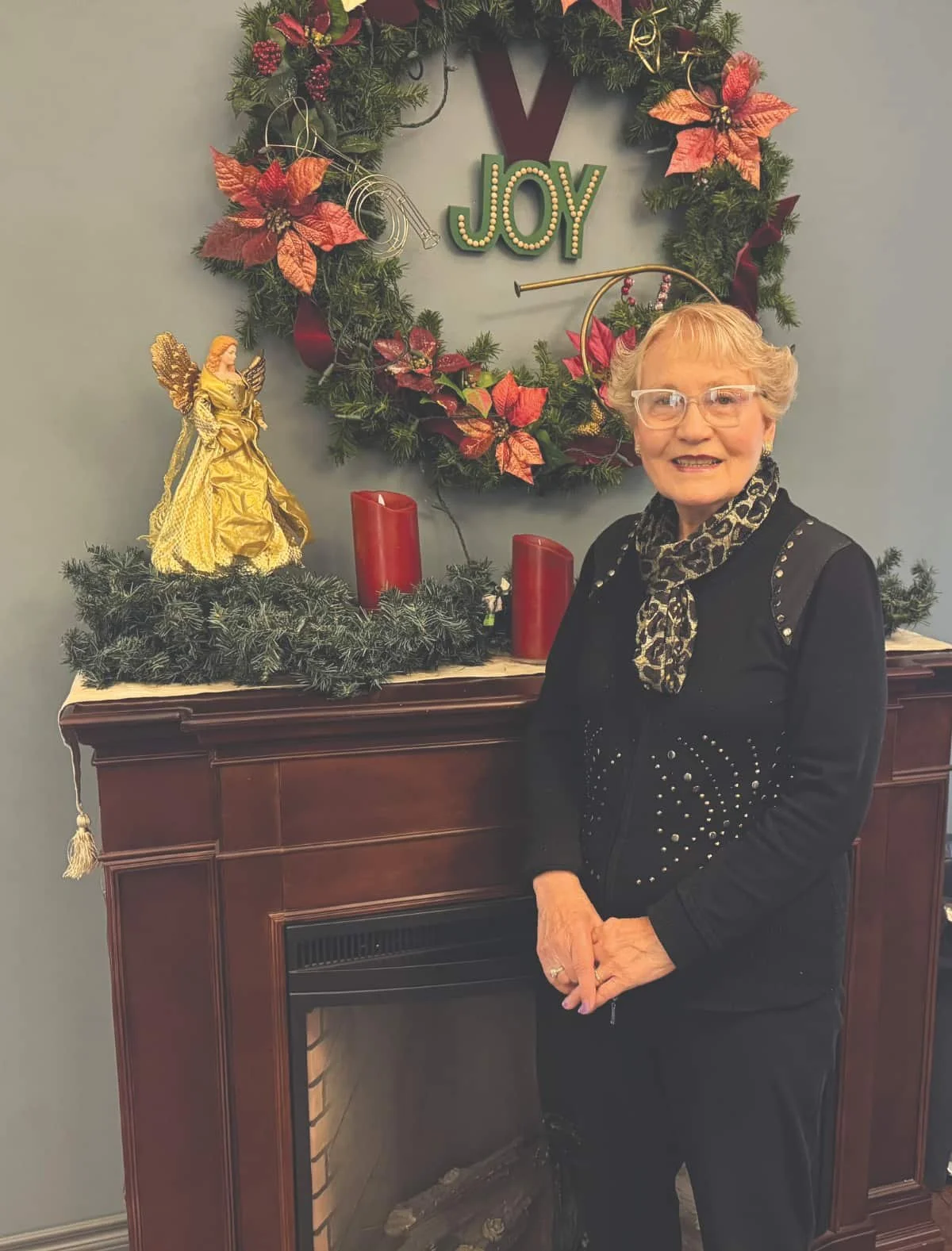
Carol Gerle shares some of her treasured memories from the past. Photo by Joan Janzen
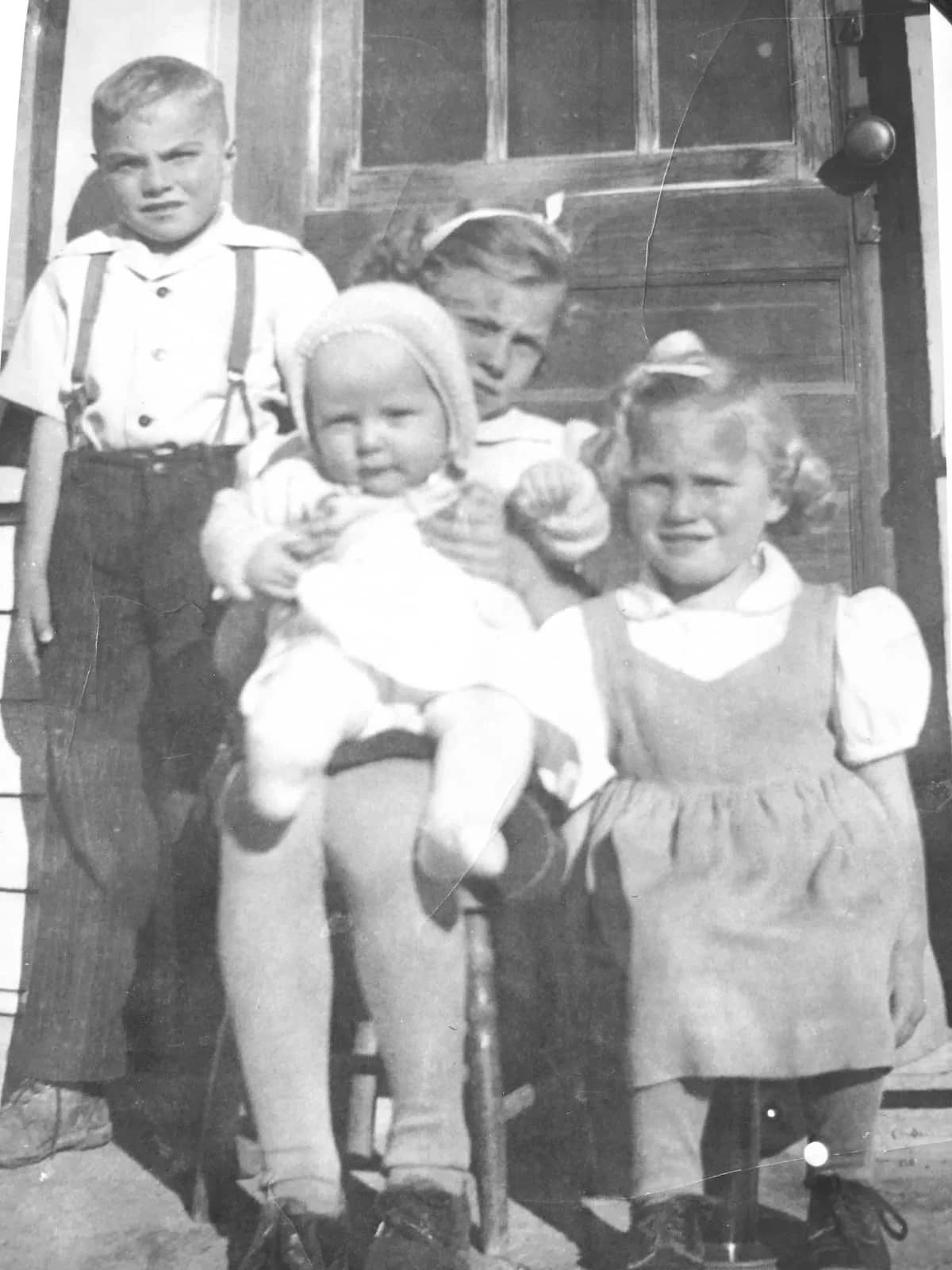
Carol on far right with her siblings. Photo Submitted
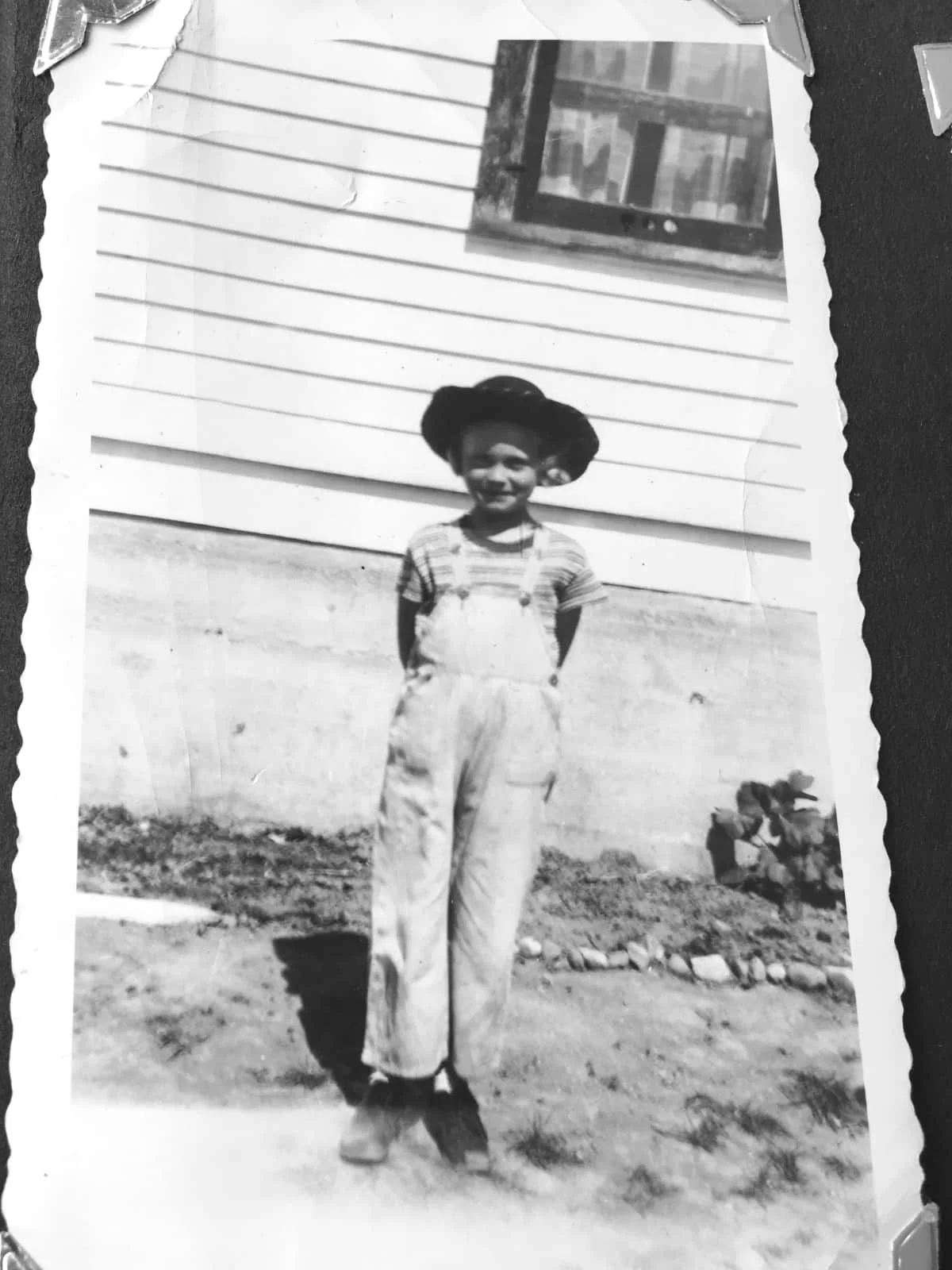
Carol standing in front of the house at the experimental station. Photo Submitted
During the latter years of WWII, Carol’s dad served as an instructor in Vancouver for new recruits in the navy. His willingness to learn, along with his farming background, helped him earn the promotion to instructor.
“Mom took the three of us by train to Vancouver for a short visit,” she recalled, though she was too young to remember the train ride.
After the war, her dad was immediately sent home to run a hardware store, which her grandparents had been managing in his absence. Around the same time, he connected with the administrator of Dominion Range Experimental Station in southern Alberta, located 40 miles from Manyberries, Alta. He was soon hired as foreman, and the family moved to the station.
As a preschooler, Carol enjoyed spending her days with her dad while her older siblings were at school and her mom looked after her baby sister. “Because it was a federal experimental station, a lot of war supplies were sent there,” she said, remembering rides in a war troop truck she called the Big 9. “I remember going to where the little lambs were born, and at sheep-shearing time, I’d help push down the wool in big barrels.”
All the information about the animals was documented and sent to the agriculture department in Ottawa.
“We were self-sufficient at the station,” she said. “There was a gardener who supplied winter vegetables stored in a root cellar, and there was an orchard. The egg man and milk man was also the man who brought ice for the icebox.” Non-perishable supplies were stored in the administration building, where staff worked in offices.
“We had a secretary who boarded at the cookhouse and also cooked for all the single men,” she added. “Many of those men were riders who looked after the animals and fence lines.”
Because it was a federal facility, Carol’s family enjoyed modern conveniences that most people lacked: hot and cold running water, indoor plumbing, and electricity from generators.
“One winter, we were snowed in, and the station was running out of supplies. Dad volunteered to go to Manyberries, 40 miles away,” she recalled. He headed out with a team of horses pulling a sleigh, wearing his brand-new parka. It was bitterly cold, and there were no roads or signs, yet he managed to reach a farm each night where both he and the horses were fed and sheltered.
At one of the farms, her dad traded his parka for a farmer’s coat made of animal hide. On the return trip, the horses broke free from the lines and ran off. Her dad walked to the nearest farm where the horses had been caught and fed. He finally arrived at the station wearing the hide coat instead of his new parka. “And everyone at the station was saved with supplies for the winter,” Carol said.
While Carol learned much from her dad, she didn’t gain much at the nearby one-room school. “Our teacher had taken a crash course over the summer and was then sent to this isolated community to teach grades 1–8,” she said. “I don’t remember any lessons being directed to me.” After school, her dad helped teach her how to read.
Carol recalled an unwelcome visitor on the school property—a rattlesnake, common in the area. “We always had antivenom at the station,” she said, noting that they often sent rattlesnake tails to cousins in Saskatchewan. Her brother and a friend killed the schoolyard rattlesnake, testing an old saying that “a rattlesnake doesn’t die until sundown.” After school, its body was gone. “We thought it didn’t die, but the teacher may have gotten rid of it,” Carol chuckled.
When Carol’s oldest sister completed Grade 8, her dad decided to leave his job at the station and move the family back to Saskatchewan so the children could be educated closer to home. Back in Ceylon, he built a home while hauling farmers’ cattle to auction in Regina. On each trip, he brought home supplies to finish the house, including all the amenities they had at the station.
“No one in town had indoor plumbing or hot and cold running water. People were amazed!” Carol said.
Her grandpa lived with them and drove the children to school during winter. Nearby was a large skating rink where they learned to skate in hand-me-down skates. “One Christmas, my younger sister got white figure skates. I always had boys’ skates, and we were so happy for her white skates we didn’t pay attention to our own gifts,” she said. “I still have those skates in my basement.”
Carol caught up on her schooling in Ceylon and decided to become a teacher after Grade 12. She attended teacher’s college in Regina for one year, then taught at Bradville, 16 miles from Ceylon, while taking classes.
At the end of that year, she and Dan married and both taught at Lake Alma, a town of 200. “We would joke and say we taught at L.A.!” Carol laughed. They taught there for three years, commuting 220 miles round-trip to attend one night class. Every summer, they took a class at summer school in Regina or Saskatoon.
Later, Carol taught in Saskatoon while Dan finished his degree. The family moved to Rosetown, where they started their family. “I took night classes once a week while raising my boys and also took a class through the community college. I taught as a substitute while raising my family. Dan taught French, English, and geometry at Rosetown. He was very good in French. People always commented on his excellent French,” she said.
Carol and Dan spent the summer of 1967 in Quebec City while Dan took French immersion classes. “It was amazing because that was Expo ‘67, and so many friends came to visit us,” she said. “We saw everything in Quebec and would be tour guides for our friends. It was also strawberry season. It was one of the best times we ever had.”
The next step in their journey brought the family to Kindersley in 1979, where they moved into their newly constructed home. “I did substitute teaching, and in the fall of 1982 I started teaching at the private Christian school until 2005 when it closed,” Carol said.
Carol has always been a teacher at heart and continues to encourage people and pray with them. If you happen to see her, be sure to tell her you enjoyed hearing some of her treasured memories.