
By Joan Janzen
According to statistics, Saskatchewan has one of the highest per-capita rates of drug and alcohol addiction in Canada, with roughly 14 percent of residents experiencing a substance use disorder. However, there’s good news for anyone needing help! The Village of Hope addiction treatment centre is located locally in Eston, Saskatchewan.
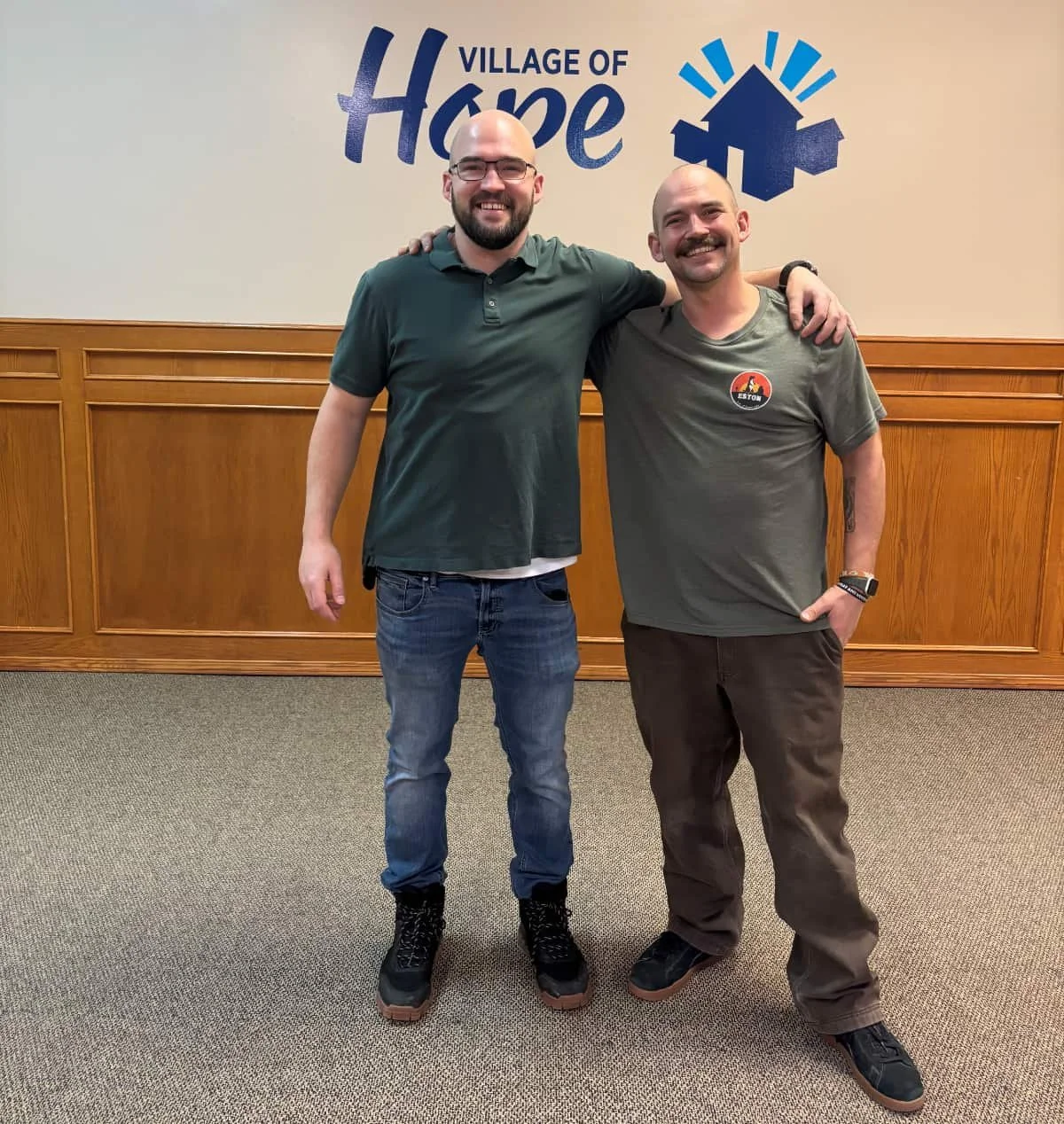
Brothers in recovery, and on staff: Alex Parsons, director, and his brother Kyle Parsons, project manager, at Eston’s Village of Hope addiction treatment centre. Both are graduates of the program. (l-r) Alex Parsons and Kyle Parsons. SUBMITTED PHOTO
With a 67 percent success rate, Village of Hope centres in Canada are making a difference in the lives of the people enrolled in the program. Director Alex Parsons shared some of the building blocks used at Eston.
He said the program is unique because it deals with the root causes of addiction. Much like an open wound, unattended inner hurt becomes unhealthy, causing the sufferer to turn to a ‘feel good’ substance experience.
“The biggest portion of our program is dealing with inner healing, childhood trauma and trauma people go through in addiction,” he explained.
He said some of the students decide to leave the 10-month program prematurely. “A lot of them choose to leave because there’s a hurt they’re not ready to share,” he observed. “The guys who leave and want to come back say there’s something I wanted to share but didn’t.” Alex noted most of the guys who leave early end up relapsing quite soon afterwards.
Accountability is another important aspect of the program. The students are like a brotherhood, living together and holding each other accountable. The goal is a family atmosphere so the men feel comfortable at the facility.
“But to be honest, the number one reason we’re successful is because God is in the mix,” Alex said. “We teach the guys how to journal. They self-reflect on negative attitudes and learn to respond in a different way than they’re used to.”
Alex and his brother Kyle know this from first-hand experience. Both are graduates of the program and now serve on staff, Alex as director and Kyle as project manager.
He said some of the men entering the program have never been in a church. “We don’t force it on anyone and we don’t exclude anyone,” he said.
The students don’t have cell phones during the program, but they can phone their family members on Sundays and arrange visits.
Morning classes are followed by work detail in the afternoon. The Village of Hope Bakery and Cafeteria is a popular venue in Eston. Alex said students who aren’t as social often work in the bakery so they can get to know people and interact with the community.
“We’re also doing big upgrades in the bakery. The men are included in all the renovations and help come up with ideas. It gives them something to look forward to and a chance to be innovative,” he added.
Some of the men work at a local canary seed plant or do construction work accompanied by a staff member. The income goes towards the program.
Even after the men graduate, they can apply for a second-phase program, which allows them to work in the area while living at Village of Hope for six months.
“I still talk to most of the guys I went through the program with. It’s something they’ll remember for the rest of their life,” Alex said.