
Esther Peever: 40 years of nursing, from polio survivor to public health pioneer
By Joan Janzen
This week is designated as Nurse's Week from May 11 to 17, celebrated annually during the week of Florence Nightingale's birthday on the 12th. It is a time to honour the contributions, leadership and expertise of nurses in Canada.
The theme "The Power of Nurses to Transform Health" is played out in the lives of nurses throughout the provinces. One of those individuals is Esther Peever, a retired Public Health Nurse, who now makes her home in Caleb Village in Kindersley.
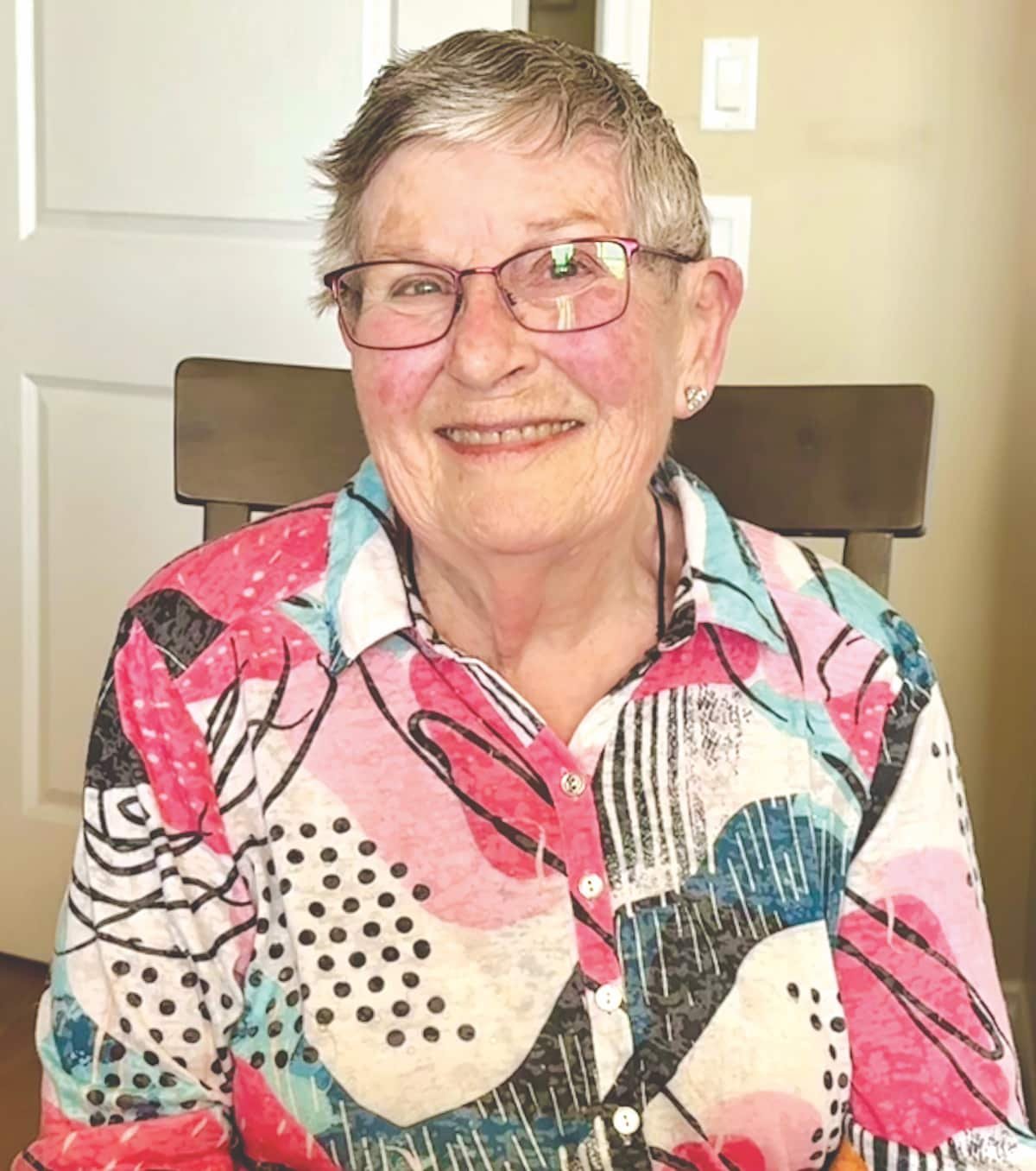
Four decades of care. Esther Peever is a retired Public Health Nurse who resides in Caleb Village in Kindersley. She graduated from nursing in 1965 and retired in 2004. PHOTO BY JOAN JANZEN
Esther was raised on a farm near Luseland and always knew she wanted to be a nurse. "I was probably six or seven when I knew I wanted to be a nurse," she recalled. At the age of 18 months she had been diagnosed with polio and always walked with a limp.
"At my last visit at the rehabilitation centre in Saskatoon at age 15, the doctor told me I shouldn't go into nursing because it would be too hard on me," she said. Nevertheless, Esther pursued her dream and went to nursing school at Edmonton General Hospital from 1962 to 1965. Edmonton was a convenient location because she could catch a bus to Macklin or take a train to Unity whenever she came home to visit at Luseland.
"It was a strenuous schedule. You would either study or be on the ward," she recalled. The girls stayed in residence at the hospital, sharing a bedroom with one or two people and accessing a common room and kitchen. "It was a real community," she said.
The class started out with 90 students; however, only 60 graduated.
"Some dropped out because they couldn't handle it. There were rigid rules back then and if you got married or became pregnant you were expelled," she explained.
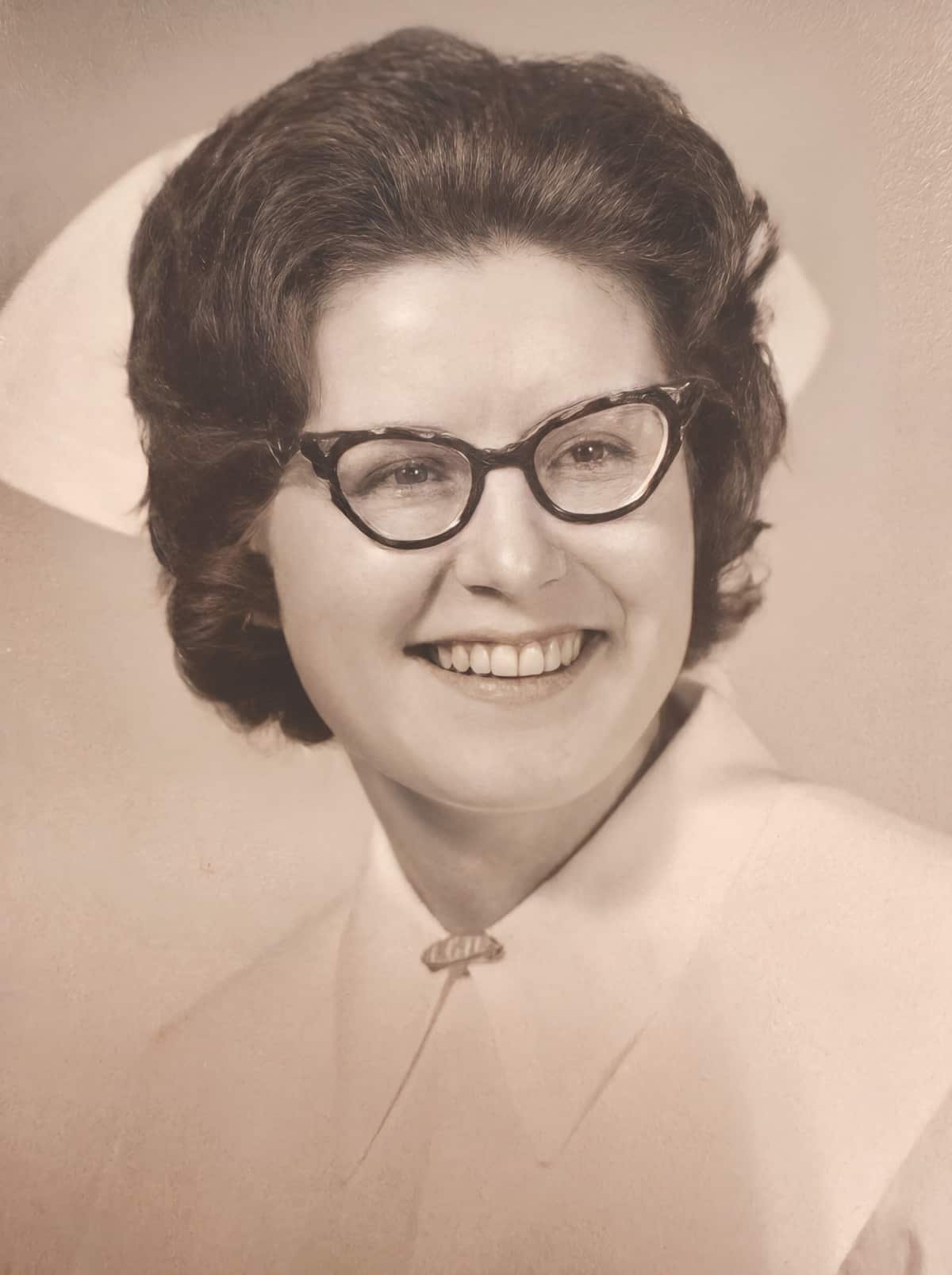
Esther wore a uniform during much of her nursing career, beginning with a white uniform, white stockings, white shoes, and everyone received a hat after six months of training. A black band was added to the nurse's hat in their third year and each graduate received a gold pin at a graduation ceremony held at the Jubilee Auditorium.
The day professional grad photos were taken, Esther was so exhausted after working her shift that she couldn't keep her eyes open. "I didn't purchase any photos because of that," she explained. Fortunately, she had a small photo of herself which had been taken earlier.
Her first job began in 1965 at the old Kindersley Union Hospital. In 1968 the new hospital was built and Esther lived in the residence for $40 a month, which included all her meals.
In 1971 there was a shortage of Public Health Nurses, who were required to have a nursing degree. So the government hired 32 nurses in Saskatchewan who had their diplomas, and Esther was one of them. Her on-the-job training included studying community health as opposed to hospital health. "The main thing in community health is immunization, controlling communicable diseases and pre-natal and post-natal care," she explained. She also enjoyed the benefit of working 8 to 5 rather than shift work, and her uniform changed.
In public health the uniform included a navy polyester dress, black shoes and a white collar that was pinned in and removed when washed separately from the uniform, which had to be dry cleaned. And they always wore pantyhose. "In the summer we wore a white polyester uniform. It was very hot," she added. In the 1990s the rules changed and uniforms were no longer required.
"We were required to visit every baby that was born, whether it was the first or the fifth," she said. "I covered all the RMs around Kindersley."
Esther said she enjoyed visiting all the babies, but sometimes wondered if a mother who had her fifth baby really needed advice from a young, single nurse.
After a few years Esther married and had two children, taking no more than six months for maternity leave. She continued to hold flu clinics and monthly baby clinics, and always kept a shovel in her car just in case she got stuck in a snowstorm, which she did.
"In November 1973 I went to Marengo School in a blizzard. It snowed all the time that winter," she explained. "I left early because the blizzard was bad and got stuck outside of Kerrobert. Someone came along and rescued me." They also rescued the vaccines, which she had in her car that had to be protected from the freezing temperatures.
"We went out in -35 degree weather, but as the years went by we didn't do that as much," she added.
Esther worked almost 40 years as a nurse and knew a lot of the people who lived in all the surrounding RMs. She knew people from when they were babies to becoming adults, at which time she visited their babies.
"In public health I met all kinds of people," she concluded.
Esther is definitely a familiar face to many people in Kindersley and surrounding communities. Thank you for your years of leadership, expertise and contributions to the community.