
Estevan Premier’s Supper highlights coal, carbon tax, and energy future
ESTEVAN – Two unions, the International Brotherhood of Electrical Workers and the United Mine Workers of America, were among the sponsors for the Estevan Premier’s Supper on Oct. 30, alongside a coal mining company and an oilfield company.
The event came amid one of the province’s largest recent policy shifts: Saskatchewan’s decision to continue using coal to generate power beyond Jan. 1, 2030, despite federal regulations. Coal currently accounts for up to 44 per cent of Saskatchewan’s winter power supply.
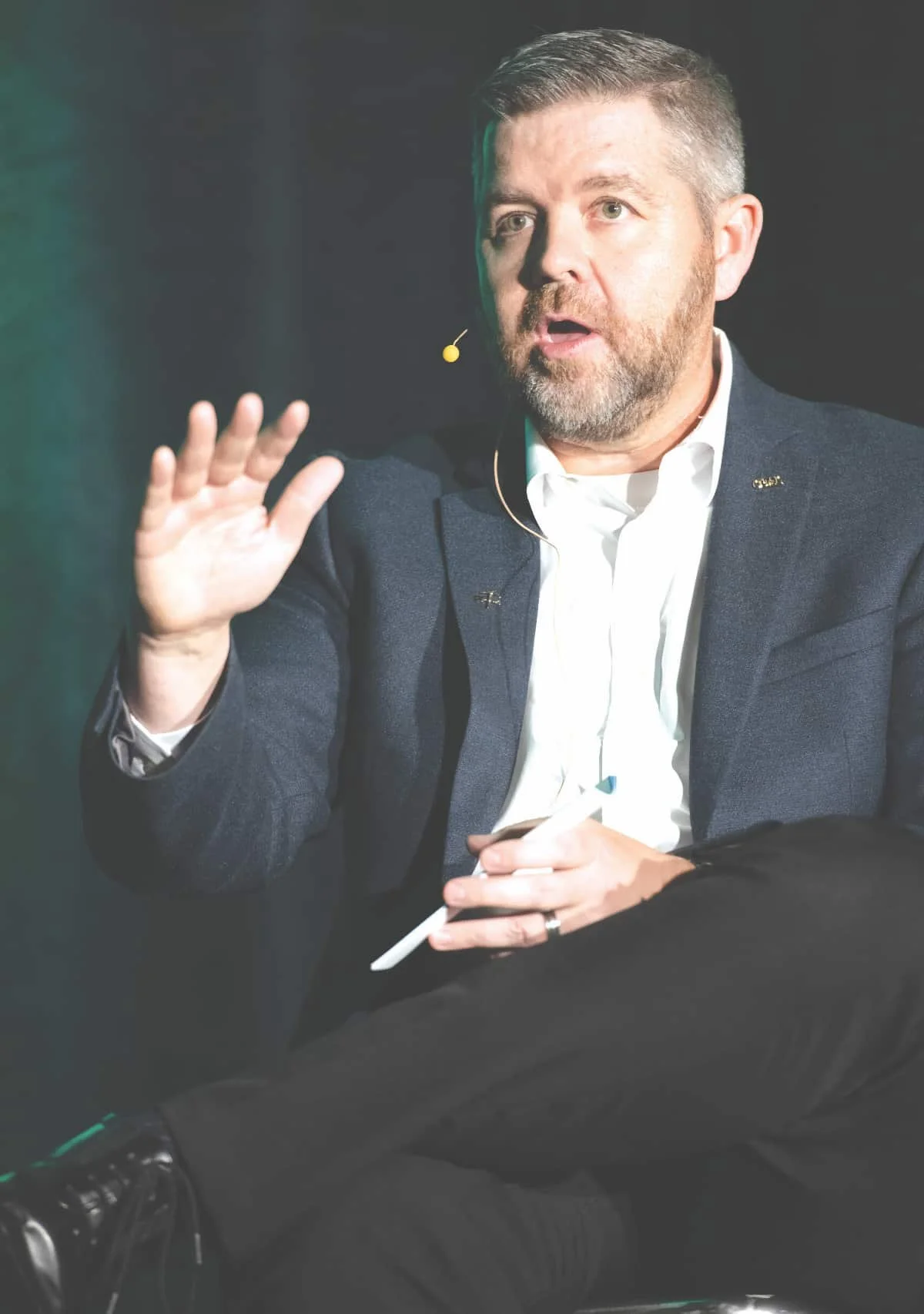
Crown Investments Corp. Minister Jeremy Harrison. If you look closely, there’s a “Coal” lapel pin on his jacket. Photo by Brian Zinchuk
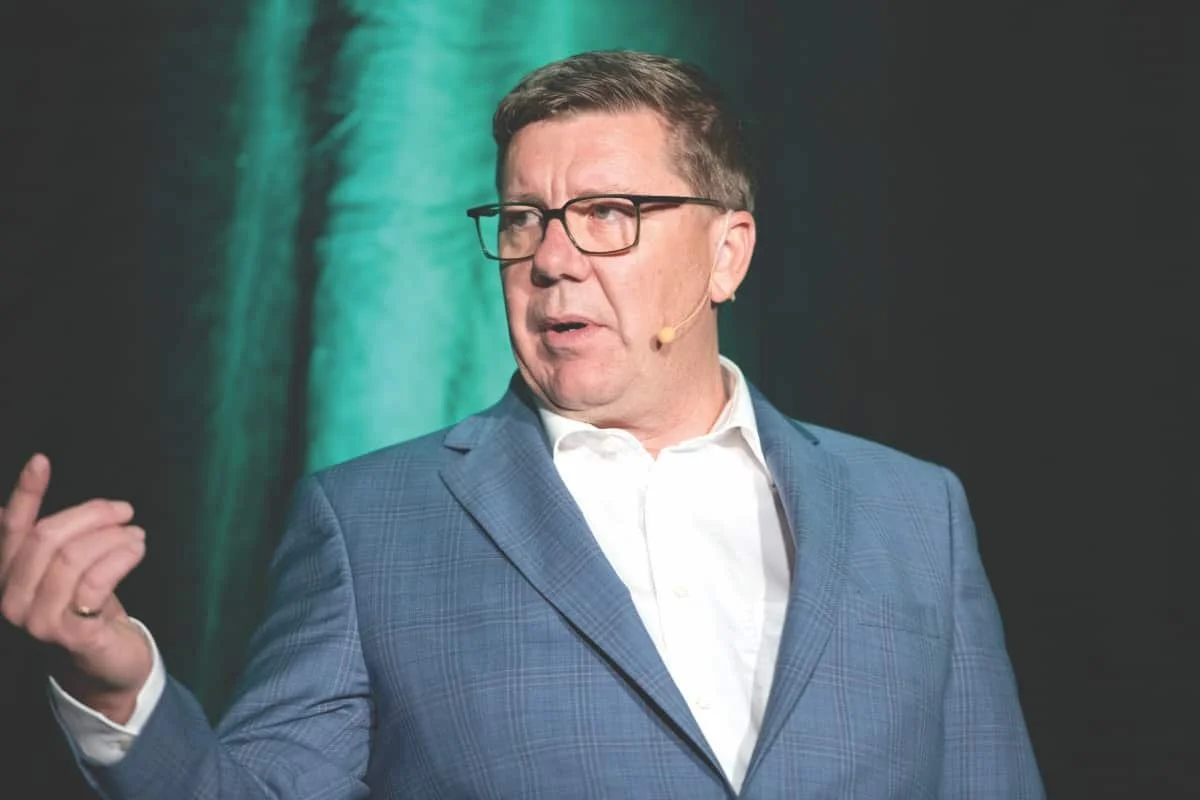
Premier Scott Moe in Estevan on Oct. 30. Photo by Brian Zinchuk
The Wylie-Mitchell building was full, with many Sask Party MLAs and cabinet ministers present. Premier Scott Moe was joined by Minister of Crown Investments Corporation Jeremy Harrison and Minister of Highways David Marit, all key players in the coal decision.
Moe spoke on “affordable, reliable power” and the province’s opportunities in the energy sector, including a Saskatchewan company at the center of an $80-billion nuclear deal with the United States.
Carbon Tax
Harrison highlighted Moe’s opposition to the federal carbon tax when he was Environment Minister, noting the removal of the consumer portion while SaskPower still faced the industrial portion, which has now been removed. Harrison described the industrial tax as “ridiculous” and “stupid” because it would not change consumer behavior but would add to power costs.
Coal
Moe criticized federal coal regulations that would have shut down plants by 2030, emphasizing the importance of reliable, affordable power. Harrison added that decisions on coal were guided by election campaign feedback, focusing on cost-of-living issues: reliability and affordability.
Both ministers stressed the significance of local support, including Estevan Mayor Tony Sernick, RM of Estevan Reeve Jason LeBlanc, and the leadership of the unions and companies involved. Harrison said the decision would have “generational implications” for communities and Saskatchewan’s position as a provider of dispatchable baseload power.
Nuclear Energy
The government also plans to expand into nuclear energy, including small modular reactors in Estevan and large-scale projects. Moe called the province’s role “exciting,” highlighting price certainty and investment potential. Harrison added that this move would create local jobs and prevent the NDP’s past mistakes of losing nuclear development to other provinces.
Local Impact
Marit spoke about coal’s importance to communities such as Coronach, Rockglen, Willow Bunch, Bengough, Ogema, and Assiniboia, praising Harrison and Tim Highmoor of Crown Investments Corp for their efforts in preserving coal operations. Moe emphasized that affordable, reliable power is the foundation for attracting future investment.