
Doug watched farming change over the years
By Joan Janzen
KINDERSLEY - As the combines head out into the field, Doug Francis recalled the years he spent on the family farm located south of Kindersley. During his thirty-five years of farming, he witnessed numerous changes from 1969 to 2014.
“My dad had three-quarters of a land,” he explained, as he recalled growing up as the third oldest in a family of seven. “But most of his income came from his mechanical shop.”
By the time he was 14, Doug was unloading grain in square wooden bins. Shovelling barley inside a square bin was not a lot of fun. “We would be getting the bin full in the corners, but you couldn’t see two feet in front of you because of the dust while unloading at the same time,” he said.
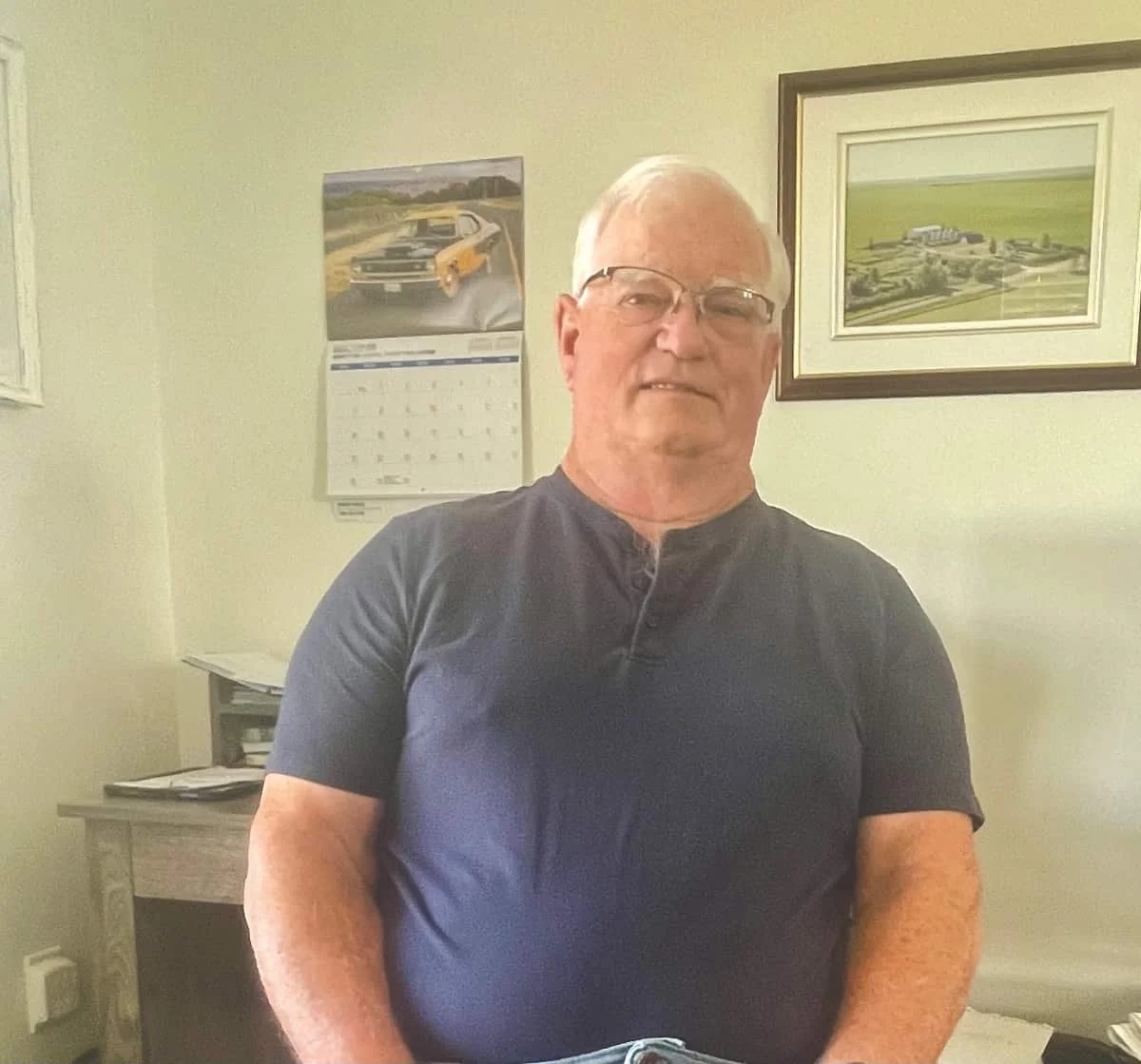
Doug Francis is a retired farmer who has seen many changes during his 35 years of farming. PHOTO BY JOAN JANZEN
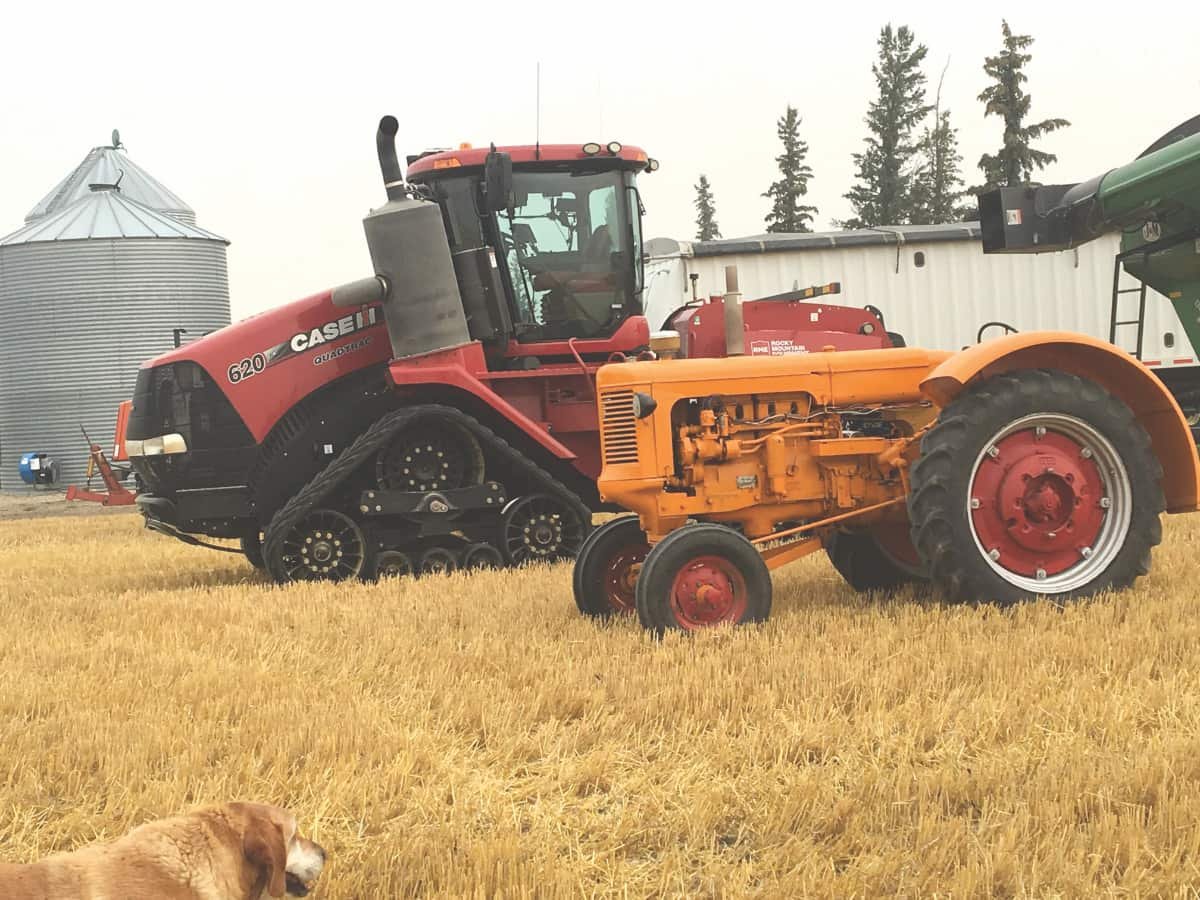
The photo of Doug’s 2012 Case 620 quad track beside a 1949 Minneapolis illustrates the changes that have taken place during his years of farming. PHOTO BY DOUG FRANCIS
Doug remembered unloading grain from a one-ton truck without a hydraulic hoist. When he was 16, he began hauling grain to the elevator.
“We were six miles from the closest elevator,” he recalled. “Everyone was lined up with their one tons waiting to get in. Guys who lived closest got the most grain hauled each day. When the grain cars were full, that was it.”
Eventually, Doug and his brother Ray began operating the family farm. The brothers purchased their dad’s equipment and began buying more land. “We started with nothing and kept expanding, but not too fast,” he said. “Our first land was $100/acre. Now it’s about $4,000/acre.”
The two brothers worked well as a team. “My brother and I got along really well. My brother did all the books, and I did the shop work,” Doug explained. “We fixed our own equipment. We’re pretty mechanical. We were fortunate because our dad was a mechanic.”
Back in the day, farmers wouldn’t seed everything, leaving half the land as summer fallow; however, Doug’s dad would always seed a bit of stubble. When the brothers began farming, they seeded two-thirds of the crop and left one-third summer fallow.
While his dad operated the farm, he planted flax, wheat and barley. “We started with lentils, but we didn’t get yields like they do now. They have better varieties now,” he said. They grew one-third each of durham, canola and lentils.
“Lentils make their own nitrogen once they get growing. Next year, when you grow wheat on that lentil field, you have nitrogen for the wheat field,” he explained.
As for equipment, he recalled purchasing a big tractor, sprayer and two large combines at once. They would run some of the equipment for nine or ten years. “Farming is a tough game because everything is so expensive. Now the biggest combine is over a million dollars,” he observed. Many farmers lease equipment, which enables them to have more combines on the field during harvest.
Even when the harvest is completed, there’s more work to be done. “It’s just as much work afterwards fixing and cleaning equipment,” Doug said. “There’s no end to work.”
Throughout the years, they hired seasonal help. They raised their families, and enjoyed their years of farming. “My son is handling the farm now. We drive out there once a week because we have our farm dog out there and farm cats,” he said.
Doug and his wife Sheila have been living at Caleb Village for the past three years. “I don’t farm anymore. I can see the combines go by, that’s good enough,” he said.