
Biggest barn in North America stood for the shortest amount of time
By Joan Janzen
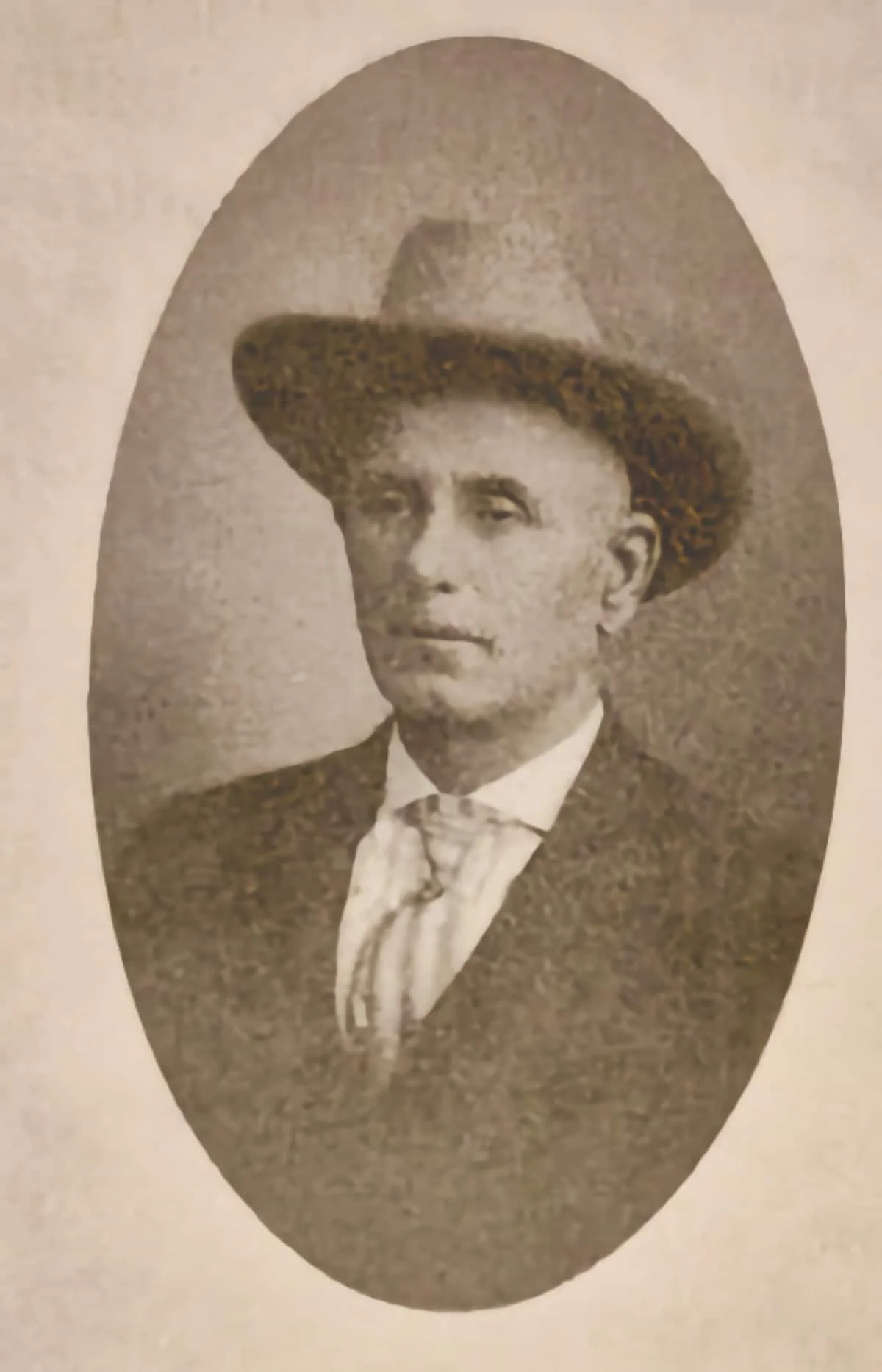
The biggest barn that stood for the shortest amount of time was built in 1914 approximately ten kilometres northwest of Leader, Sask., near the South Saskatchewan River. William T. Smith was the entrepreneur with a big dream to have the largest ranch in the area.
The Kentucky-born man had ventured to Manitoba, where he had a butcher business and a sale barn. In 1868, he headed to the South Saskatchewan River in search of farmland located close to the river, and soon filed his homestead. That summer, he went to Montana, where a rancher gave him credit to purchase 400 unbroken horses. The return trail ride took five days.
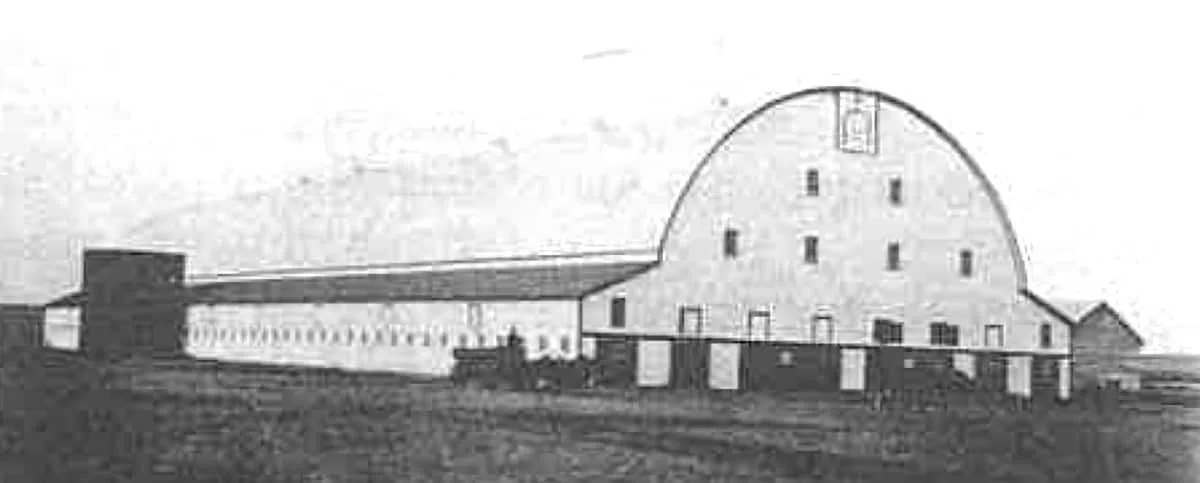
In 1914, William T. Smith built the biggest barn in the North American continent. All that remains today is the weed-covered foundation, which serves as a memorial to the King of Saskatchewan Ranchers. Photo Pages of the Past: Leader, Saskatchewan
Two years later, he borrowed funds from a relative in Winnipeg and purchased 600 more horses and some mules. He spent the following years breaking, breeding, and selling horses.
But Smith wasn’t done dreaming, and around 1885 he headed to Montana, where he purchased 5,000 or more sheep. On the way home, the cowboys in their covered wagons encountered a snowstorm, and the sheep became so heavy they couldn’t walk. Smith fashioned a primitive horse-drawn snowplow out of wooden planks to make a path for the sheep. Nevertheless, it was reported nearly 1,000 of the herd didn’t survive the long journey, as they covered ten miles each day.
Smith’s plans included starting a sawmill so he could sell lumber to settlers, and he convinced the government to lease him 10,000 acres of land covered with poplar trees. A steam engine, sawmill, plows, and drills were picked up at the train at Maple Creek and brought back to the homestead. Fred Cocks, the foreman, helped set up the sawmill and begin the lumber business.
Smith purchased another steam engine and two big bush plows to clear more land. Two thousand of his 10,000 acres were under irrigation, and it was reported his haystacks were half a mile long. After his first newly built barn was destroyed in a fire, another barn was needed, and Smith began building the biggest barn in the North American continent.
He used his 2,000 horses, 1,600 mules, 10,000 sheep, plus cattle as security for his $82,000 loan. He also had seven purebred stallions, one of which was from Spain and worth $7,000. He brought his newly acquired cash home from Maple Creek in gunny sacks stashed under the seat of his Democrat.
The construction project required a railway carload of nails, 32 carloads of B.C. fir, 30,000 bags of cement, 60,000 feet of corrugated galvanized iron roofing, seven ventilators, and a lot of windows. Gravel was hauled from a half mile east of the construction site.
The Manitoba contractor kept 100 men employed for five months. Tom Hern was one of the employees. In Leader’s history book, Edna (Hern) Cocks wrote, “Since the Hern farm was across the river from the ranch, Mr. Hern would swim the river to go home on weekends and then walk a mile to their homestead.” The end result of all this hard work was a 128-foot x 400-foot x 60-foot three-storey-high barn.
There was a big party at the barn before the roof was finished, with 500 people in attendance, coming from as far as Montana and California by horse and wagon. There was an orchestra at each end of the building for the square dancing, and of course there was a lot of food.
The year 1915 was a prosperous year, with Smith’s wheat crop yielding 85,000 bushels, and his employees were rewarded for their hard work. They had their own baseball team, sports organizations, and a stampede every Sunday during the summer months.
In spite of Smith’s extravagant taste, he always took a very simple lunch with him on his trips to Maple Creek, which consisted of a can of tomatoes and a package of biscuits. He ensured every visitor to the ranch was well fed, and he always worked alongside his men.
Shortly after the barn was completed, Smith became ill with cancer and died in 1918 at the age of 73. In 1921, a trust company took over the ranch. The barn was dismantled, the lumber sold to farmers, and everything was put up for auction.
The biggest barn in the North American continent stood for the shortest amount of time … a total of seven years. All that remains is a weed-covered foundation that stands as a memorial to the King of Saskatchewan Ranchers — W.T. Smith.
Information for this article was obtained from the history book Pages of the Past: Leader, Saskatchewan.