
A childhood journey from Germany to Canada
By Joan Janzen
KINDERSLEY—Christa Breitkreutz-Erker was born in November, 1938 in West Germany, a year before WWII began. "You realize how God provided and it's not just luck," she said as she began sharing her story from her home in Kindersley.
She was the first born child of Adam and Gertrud Petri. The family's peaceful rural life came to an abrupt halt on September 1, 1939 when war broke out between Poland and Germany. The very next day they received clothing cards and ration cards for groceries. Within 30 days Germany conquered Poland; however the war continued with many other countries getting involved.
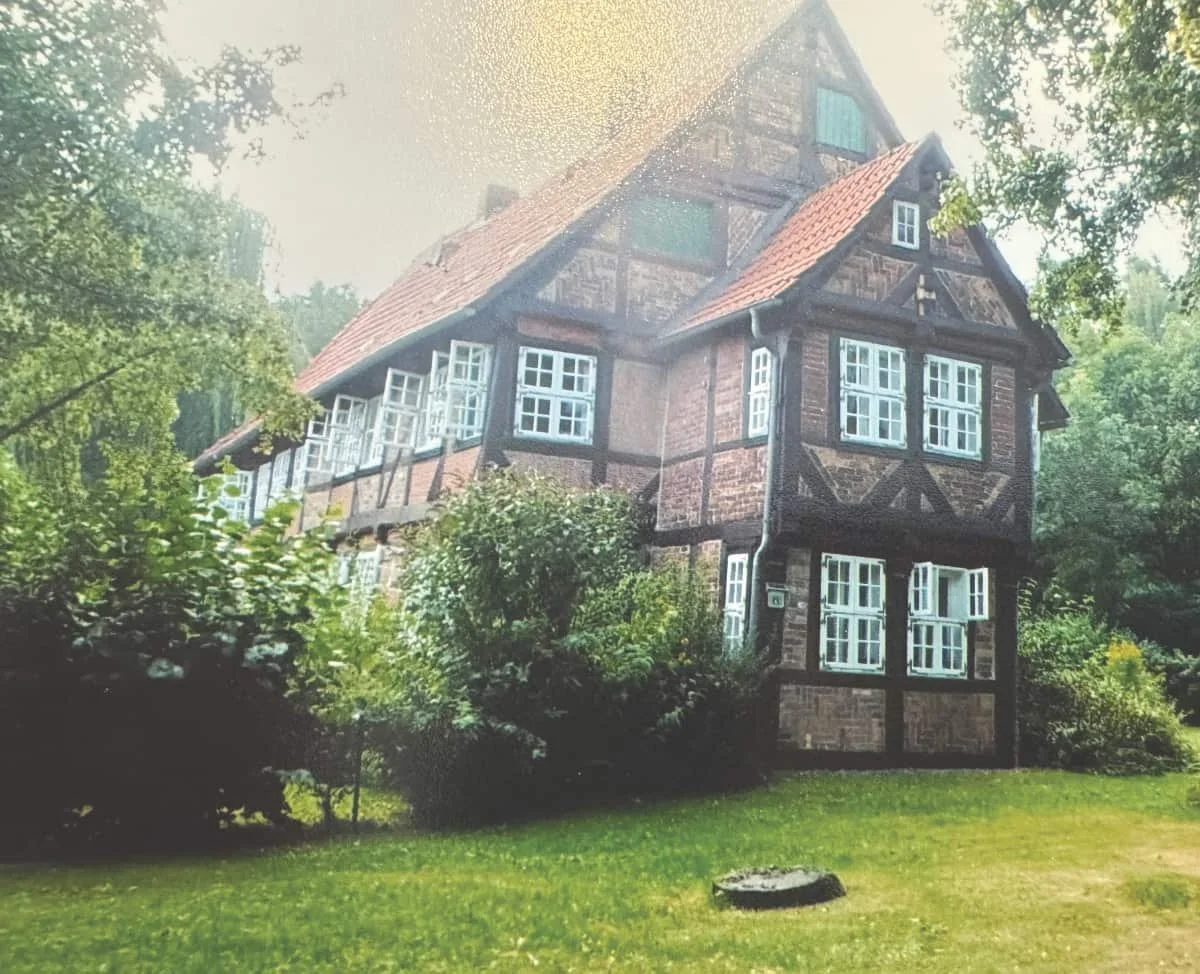
Christa Breitkreutz-Erker returned to Germany sixteen years ago and visited the forestry house where her family lived with five other families following the war, before emigrating to Canada. Photo submitted
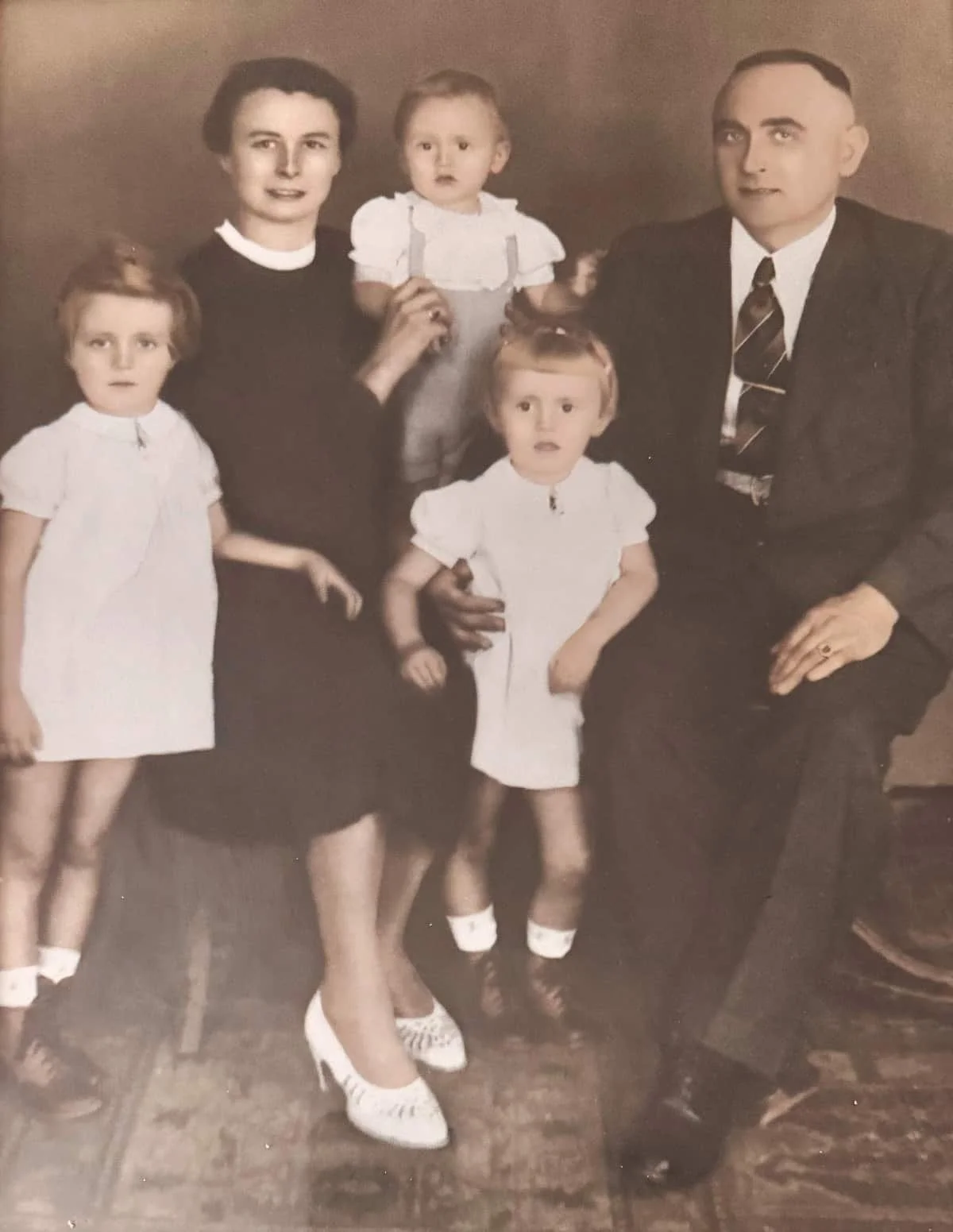
The Petri family, photographed in West Germany in 1943. From left are Christa, mother Gertrud holding baby Helmut, sister Gerda, and father Adam. The family arrived in Canada in 1948 and settled in the Flaxcombe-Laporte area. Photo submitted
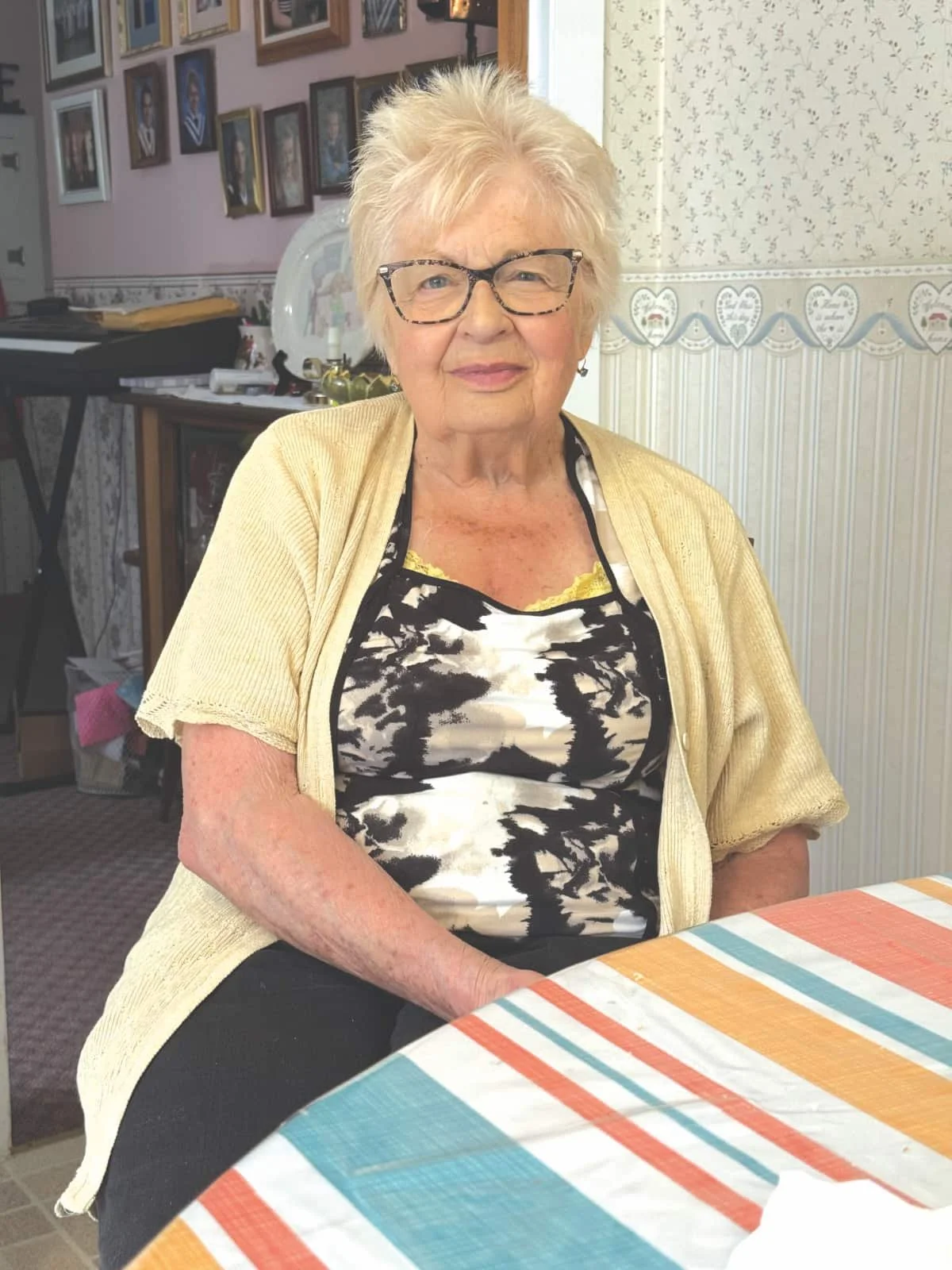
Christa Breitkreutz-Erker of Kindersley shared her memories of growing up in Germany during the Second World War and immigrating to Canada at age nine. Photo by Joan Janzen
Christa's sister Gerda was born in 1940 just a year and four months after her own entry into the world. Besides caring for her young children, Christa's mom kept watch at night for approaching enemy planes. Once spotted, she would carry her girls down to the cellar which served as their bomb shelter. For a period of four months she and her two young daughters moved to a resort area in the Black Forest region which offered more protection for women and children.
After that time they returned home where Christa's dad was working at a factory with the war effort, and in 1942 her younger brother Helmut was born. It was a dark period of time when windows were covered with paper to prevent enemy planes from targeting lighted areas.
As a child Christa said she can't remember anyone saying anything about the government. Everyone kept very quiet and didn't voice their opinions.
One night it remained very quiet for a long period of time after the family had moved to the bomb shelter. Without waiting for the siren signalling safety, the family moved back upstairs and put the children to bed. All of a sudden their neighbour's house was struck by a bomb, and pieces of plaster from the ceiling fell on the baby's pillow. It was one of many instances when the family was protected from harm.
Once again the young mom and her three children sought safety and spent three summer months in Poland with Christa's aunt and her family. Later that year they returned home to be with Christa's dad, hoping winter would be more peaceful. However that Christmas was spent in their bomb shelter, and the following year, in June of 1943 they returned to Poland, just before their apartment was bombed on June 23. Her dad was unharmed in the bomb shelter, but most of their belongings were destroyed. He secured a room in another apartment and continued to work until September of 1944 when he was drafted at the age of 39.
By the end of 1944, the people were warned the Russian army was approaching and they should flee. In January of 1945 Christa's aunt hauled a load of wheat to the city to sell, providing funds for their journey. When she returned the family packed up their belongings and food in two wagons. At midnight orders were given that by 2:00 o'clock the entire community had to leave. For 27 days the two horses pulled their load in cold winter temperatures until they arrived in West Germany, and continued to travel west. Everyone was travelling together and the family often met up with long lost friends.
During their journey they found shelter at farms where they could thaw their frozen provisions; however some of the farmers had already left or were preparing to leave. Once again they witnessed God's protection on their journey.
Gertrud and her sister begged to travel with the group on a road leading to a big farm where they could find shelter, but the road was much too crowded. This caused them to take their wagons down a different road where they spent the night at a forestry station. The following day they were told the Russians had overtaken the other group that stayed at the farm. At the same time the town they were headed to was being bombed.
"The sky lit up with bombs that dropped on the refugees, while we were protected. We could have been taken over by the Russians, and the next day you could see the fires in the nearby town that had been bombed and we missed it because we hadn't arrived there yet," she remembered. On another occasion they were fortunate to pass over a bridge before the German troops blew it up.
"I just felt God's providence so much," she recalled.
On February 16th their family arrived safely at a small town that doubled in size from people fleeing the Russians. On April 8th, 1945 the war was finally over and Gertrud and her sister moved their families to a nearby town where they lived in a forestry house with five other families. The adults found work hoeing rows of vegetables, and Christa was able to go to school.
In March, 1946 Christa's dad found his way back to his family, with the help of the Red Cross. "I didn't recognize him," Christa remembered. "He was skin and bones. They worked the men hard and didn't feed them much at the prison camp."
After her dad regained his strength he also worked hoeing vegetables. Care packages arrived regularly from Gertrud's sister in Canada, and the family traded the coffee, chocolate and cigarettes they received for groceries and necessities. Inflation had made any savings they had worthless, and only $60 per person was allowed to be withdrawn from the bank.
Gertrud's sister and husband in Canada also made the commitment to move the two families to Canada and take care of them for a year. Plans to move began in January of 1947 and after numerous delays, the families departed on July 8th, 1948. The following day they boarded an army ship along with 800 immigrants. The immigrants slept on row after row of bunk beds with women on one side of the ship and men on the other.
Christa said she had a friend to play with on the ship. "We had met in camp beforehand and would run around together on the ship," she said. "But we got seasick because it was a rocky ride. They gave us root beer and I still can't drink it to this day."
On July 18th they landed in Quebec. "I had pink eye but fortunately the doctor let me leave the ship," she remembered. The group boarded a train to Kindersley arriving on July 21st. Christa was 9 years old when they continued the journey to her aunt and uncle's home located between Flaxcombe and Laporte.
"Even though it was a small house, Frieda and John Young and cousins Inge and Heinz shared their home with us for six months," Christa explained. "I was so glad to see my aunty who brought us here. She met her husband during the First World War and moved to Canada. God had already provided for us way back then by bringing her to Canada."
It was a huge adjustment for the new arrivals as they looked out at the bald prairies. "We didn't know English but we learned very quickly," she said. Her cousins were ordered by the teacher to speak only English to their house guests.
"A lot of people don't realize how many things they were saved from," Christa observed. However Christa is not one of those people. "I want to give all the credit to God," she added.